Supreme Court Upholds Delimitation Act, Denies SC/ST Seat Rotation
The Supreme Court has ruled against a plea for mandatory rotation of reserved seats for SC/ST in legislative assemblies and Parliament.
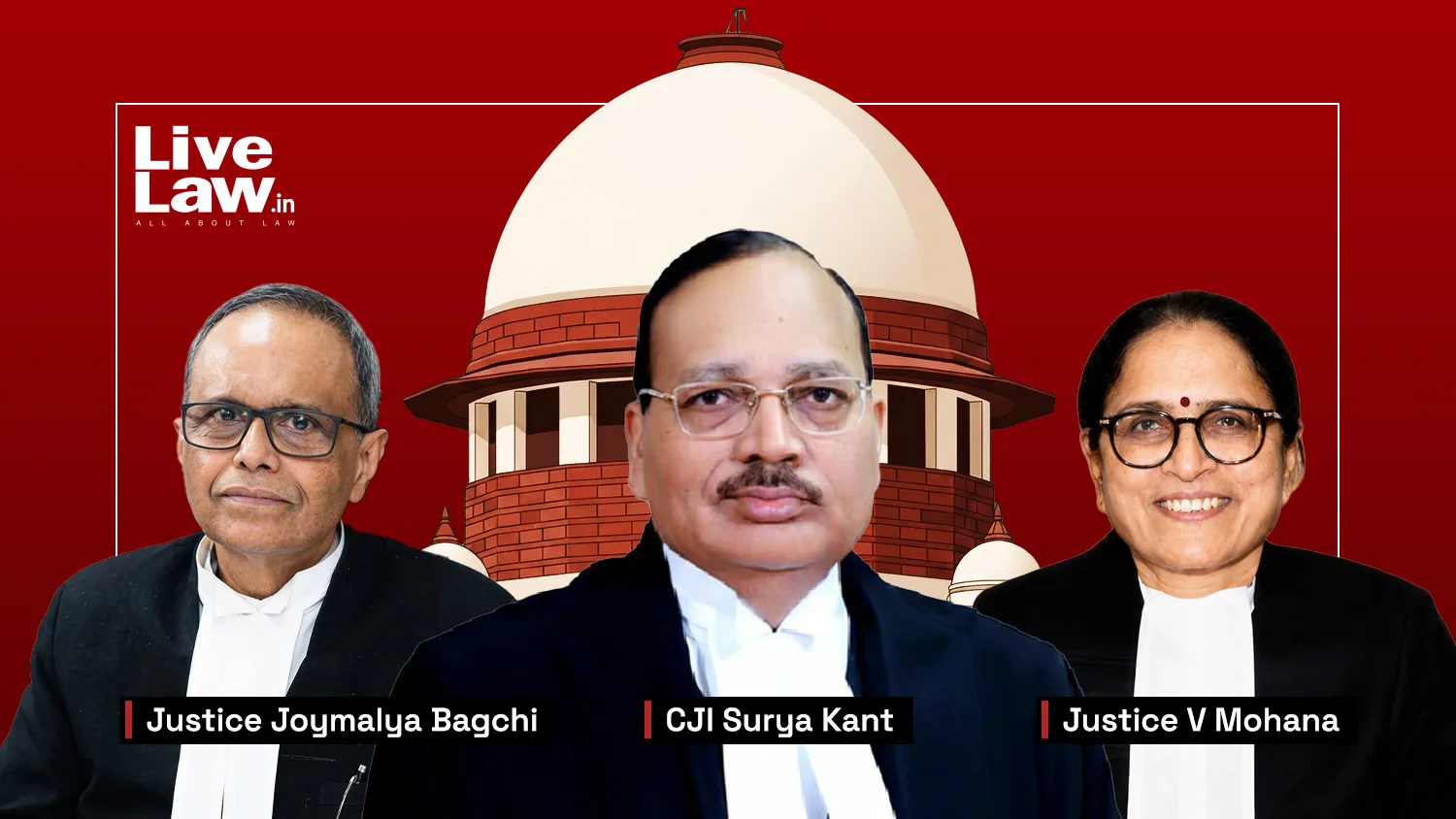
The Supreme Court affirmed the validity of Section 9(1)(c) of the Delimitation Act, 2002.
The court stated that the decision on seat rotation is a legislative matter, not judicial.
The petitioner argued that continuous reservation violates constitutional rights, but the court disagreed.
In a significant ruling on November 4, 2026, the Supreme Court of India dismissed a petition seeking the mandatory rotation of seats reserved for Scheduled Castes (SCs) and Scheduled Tribes (STs) in the State Legislative Assemblies and Parliament. The court held that such matters fall within the legislative domain and cannot be mandated by judicial intervention. The bench, comprising Chief Justice Surya Kant, Justice Joymalya Bagchi, and Justice V Mohana, emphasized that the issue of seat rotation is a policy decision for Parliament to make.
The petition challenged Section 9(1)(c) of the Delimitation Act, 2002, which mandates that reserved constituencies be situated in areas with a significant SC/ST population. The Allahabad High Court had previously upheld this provision, leading the petitioner, Jagdish Singh from Sultanpur, Uttar Pradesh, to escalate the matter to the Supreme Court. Singh contended that the continuous reservation of the 191-Kadipur Assembly seat for SCs for nearly seventy years infringes upon Articles 14, 15, and 19 of the Constitution, limiting voter choice to SC candidates and benefiting only a select few families.
During the proceedings, the bench noted that in a multiparty democracy, voters should base their choices on political ideologies rather than caste affiliations. Justice Bagchi remarked that the concentration of reserved seats in SC/ST-populated areas does not inherently create caste divisions and is a legislative concern. The court clarified that the right to vote does not equate to a right to contest from a specific constituency, as candidates from general categories can also run for non-reserved seats.
The Supreme Court's decision has broader implications for the legislative process and the representation of marginalized communities in India. By reinforcing the legislative authority over the rotation of reserved seats, the court has placed the onus on elected representatives to consider changes in the law. The ruling highlights the ongoing debate about the effectiveness of current reservation policies and their impact on social justice.
Looking ahead, the petitioner has been encouraged to engage with public representatives to advocate for a consensus on the rotation principle. The Supreme Court's ruling underscores the importance of legislative action in addressing the complexities of representation for SC/ST communities, as the court reiterated that it cannot rewrite existing laws or the Constitution to introduce new provisions absent from the current legal framework.