Supreme Court Rules Against Indefinite Protests at Designated Sites
The Supreme Court emphasizes the need for time limits on protests, impacting recent demonstrations in Delhi.
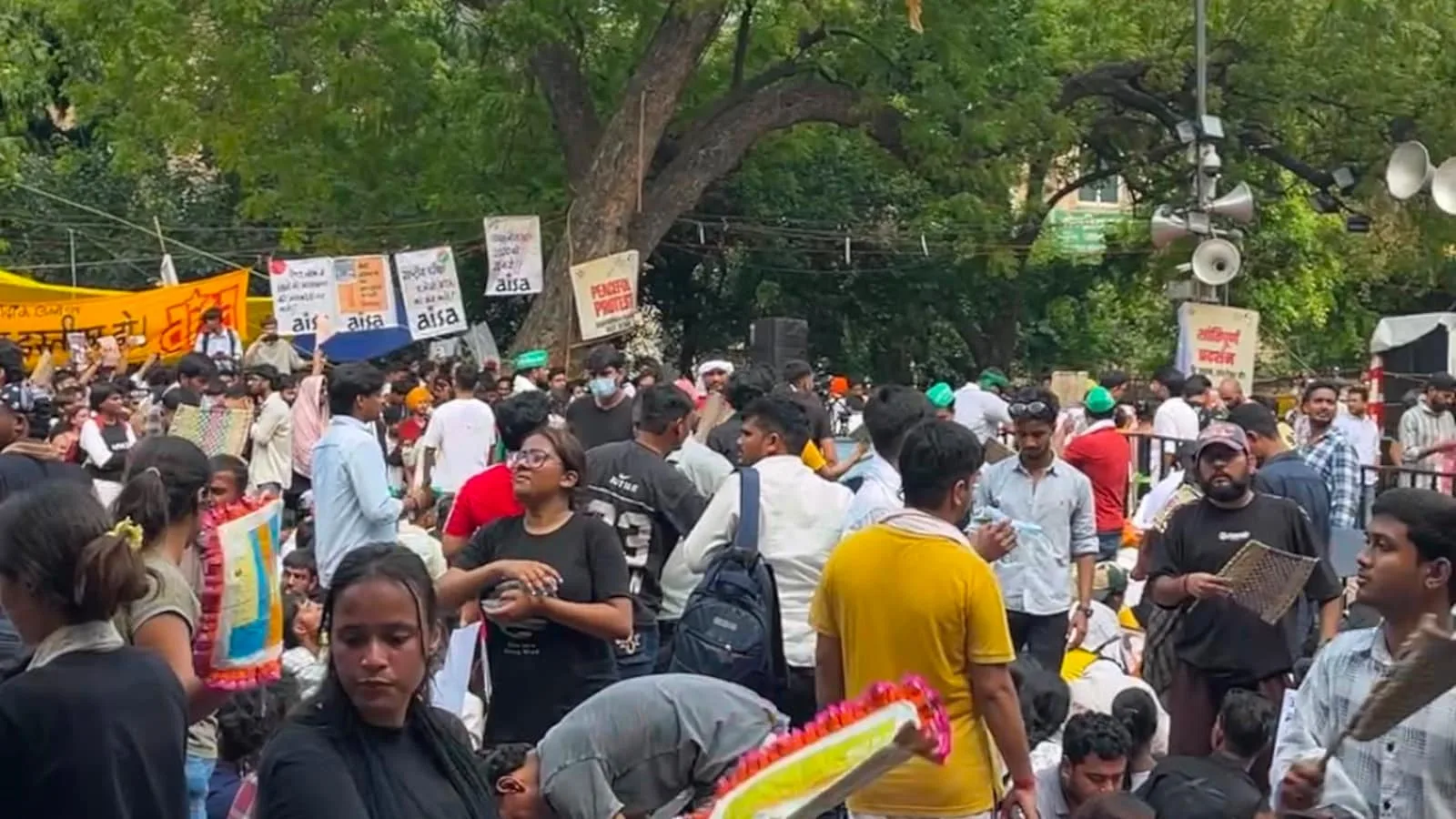
Supreme Court states protests cannot occupy sites indefinitely.
Protesters must take responsibility for consequences of their actions.
New designated protest sites announced by the government amid ongoing demonstrations.
In a significant ruling today, the Supreme Court of India declared that no individual or group can occupy a protest site indefinitely. This statement arose during a hearing concerning recent protests at Jantar Mantar and Ramlila Maidan in Delhi, where opposition parties rallied against the Election Commission. The court underscored the necessity for designated protest sites to have defined time limits to ensure public order and the rights of other citizens.
The government had previously removed the designation of Jantar Mantar as a protest site and introduced three alternative locations, including Ramlila Maidan. During the proceedings, Tushar Mehta, representing the government, asserted that those who initiate protests must be accountable for any repercussions stemming from their actions. Chief Justice Surya Kant emphasized that indefinite occupation of protest sites infringes on the rights of other groups, such as farmers and lawyers, to express their grievances.
The court was informed that the protest on July 20 was authorized for just one day; however, demonstrators extended their presence and even marched towards Parliament. Chief Justice Kant remarked that Parliament is not merely a political venue and that such marches are inappropriate. The bench, which also included Justices Joymalya Bagchi and V Mohana, was reviewing multiple petitions, including those from trader organizations seeking to address business losses caused by the protests.
Praveen Khandelwal, Secretary General of the Confederation of All India Traders (CAIT), welcomed the Supreme Court's intervention, highlighting the need to balance the right to protest with the public's right to conduct business. He noted that around 5 million residents live near the protest areas, where businesses have suffered due to closures during the demonstrations. Senior lawyer Mukul Rohatgi emphasized that the court cannot resolve these issues unless the protesting organizations are made parties to the petitions.
Looking ahead, the Supreme Court's ruling may prompt a reevaluation of protest regulations and designated sites across India. The court has previously sought responses from the Election Commission regarding allegations of voter deletions and irregularities, indicating ongoing scrutiny of electoral processes. The implications of this ruling could reshape the landscape of public protests and the rights of citizens to engage in peaceful demonstrations without infringing on others' livelihoods.