Supreme Court Grants Temporary Permission for Karthigai Deepam Ceremony
The Supreme Court's recent order allows a one-time lighting of the Karthigai Deepam at Thiruparankundram, raising questions about interim relief standards.
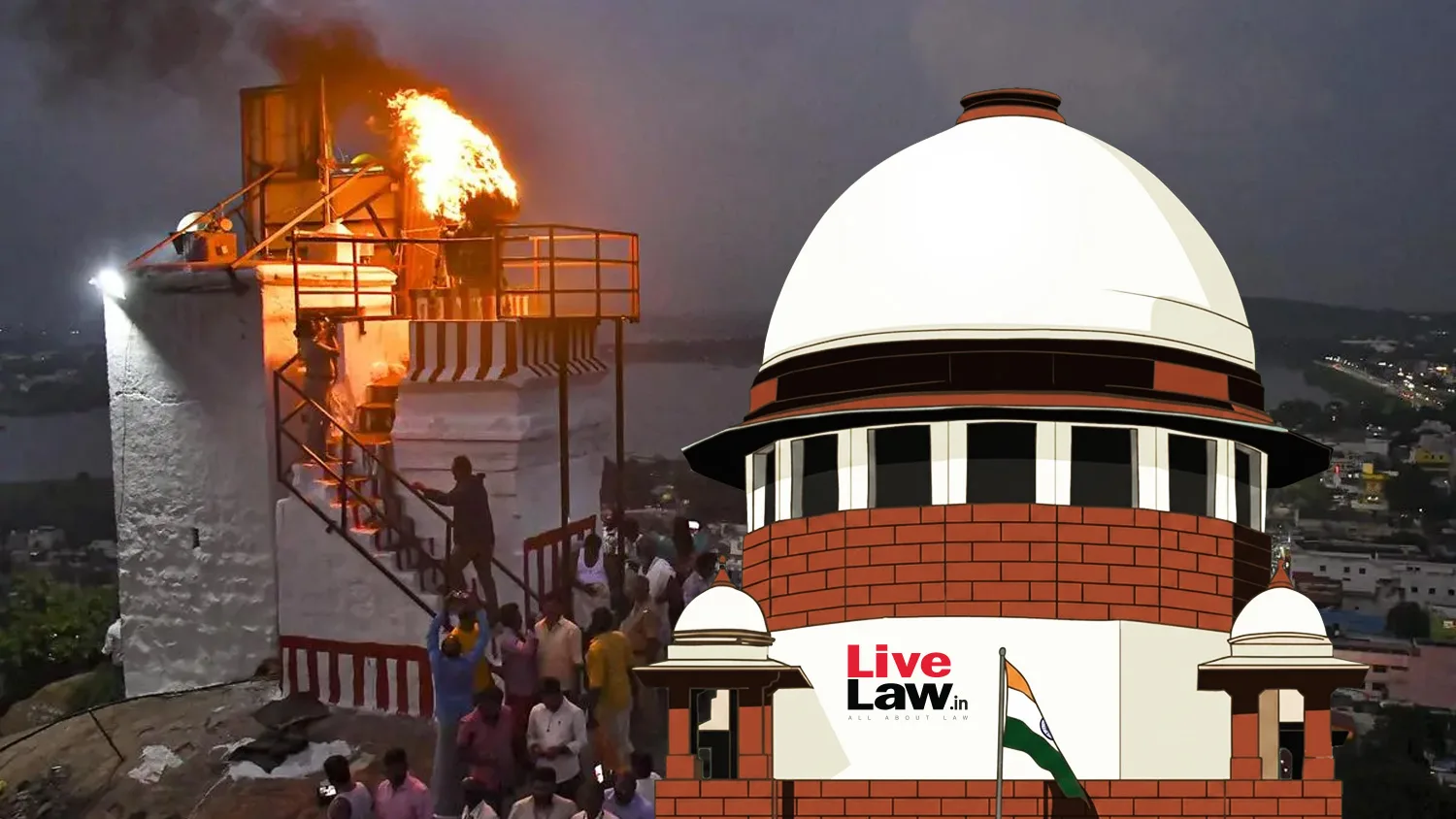
The Supreme Court permitted a temporary lighting of the Karthigai Deepam at Thiruparankundram without recognizing customary rights.
Concerns arise regarding whether the court adequately established a prima facie case for the interim relief granted.
The order, while limited to 2026, could set a precedent for future religious claims at disputed sites.
In a significant ruling, the Supreme Court of India has granted a one-time permission for the lighting of the Karthigai Deepam at the Deepathoon pillar located on Thiruparankundram hill in Tamil Nadu. This decision, made on November 20, 2026, allows the ceremony to proceed without acknowledging any customary rights associated with the site, prompting discussions about the implications of such interim judicial interventions in religious matters.
The backdrop of this ruling involves ongoing disputes regarding religious practices at the Deepathoon site, where competing claims have been made. The Supreme Court's order appears to balance these interests temporarily, but it has left many questions unanswered regarding the legal basis for the interim relief. The bench, comprising Justices Aravind Kumar and Vipul Pancholi, emphasized the need for stringent safeguards while permitting the ceremony, yet the rationale behind satisfying the established tests for interim relief remains unclear.
Key aspects of the court's reasoning include the assertion that the opportunity to perform the ceremony could not be restored once missed. However, critics argue that the court did not adequately demonstrate how the three-fold test for interim relief—establishing a prima facie case, potential for irreparable injury, and balance of convenience—was satisfied. The absence of a clear legal right supporting the claim raises concerns about the legitimacy of the court's decision to allow the ceremony at a disputed location.
The implications of this ruling extend beyond the immediate ceremony, as it may set a precedent for future claims involving sensitive religious sites. The court's decision to allow the lighting of the lamp, despite staying previous judicial findings from the High Court, raises questions about the legal grounds for such a move. Furthermore, the order's potential to alter the status quo rather than preserve it could have lasting effects on ongoing disputes.
Looking ahead, while the Supreme Court has clarified that this permission is limited to the 2026 festival and does not set a precedent for future years, the reality is that allowing such claims in sensitive religious contexts can lead to recurring disputes. The court's failure to thoroughly address the prima facie case and the balance of convenience may have broader implications for how similar cases are handled in the future.