Supreme Court Allows Green Firecrackers for Deepavali 2026
The Supreme Court has approved the use of certified green firecrackers in Delhi-NCR for Deepavali, with specific time restrictions.
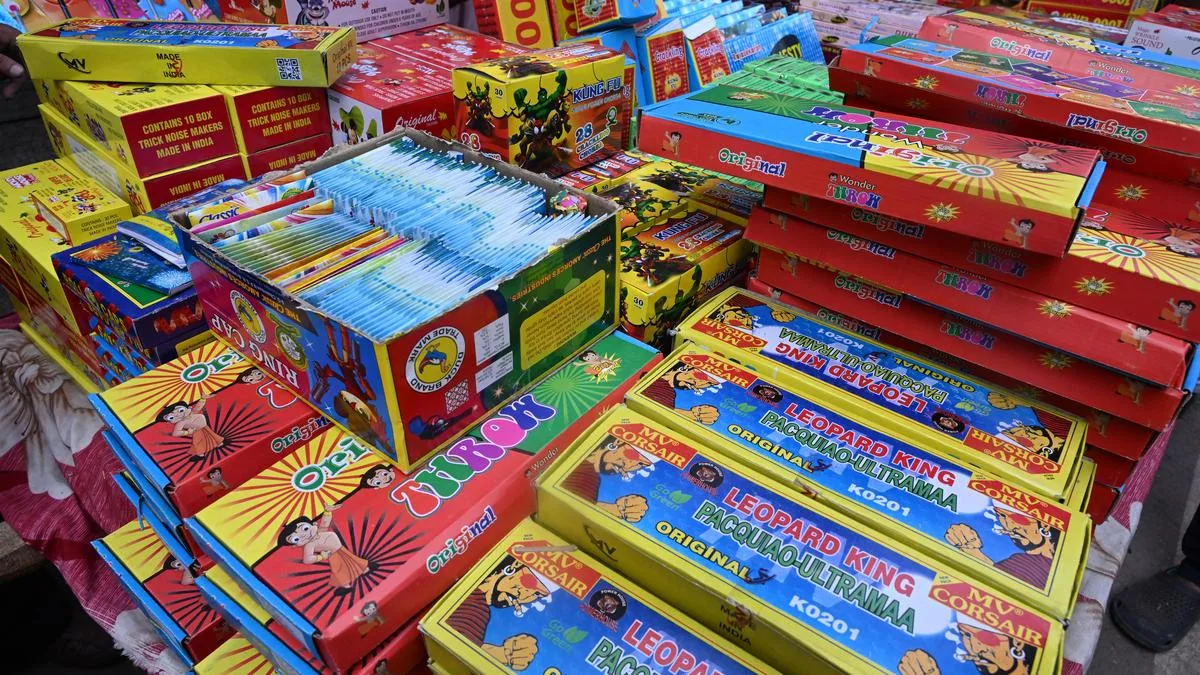
Green firecrackers can be burst on November 7 and 8, 2026, between 6-7 AM and 8-10 PM.
No firecrackers are allowed within 300 meters of hospitals and silence zones.
The court emphasized balancing religious practices with environmental protection.
On November 2, 2026, the Supreme Court of India granted permission for the use of certified green firecrackers in Delhi and the National Capital Region (NCR) during the Deepavali festival. The court specified that these firecrackers may only be ignited during designated time slots: from 6 AM to 7 AM and from 8 PM to 10 PM on November 7 and 8, 2026.
In its ruling, the court established strict guidelines, prohibiting firecracker use within a 300-meter radius of hospitals, nursing homes, primary health centers, and other designated silence zones. These areas will be marked and published as 'No-Cracker Zones.' The court also extended these restrictions to educational institutions, emphasizing the need for compliance to minimize disturbances to vulnerable populations, including those with health issues.
The Supreme Court acknowledged the cultural significance of firecrackers during Deepavali, describing it as a long-standing religious tradition. However, it underscored the importance of environmental protection and public health, stating that the celebration should not come at the expense of air quality and noise pollution. The court noted that while Deepavali is celebrated across various communities, the adverse effects of unregulated firecracker use must be addressed.
In its 23-page judgment, the court referenced ancient Hindu texts that advocate for the use of lamps during the festival rather than firecrackers. It highlighted that the introduction of gunpowder in India transformed the celebration, leading to the widespread use of firecrackers over the years. The court pointed out that while these practices are rooted in tradition, they contribute significantly to environmental degradation and pose health risks, particularly to children, the elderly, and individuals with disabilities.
Looking ahead, the court's decision sets a precedent for balancing cultural practices with environmental responsibilities. The upcoming Deepavali celebrations will be closely monitored to ensure adherence to the new regulations, with further discussions anticipated on how to promote sustainable festive practices in the future.