Sridhar Vembu Links Trump's $5,000 Payout to Tamil Nadu Politics
Zoho founder Sridhar Vembu claims US President Trump's proposed $5,000 payment mirrors Tamil Nadu's welfare-driven electoral strategies.
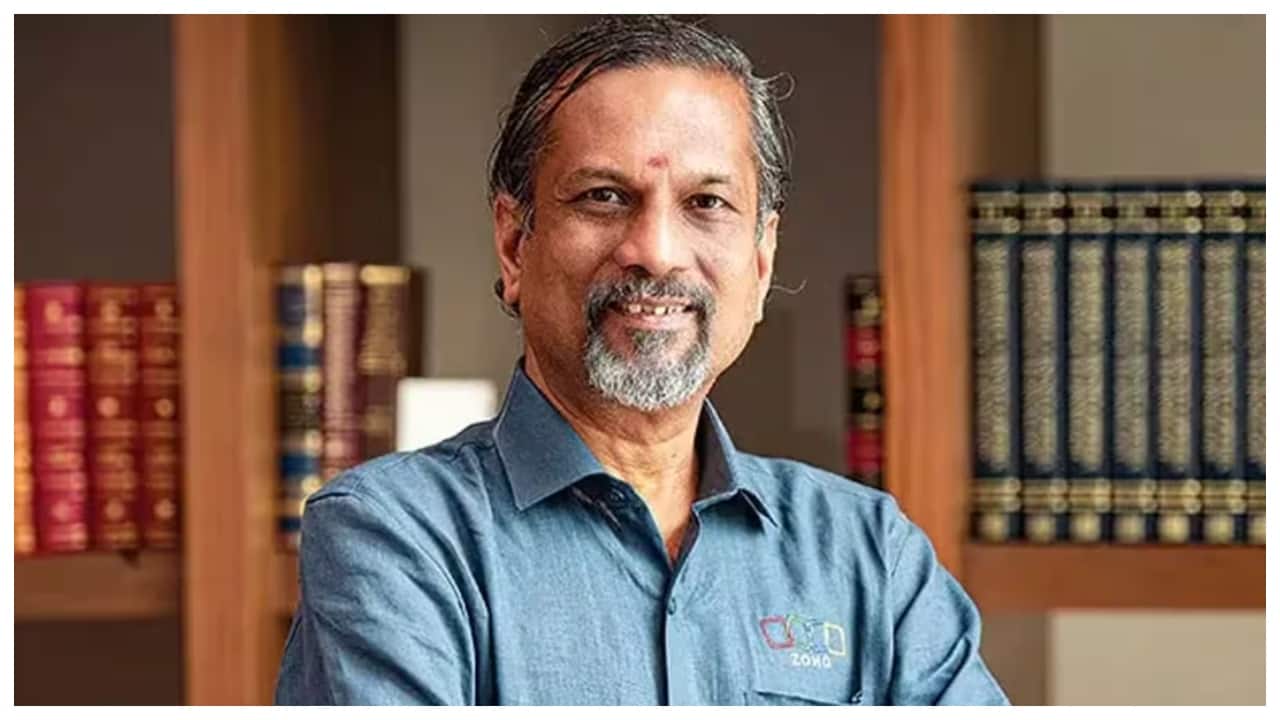
Sridhar Vembu compares Trump's $5,000 proposal to Tamil Nadu's DMK welfare policies.
Trump's plan requires congressional approval and could exceed $1 trillion.
Tamil Nadu's political history shows a long tradition of welfare measures influencing elections.
Sridhar Vembu, the founder of Zoho, has highlighted a striking similarity between US President Donald Trump's proposed $5,000 payment to American adults and the welfare-centric electoral politics of Tamil Nadu. In a recent post on social media platform X, Vembu remarked, "We invented this in Tamil Nadu, and spread it to rest of India. President Trump is copying the DMK." This statement comes in light of Trump's pledge to distribute the payment if Republicans maintain control of Congress during the upcoming midterm elections.
The concept of the $5,000 payment, dubbed the "Trump Dividend," is reminiscent of welfare schemes historically associated with the Dravida Munnetra Kazhagam (DMK) party in Tamil Nadu. The DMK has long integrated welfare measures into its political platform, dating back to the 1950s and 1960s when K Kamaraj, then Chief Minister, initiated free education and a midday meal program for schoolchildren. The DMK's approach became more pronounced in the 1967 elections when CN Annadurai promised subsidized rice, leading to their electoral victory and subsequent implementation of the scheme.
Trump's proposal, however, is not without its challenges. It would necessitate congressional approval and could potentially cost over $1 trillion, a significant concern given the current annual budget deficit of approximately $2 trillion and a national debt exceeding $40 trillion. Experts, including Marc Goldwein from the Committee for a Responsible Federal Budget, have pointed out that Trump's plan cannot be executed without legislative backing and have raised questions about the appropriateness of labeling the payment as a "dividend" in light of the government's financial situation.
The influence of Tamil Nadu's welfare politics has extended beyond state lines, with various political parties across India adopting similar strategies. The Aam Aadmi Party's 2015 campaign in Delhi, for instance, focused on subsidized utilities, while recent trends have seen a shift towards direct cash assistance, such as Tamil Nadu's monthly payment for eligible women heads of households. This evolution reflects a growing trend in Indian politics where welfare measures are increasingly tied to electoral success.
Looking ahead, the implications of Trump's proposal may resonate beyond the immediate political landscape. As the midterm elections approach, the feasibility of the $5,000 payment will be scrutinized, and its potential impact on American voters will be closely monitored. The upcoming congressional discussions will be crucial in determining whether this ambitious plan can materialize, marking a significant intersection of welfare politics in both the US and India.