Sinking of Russian Frigate Merkury: A Wake-Up Call for Indian Navy
The recent sinking of the Russian frigate Merkury by Ukrainian drones highlights critical lessons for the Indian Navy's maritime strategy.
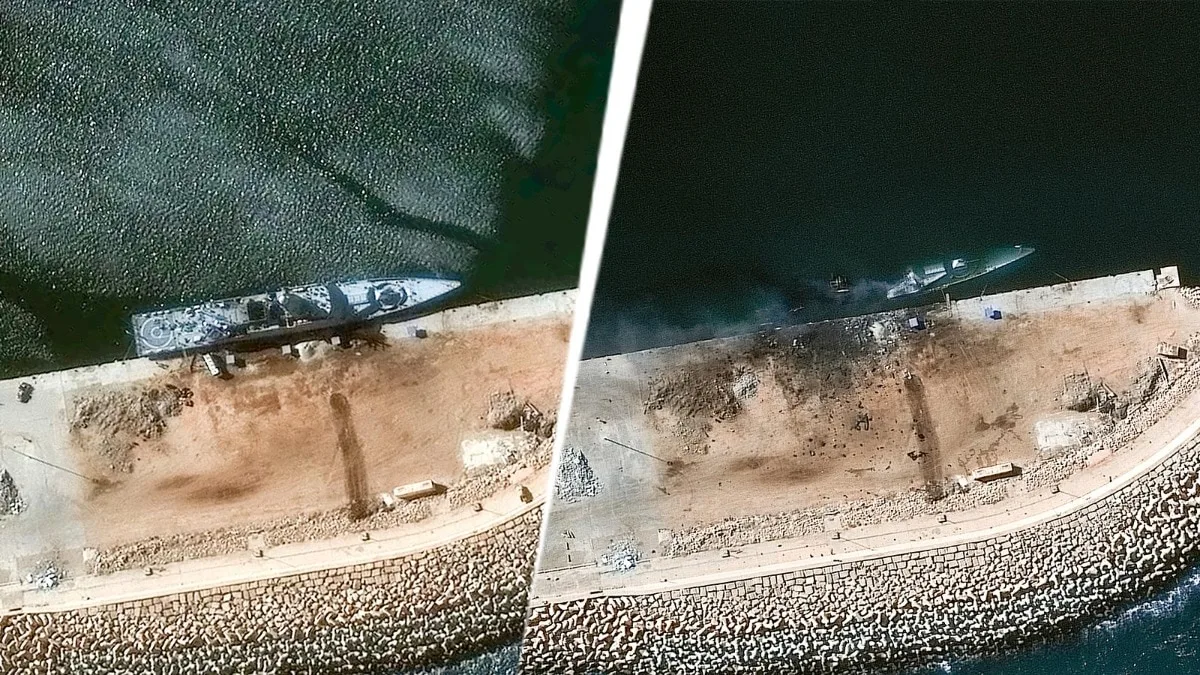
The Russian frigate Merkury was sunk by Ukrainian sea drones in Benghazi, marking a significant moment in naval warfare.
Technological advancements in drone warfare are reshaping naval strategies, emphasizing the need for layered defenses.
The Indian Navy is investing in unmanned surface vehicles (USVs) but must enhance its defensive measures against drone threats.
In a striking development in naval warfare, the Russian frigate Merkury was sunk by Ukrainian sea drones on November 22, 2026, while docked in Benghazi, Libya. This event, occurring over 1800 kilometers from Russian territorial waters, underscores the evolving dynamics of maritime conflict. The attack involved multiple unmanned surface vessels that successfully targeted the frigate, marking a significant escalation in the use of drone technology in warfare.
Historically, the sinking of the Merkury serves as a reminder of the changing face of naval engagements, particularly in the context of the ongoing Russia-Ukraine conflict. Ukraine has demonstrated a capacity to inflict substantial damage on Russian naval assets, previously sinking the cruiser Moskva and other vessels using advanced missile and drone technologies. This incident highlights the importance of technological superiority in modern warfare, where smaller forces can effectively challenge larger adversaries.
The implications of this incident extend beyond immediate military concerns. The Merkury, while not a total loss, will require significant resources to salvage and restore. This incident reflects a broader trend where nations must adapt to new forms of warfare, particularly the integration of drones and satellite technology. The Russian Navy's experience illustrates the vulnerabilities of traditional naval forces in the face of innovative tactics employed by adversaries.
For India, the sinking of the Merkury serves as a crucial lesson in maritime defense strategy. The Indian Navy has already begun investing heavily in unmanned surface vehicles (USVs) and drone technology, recognizing the need to enhance its capabilities in response to emerging threats. However, there remains a pressing need for improved defensive measures against drone attacks, particularly in key ports such as Mumbai and Visakhapatnam. The establishment of robust surveillance and detection systems will be essential to safeguard naval assets from similar threats.
Looking ahead, the Indian Navy must prioritize the development of multi-layered defense strategies that encompass air, surface, and underwater domains. This includes the integration of advanced detection systems, rapid response protocols, and the establishment of restricted zones around critical naval installations. As global naval strategies evolve, the lessons learned from the sinking of the Merkury will be vital for ensuring the security and effectiveness of the Indian Navy in an increasingly complex maritime environment.