Rohingya Refugees Celebrate ICJ Ruling on Genocide
The International Court of Justice's ruling on Myanmar's genocide against Rohingya brings mixed emotions of joy and hope for return.
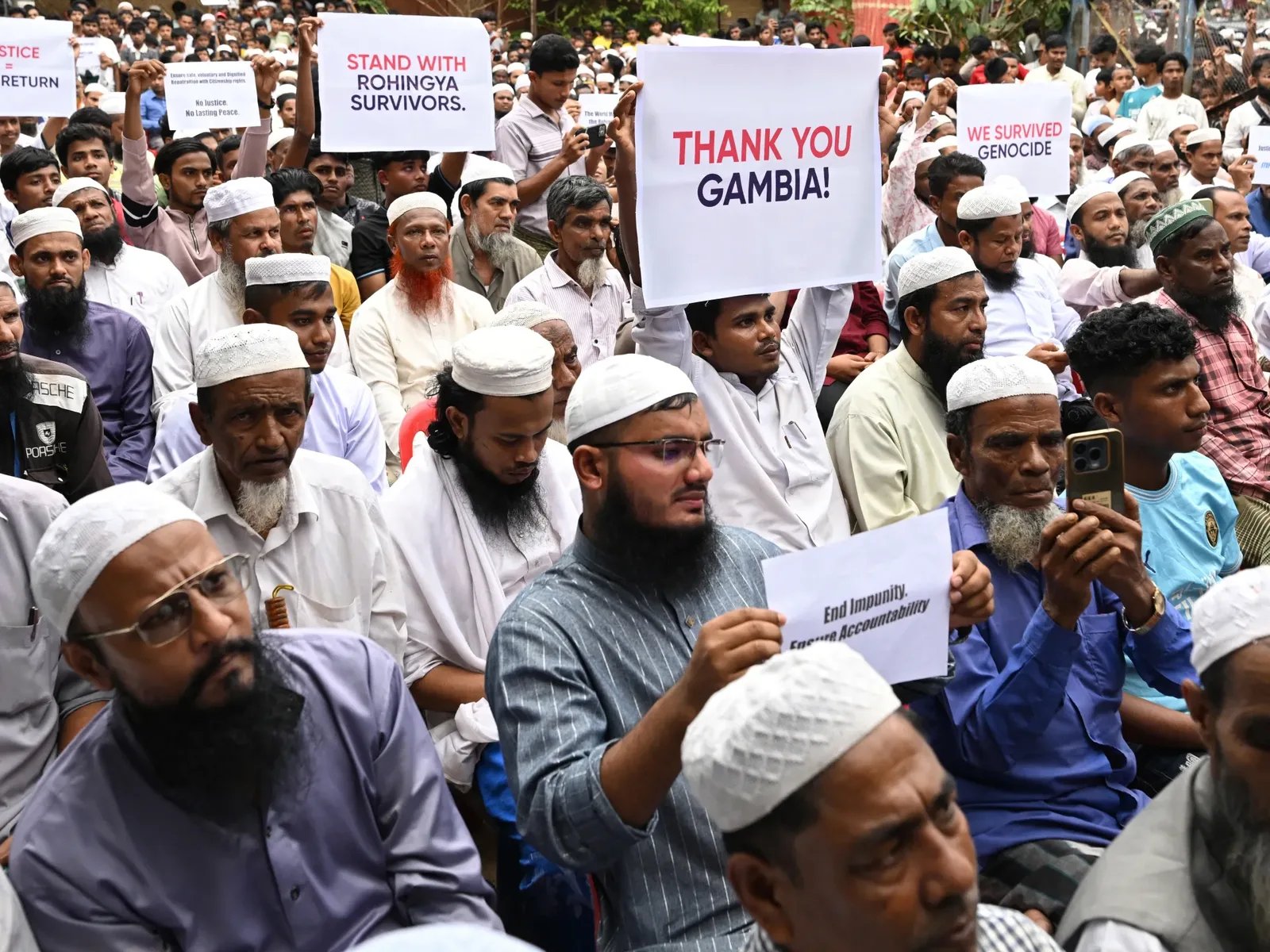
The ICJ ruled Myanmar committed genocide against the Rohingya in 2017.
Refugees express relief but remain concerned about their future and return home.
The ruling may influence negotiations between Bangladesh and Myanmar regarding repatriation.
In a significant development for the Rohingya community, the International Court of Justice (ICJ) has ruled that Myanmar is responsible for committing genocide against the Rohingya during military operations in 2017. This landmark verdict, announced on November 19, 2026, has brought a wave of relief and joy among refugees who have long awaited acknowledgment of their suffering. Umme Ruman, a refugee in Cox's Bazar, expressed her emotions, stating, "I celebrated with tears of joy because, for the first time, the world acknowledged what happened to us."
The ruling was a culmination of a case brought by The Gambia, which recognized the atrocities faced by the Rohingya after years of denial. The court found that over 10,000 individuals were killed during the military's brutal crackdown. This verdict is seen not merely as a legal decision but as a validation of the pain endured by the Rohingya, who have been displaced for nearly a decade. Many refugees gathered in camps to watch the announcement, sharing their reactions with family and friends, reflecting a collective sense of hope.
While the ruling has sparked celebrations, it has also raised questions about the future. Eighteen-year-old Mohammad Rehan shared his thoughts on the potential for the ruling to facilitate the Rohingya's return to their homeland. However, the reality of their living conditions remains dire, with ongoing challenges such as Cyclone Akvan exacerbating their struggles. Despite the joy of the verdict, many refugees, including Nurul Amin, recalled the traumatic events of 2017, highlighting the complex emotions surrounding the ruling.
Experts have noted the ruling's implications for justice and accountability. Nasir Uddin, an anthropology professor, emphasized the importance of the ICJ's decision in establishing global justice, while Michael Kugelman from the Atlantic Council pointed out that the ruling could impact negotiations between Bangladesh and Myanmar regarding the safe return of Rohingya refugees. The international community's response will be crucial in shaping the future for the Rohingya.
Looking ahead, the Rohingya community remains hopeful for a future where they can return home with dignity and rights restored. Activists like Nurul Amin stress the need for the international community to address not only the humanitarian crisis but also the political factors contributing to their displacement. As they celebrate this milestone, the Rohingya's aspirations for justice and a safe return to Myanmar continue to resonate strongly.