Northern India Suffers Severe Smog Post-Diwali, AQI Hits 299
Satellite imagery reveals a thick smog blanket over northern India, with air quality in Delhi classified as 'poor' two days after Diwali.
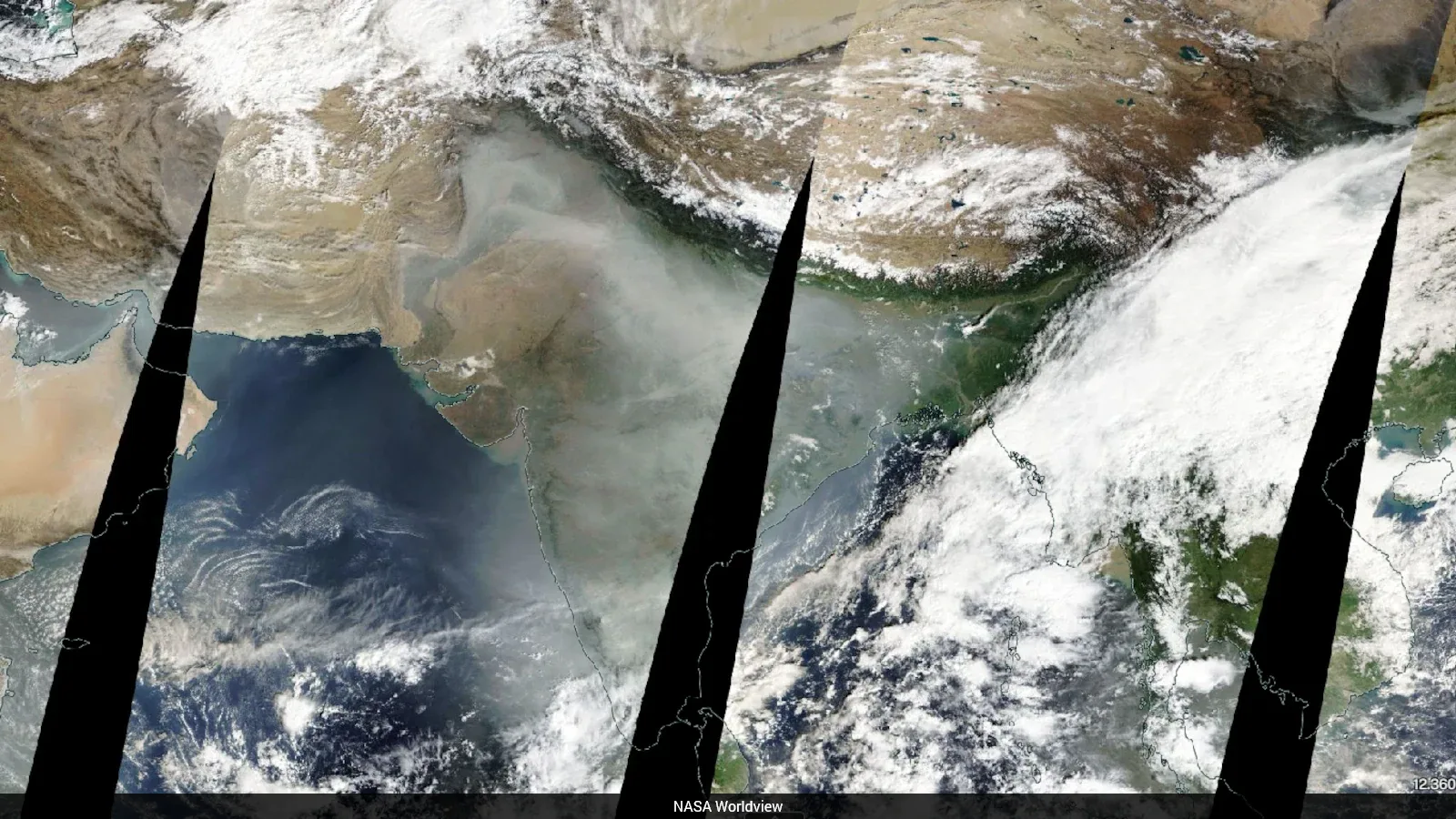
Satellite images show extensive smog over northern India on November 10.
Delhi's air quality improved slightly to an AQI of 299 after reaching 376.
The haze is attributed to post-Diwali firecracker use and seasonal weather patterns.
On November 10, satellite images from NASA revealed a dense layer of smog enveloping much of northern India, particularly affecting the national capital and surrounding states. This annual phenomenon, exacerbated by post-Diwali celebrations, has resulted in air quality levels that are alarming enough to be detected from space.
The smog's intensity is most pronounced in northern regions, including Delhi and Uttar Pradesh, with the haze extending into the Himalayan states of Uttarakhand, Himachal Pradesh, and Jammu and Kashmir. In contrast, areas such as Rajasthan, Gujarat, and the northeastern states appear to be less impacted by the pollution.
The situation has worsened since November 8, the day of Diwali, when heavy firecracker usage led to a significant spike in air pollution. On November 9, the haze was less severe, covering only select areas, but by November 10, it had thickened considerably. The Central Pollution Control Board (CPCB) reported that air quality in Delhi improved slightly to a 'poor' category with an Air Quality Index (AQI) of 299, down from a 'very poor' AQI of 376 recorded on November 9.
The persistent smog has raised concerns about public health and environmental impacts across the region. Experts attribute the ongoing pollution to a combination of festive activities, seasonal weather conditions, and inadequate regulatory measures. The CPCB categorizes air quality levels, with an AQI of 0-50 considered 'good' and 401-500 classified as 'severe'.
Looking ahead, authorities are monitoring air quality closely as wind patterns shift, which may influence pollution levels in the coming days. Continued public awareness and adherence to pollution control measures will be crucial in addressing this recurring environmental challenge.