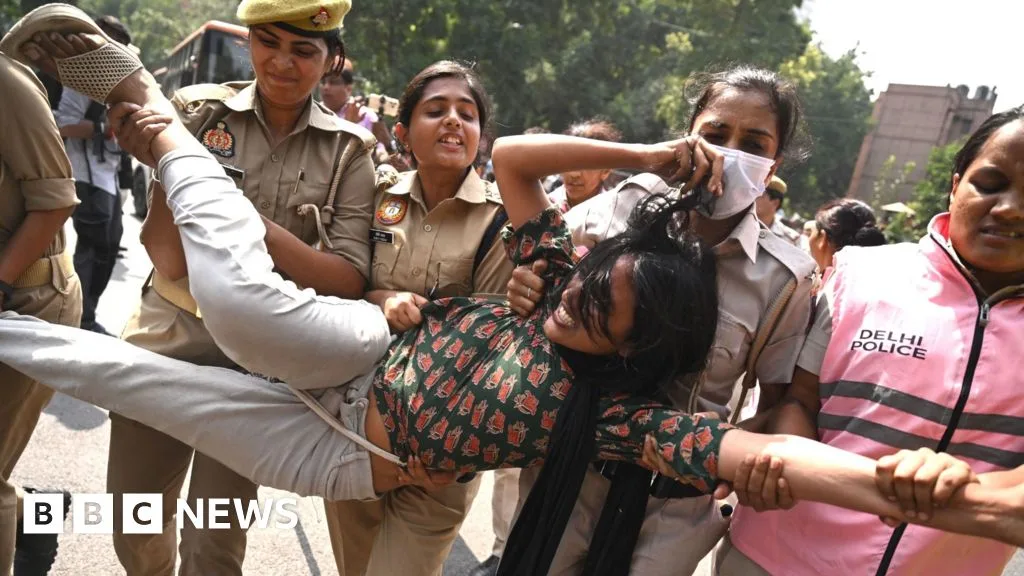
Neha Bora: The Face of Protest and Rage in Delhi
Neha Bora, a prominent activist, has become a symbol of defiance against state oppression, leading protests and facing repeated detentions.

Neha Bora has been detained over 10 times in recent weeks for leading protests against electoral reforms.
Their activism highlights the growing visibility of anger among women and marginalized communities in India.
Bora's approach combines fierce resistance with a call for collective action against systemic injustices.
Neha Bora, president of the All India Students’ Association (AISA), has emerged as a prominent figure in the ongoing protests against electoral reforms in India. Since October 2, they have been at the forefront of demonstrations demanding the resignation of Chief Election Commissioner Gyanesh Kumar. On October 11, during an interview at a detention center on the outskirts of Delhi, Neha expressed that detentions have become a routine part of their activism, stating, "Detentions have become my rest hours these days."
The protests, fueled by anger over the Special Intensive Revision of voter rolls, have seen Neha making impassioned speeches and facing aggressive police responses. Their commitment to the cause is evident, having been detained multiple times, yet they continue to rally support and inspire others. Neha's activism is not just about personal grievances but reflects a broader societal rage against systemic injustices, particularly concerning marginalized communities.
Neha's visibility on social media has amplified their message, with videos showcasing their resilience going viral. The imagery of Neha, often bruised yet defiant, resonates with many who feel similarly oppressed. As Neha articulated, "Anger is perhaps what defines this country right now," highlighting a collective awakening among citizens who refuse to be silenced. This shift in the narrative around anger, particularly among women and queer individuals, marks a significant moment in India's political landscape.
The protests have not only brought physical injuries to participants but have also exposed the harsh realities of state repression. Many activists, including Neha, are aware of the risks involved, yet they choose to confront these challenges head-on. Neha pointed out the importance of standing against injustices, stating, "We live in a society where people are being killed for merely existing."
Looking ahead, Neha and their comrades remain committed to their cause, knowing that the fight for justice is far from over. With the support of AISA and a network of activists, they plan to continue their protests, emphasizing that while physical wounds may heal, the fight against oppression must persist. Neha's journey is a testament to the power of collective anger and the potential for change it holds.