Neha Bora's Emergence Highlights Youth Discontent in Politics
The rise of AISA president Neha Bora signals a shift in political dynamics as youth activism gains momentum.

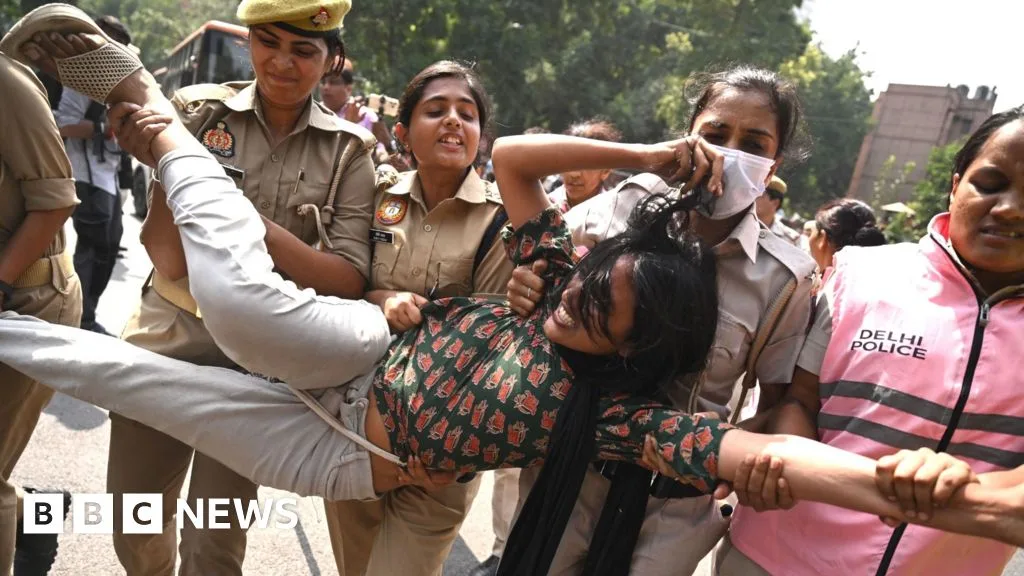
Neha Bora has gained national attention amid youth protests.
The Left's electoral struggles raise questions about its future.
Bora's connection with Congress leaders indicates potential political shifts.
Neha Bora, the president of the All India Students Association (AISA), has recently emerged as a significant figure in national politics, particularly during the ongoing student-youth protests. On October 12, she was notably shielded by Congress leader Rahul Gandhi from a throng of media and demonstrators as the INDIA bloc presented a petition against Chief Election Commissioner Gyanesh Kumar at the Supreme Court. This incident underscores Bora's transition from campus politics to a more prominent political role.
Historically, the Left has faced a decline in its electoral base, even as its student organizations remain active in universities. Bora's rise prompts a critical question: can the current agitation help the Left reclaim its lost political influence? The Left and its student factions had been mobilizing prior to the INDIA bloc's involvement, extending support to various groups including the Cockroach Janta Party. At a recent press conference, Rahul Gandhi encouraged Bora to address the audience, highlighting her growing significance within the political landscape.
Bora's leadership in AISA, which is affiliated with the Communist Party of India (Marxist-Leninist) Liberation, has been pivotal in maintaining a presence in university politics, especially at Jawaharlal Nehru University (JNU). Recent electoral successes for AISA and its allies in student union elections reflect a resilient grassroots connection, despite the Left's broader electoral challenges. Dipankar Bhattacharya, General Secretary of CPI (ML) Liberation, noted that the current agitation represents an opportunity to extend the INDIA bloc beyond mere electoral alliances, aiming for a movement-oriented platform.
The implications of Bora's rise extend beyond immediate electoral gains. Political analyst Chandrachud Singh cautions that while the Congress and Left may find common ground in their activism, the Left's historical challenges in national politics remain. He points out that many leaders have transitioned from Left student politics to Congress, suggesting a potential future for Bora within the party. This pattern of migration from Left organizations to Congress is not new, as several former student activists have integrated into the Congress framework, leveraging their experience in mobilization to connect with younger voters.
Looking ahead, the Left's struggle to regain its footing in Indian politics continues, as evidenced by its declining Lok Sabha seat counts over the years. The CPI (Marxist) and its allies have seen their representation dwindle significantly since 2004. While the CPI (ML) Liberation has maintained a presence in Bihar, its overall performance in recent elections has been disappointing. As the political landscape evolves, the future of the Left and leaders like Neha Bora will depend on their ability to adapt and resonate with the changing aspirations of the electorate.