Neha Bora's Ascent: A New Voice in Student Activism
Neha Bora, a prominent figure in student activism, draws comparisons with past leaders as she rises against the Modi government.

Neha Bora, 29, is the national president of the All India Students’ Association (AISA).
Jignesh Mevani and Kanhaiya Kumar highlight her commitment and natural emergence in activism.
Bora's recent protests have garnered significant media attention and public support.
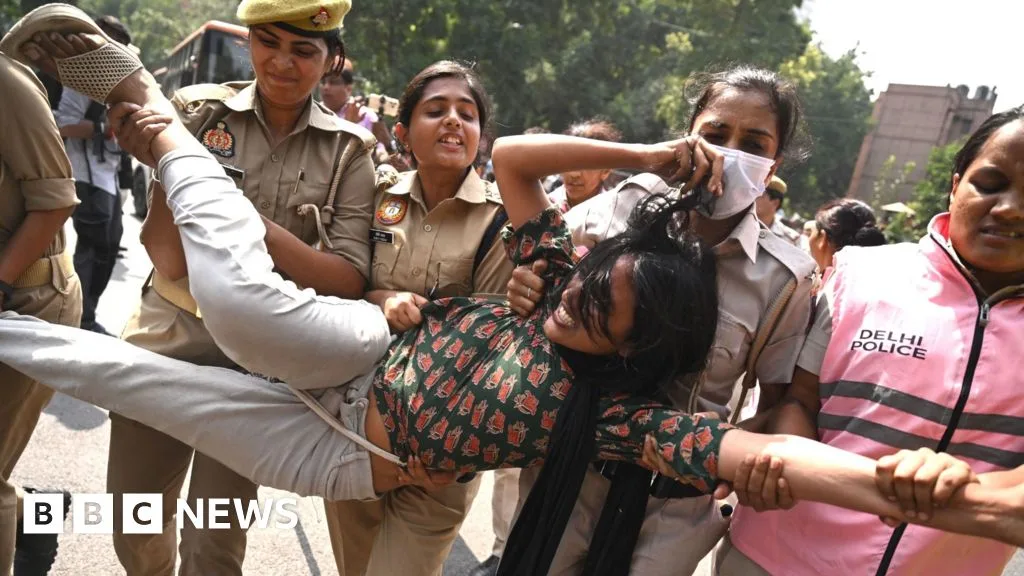
Neha Bora, the 29-year-old national president of the All India Students’ Association (AISA), has emerged as a significant figure in the ongoing student protests against Prime Minister Narendra Modi's government. Her recent activities, including a compelling speech following a 23-day hunger strike at Jantar Mantar, have propelled her into the national spotlight, drawing attention from both supporters and critics alike.
The backdrop of Neha's rise is rooted in a long history of student activism in India, where movements have often served as a breeding ground for future leaders. Jignesh Mevani, a prominent activist and two-time MLA from Gujarat, sees a reflection of his younger self in Neha. He describes her as "fiery, articulate, and ideologically committed," suggesting that her emergence in the current political climate is a natural progression for someone with her passion and dedication.
Neha's recent protests have included a march in Delhi alongside notable figures such as Dipankar Bhattacharya and Rahul Gandhi. Her actions have sparked a mix of admiration and vitriol on social media, illustrating the polarized political landscape in India. As she continues to engage with students across the country, her influence is becoming increasingly evident, with media outlets like the BBC recognizing her as a leading voice of India's Generation Z.
The implications of Neha's activism extend beyond her personal journey; they reflect a broader trend of youth engagement in political discourse. Kanhaiya Kumar, another key figure in student politics, emphasizes that the current movement transcends individual political affiliations, asserting that it is a collective fight for democracy and the Constitution. He believes that Neha's steadfastness will ensure her relevance in the ongoing struggle for social justice.
Looking ahead, Neha Bora's trajectory in activism is likely to continue shaping the political landscape in India. With upcoming protests and movements planned, her role as a leader in the student community will be critical in influencing public opinion and mobilizing support against government policies. As she navigates this challenging environment, her commitment to activism remains unwavering, promising to keep her at the forefront of India's democratic discourse.