Media Organizations Contest Privacy Law in India's Supreme Court
A coalition of 21 media publishers argues that India's new privacy law threatens investigative journalism and press freedom.
The privacy law mandates journalists obtain consent from subjects, viewed as pre-censorship.
Media groups, including those owned by Ambani and Adani, argue this law could endanger sources and investigative work.
The Supreme Court is set to hear the case next month, amid concerns over press freedom.
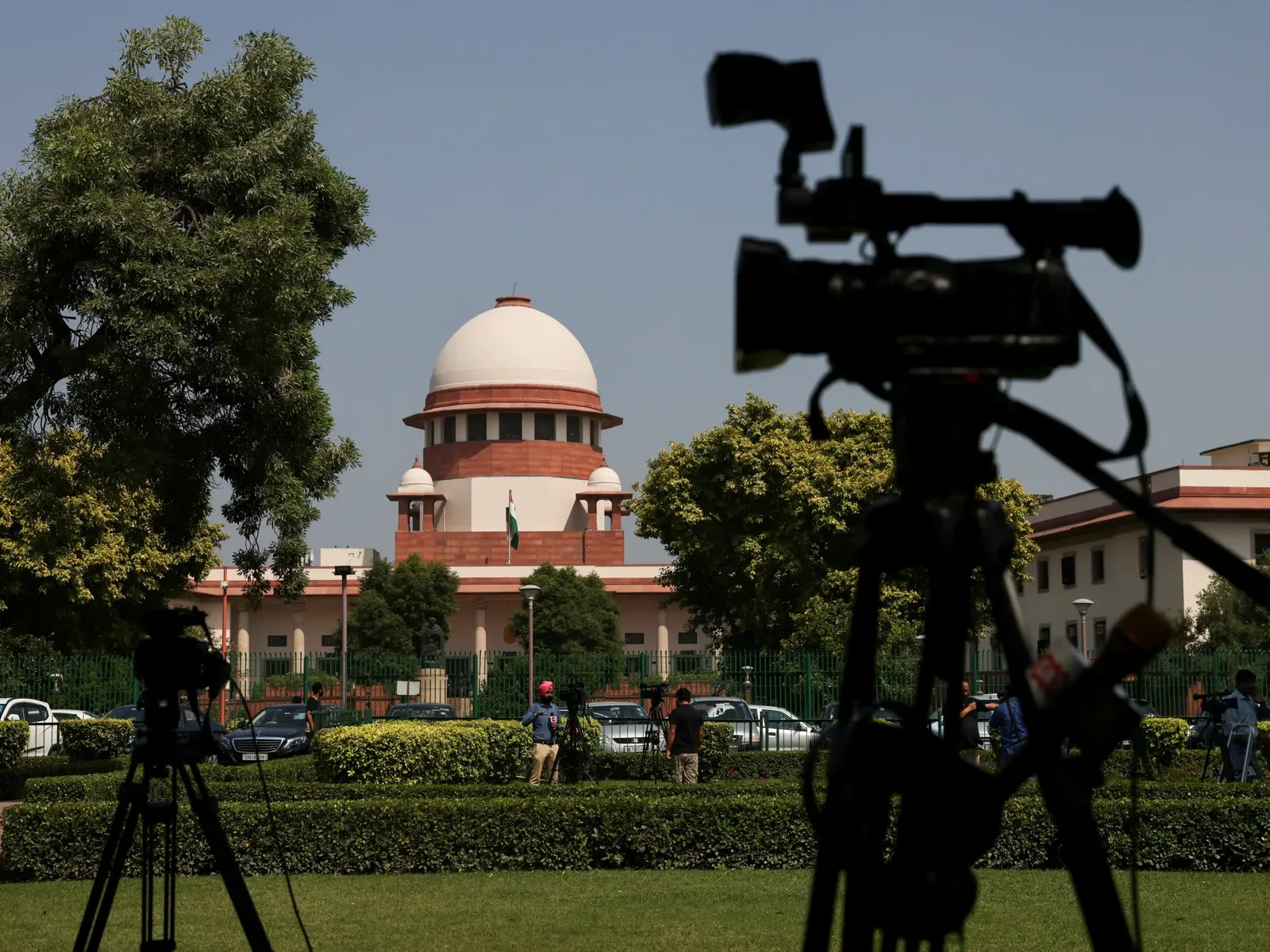
A coalition of 21 media organizations has filed a challenge against India's privacy law in the Supreme Court, asserting that the legislation could severely hinder investigative journalism. The law, which mandates journalists to seek consent from individuals before publishing information, has been criticized as a form of pre-censorship that could lead to the closure of newsrooms. Prominent media companies, including those owned by billionaires Mukesh Ambani and Gautam Adani, are at the forefront of this legal battle, emphasizing the potential risks to journalistic integrity and source protection.
The privacy law was introduced by Prime Minister Narendra Modi's administration and is viewed by media advocates as a significant threat to the freedom of the press. Madhavi Goradia Divan, representing the Digital News Publishers Association (DNPA), expressed concerns that the requirement for journalists to obtain consent would fundamentally alter the nature of news reporting. She warned that such regulations could lead to a complete regime of pre-censorship, effectively stifling independent journalism.
In a recent filing, the DNPA highlighted the dangers posed by the law, particularly the provision allowing individuals to withdraw consent at any time, which could compel news organizations to retract or heavily edit factual reports. This aspect of the law raises alarms about the potential for subjects of investigations to destroy evidence or intimidate witnesses, thereby undermining the integrity of journalistic investigations. The DNPA's members include major media outlets like Network18 and NDTV, which have expressed serious reservations about the implications of the law.
The implications of this legal challenge extend beyond the immediate concerns of the media industry. If the law is upheld, it could set a precedent that allows the government to exert greater control over the flow of information, potentially leading to increased censorship and a chilling effect on whistleblowers. The DNPA has argued that the law's provisions could deter individuals from reporting corruption or misconduct, thereby harming the public interest.
As the Supreme Court prepares to hear the case next month, the outcome could have far-reaching consequences for press freedom in India. Media organizations are advocating for a clear exemption for journalists, similar to those in the European Union and other jurisdictions, to safeguard the essential role of the press in a democratic society. The stakes are high, as the future of investigative journalism hangs in the balance amid growing concerns over government overreach and censorship.