KUNO National Park Welcomes Four New Cheetah Cubs, Population Hits 62
A female cheetah from Botswana, KOMG 3, gives birth to four cubs in the wild, marking a significant milestone in India's cheetah conservation efforts.
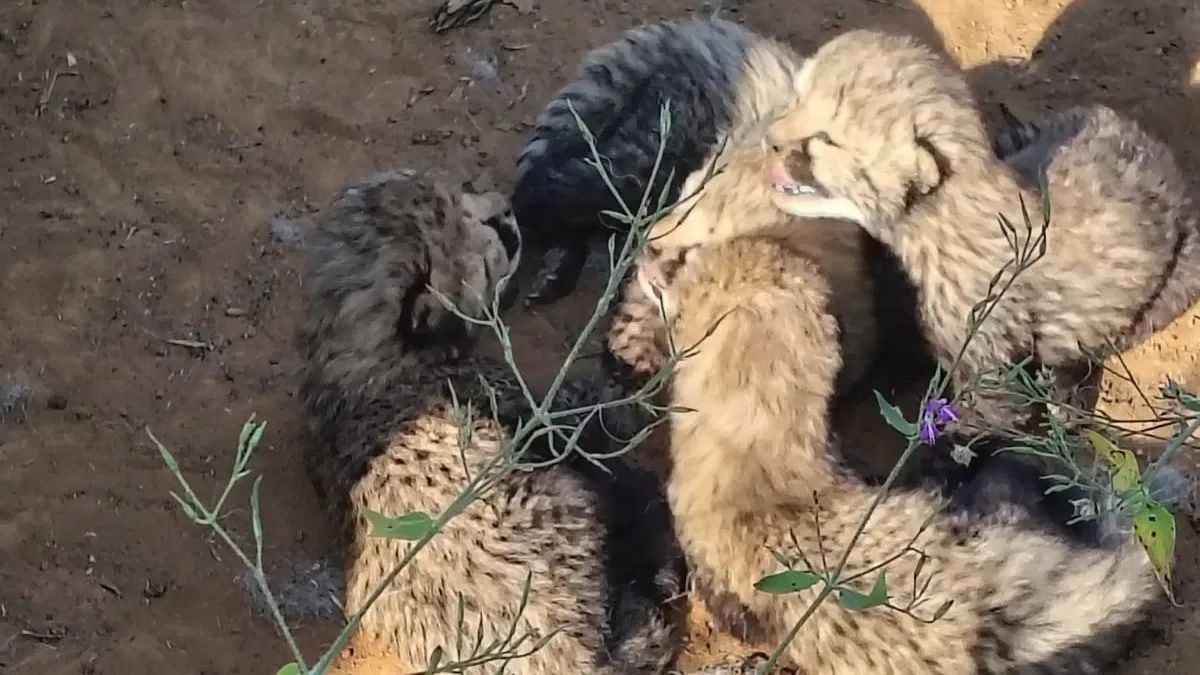
KOMG 3 is the first Botswana-origin female cheetah to give birth in India.
India's cheetah population has now reached 62, with 43 born domestically.
This marks the second wild birth since the launch of Project Cheetah in 2022.
In a remarkable achievement for wildlife conservation, KUNO National Park in Madhya Pradesh has recorded the birth of four healthy cheetah cubs, bringing India's total cheetah population to 62. The mother, KOMG 3, a two-and-a-half-year-old female cheetah from Botswana, is celebrated as the first of her kind to give birth in India. This event was officially announced by Bhupender Yadav, the Union Minister of Environment, Forest and Climate Change, on November 20.
KOMG 3's successful delivery is particularly noteworthy as she spent over four months acclimatizing to her natural habitat before giving birth. This event is only the second documented instance of a cheetah giving birth in the wild since the inception of Project Cheetah in 2022, which aims to reintroduce the species to India after its extinction in 1952.
The previous instance of wild birth occurred on April 11, 2026, when KGP12, a second-generation cheetah born in India, also gave birth to four cubs at the same park. With KOMG 3's cubs, the total number of Indian-born cheetahs has now reached 43, a promising sign for the sustainability of the species in the wild.
Project Cheetah, launched on September 17, 2022, represents India's ambitious effort to revive the cheetah population by relocating these animals from Africa. The project began with the arrival of eight cheetahs from Namibia, followed by 12 from South Africa, and most recently, nine from Botswana in 2026. KUNO National Park serves as the primary habitat for these cheetahs, with plans to expand their range to other suitable environments.
The birth of these cubs not only signifies a step forward for the cheetah population in India but also highlights the ongoing commitment to wildlife conservation. As the program continues to develop, the focus will remain on ensuring that the cheetahs can thrive in their natural habitats, paving the way for a self-sustaining population in the future.