Jamia Millia Islamia Students Demand Union Elections After 20 Years
Protests escalate at Jamia Millia Islamia as students enter the 18th day of a hunger strike, demanding the restoration of their student union.
Ebin Basil, a law student, has been on a hunger strike for 18 days to demand student union elections.
The university has not held student union elections for two decades, leading to widespread protests.
University authorities have proposed a timeline for elections, but students find it unsatisfactory and too slow.
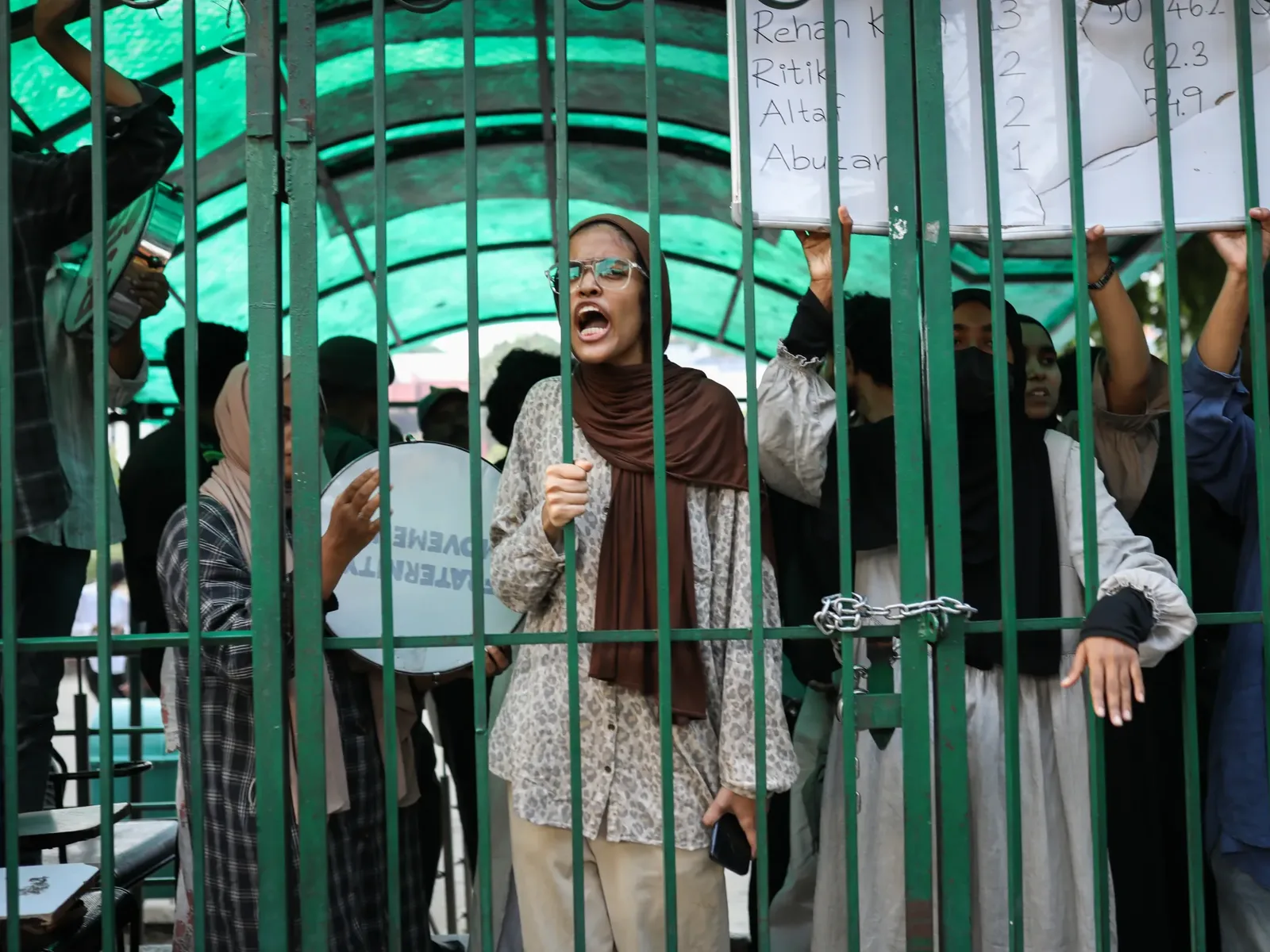
Students at Jamia Millia Islamia in New Delhi are currently engaged in a significant protest, marking the 18th day of a hunger strike led by Ebin Basil, a third-year law student. The protests are aimed at demanding the restoration of the students' union, which has not held elections for the past 20 years. Basil began his hunger strike on October 12, expressing determination to continue until the university administration addresses the students' demands for an elected union.
The backdrop of this protest is a long history of interruptions in student democracy at Jamia Millia Islamia, which was established in 1920. The first student union election took place in 1981, but elections were halted in 1997 due to campus unrest and have not been reinstated since 2006. Despite several attempts to revive the union, including court petitions and previous hunger strikes, students have faced ongoing resistance from the university administration.
As the protests gained momentum, the university administration suspended Basil for a year and imposed restrictions on gatherings, resulting in heightened tensions on campus. On October 24, the university barricaded its entrance and moved classes online, further escalating the situation. In response to the protests, the administration announced plans to hold elections within 15 days of approving a draft constitution, but students have criticized this timeline as vague and insufficient.
The implications of these protests extend beyond the university, reflecting broader issues of student representation and governance in India. Many students believe that an elected union would empower them to voice concerns regarding campus conditions, fees, and administrative policies. The protests at Jamia are part of a larger pattern of student activism across the country, particularly among Muslim institutions, which have historically faced challenges in maintaining democratic processes.
Looking ahead, the university has set a deadline of December 20 for the draft constitution, but no specific timeline for its approval has been established. This uncertainty continues to fuel student dissatisfaction, as they seek a more immediate resolution to their demands. The ongoing protests highlight the urgent need for democratic representation within the university and the broader implications for student rights in India.


