Indian Government Empowers States to Act Against Zakir Naik's IRF
The Centre has authorized states and Union territories to enforce measures under UAPA against Zakir Naik's Islamic Research Foundation, recently declared unlawful.
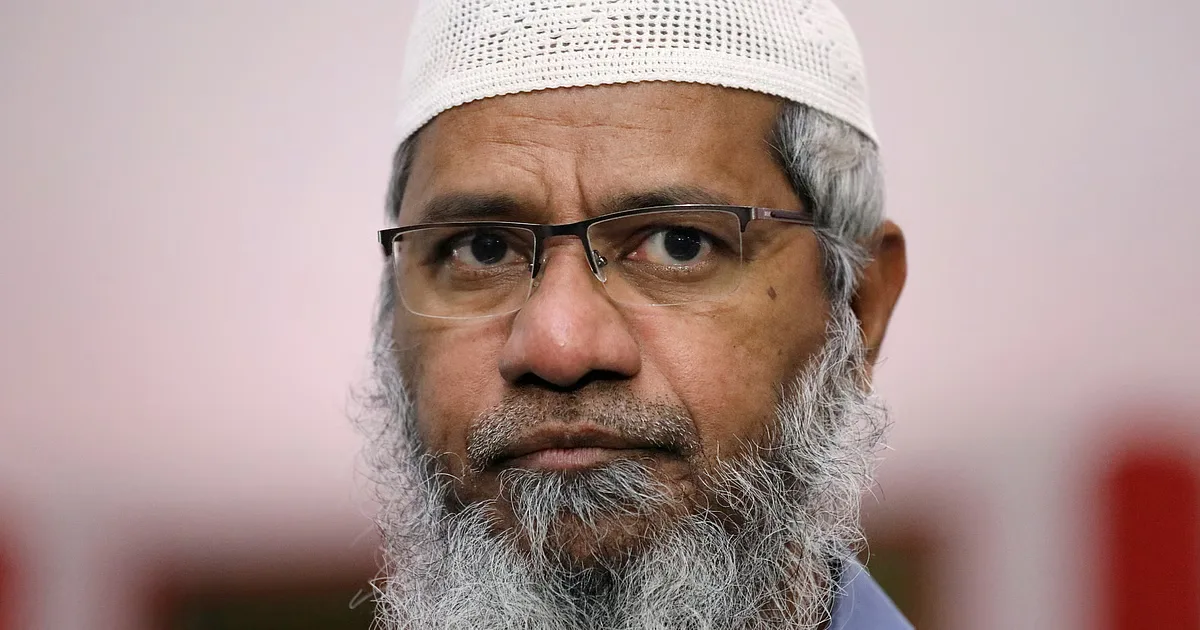
The Islamic Research Foundation (IRF) was declared unlawful on November 13, 2026.
States and Union territories can now regulate funds and premises linked to the IRF under UAPA.
Zakir Naik has been living in Malaysia since 2016, following the ban on his organization.
The Indian government has granted states and Union territories the authority to implement provisions under the Unlawful Activities (Prevention) Act (UAPA) concerning the Islamic Research Foundation (IRF), led by fugitive preacher Zakir Naik. This directive, issued through a gazette notification by the Ministry of Home Affairs, allows local authorities to manage financial assets and premises associated with the IRF, which was classified as an unlawful association earlier this month.
The Ministry's notification, released on Thursday, invokes Section 42 of the UAPA, enabling state governments and Union territory administrators to exercise powers typically reserved for the central government. This follows the extension of the IRF's ban for an additional five years, as confirmed by a notification dated November 13, 2026, which cited sections 3(1) and 3(3) of the Act.
Under the UAPA, Section 7 empowers the government to restrict the use or transfer of funds suspected to be linked to unlawful activities, while Section 8 allows for the identification of premises used for such activities. Consequently, authorities can now control access to these locations and manage movable properties found on-site.
Zakir Naik, who has been residing in Malaysia since the IRF's initial ban in 2016, faces ongoing legal challenges from the Indian government. His organization was declared unlawful due to allegations of inciting religious discord. India has pursued various legal avenues, including a Red Corner Notice from INTERPOL, although initial requests were deemed premature. A renewed request was submitted following a court warrant issued in late 2017.
Looking ahead, the Indian government continues to seek Naik's extradition, having formally requested Malaysia's cooperation in January 2018 after confirming his permanent residency status. The situation remains dynamic as authorities await responses to their extradition requests and further developments in the case against Naik.