India Assembles 190 Nuclear Warheads with Advanced Delivery Systems
A new report reveals India's nuclear capabilities, highlighting its arsenal of 190 warheads and sophisticated missile systems.
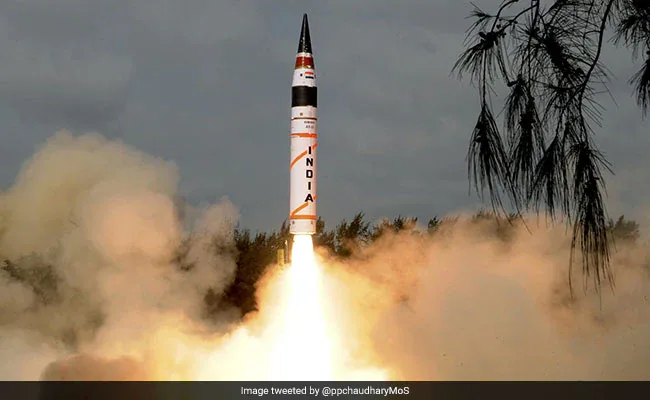
India is estimated to have around 190 nuclear warheads.
The Agni missile family forms the backbone of India's nuclear deterrent.
India maintains a no first use policy while enhancing its second strike capabilities.
A recent assessment by the Bulletin of the Atomic Scientists estimates that India possesses approximately 190 nuclear warheads, supported by a sophisticated array of delivery systems. This includes a mix of aircraft, land-based missiles, and submarine-launched systems, which together create a comprehensive nuclear triad capable of executing retaliatory strikes deep within enemy territory.
Historically, India has pursued a policy of no first use regarding nuclear weapons, emphasizing its commitment to deterrence rather than aggression. The report, authored by experts including Hans M Kristensen and Matt Korda, notes that despite this doctrine, India continues to modernize and expand its nuclear delivery capabilities. This includes the development of advanced missile technology and the enhancement of existing systems to ensure a credible second-strike capability.
The report identifies six operational ballistic missile systems, including the Agni series, which ranges from the short-range Prithvi II to the long-range Agni V, capable of striking targets over 5,000 kilometers away. The Agni V's canister launch design allows for rapid deployment, significantly enhancing India's strategic response time. Additionally, the missile's Multiple Independently Targetable Re-entry Vehicle (MIRV) technology indicates a significant advancement in India's nuclear capabilities, allowing it to target multiple locations simultaneously.
India's nuclear strategy is further bolstered by its sea-based deterrent, with the recent commissioning of the INS Aridhaman, the third indigenous nuclear-powered submarine. This addition enhances India's ability to maintain a stealthy retaliatory force, ensuring that it can respond effectively even after sustaining an attack. The combination of air, land, and sea-based systems underscores India's commitment to a robust nuclear deterrent.
Looking ahead, the report suggests that India will continue to refine its nuclear capabilities while adhering to its no first use policy. As regional tensions persist, the need for a credible deterrent remains paramount. Future developments in missile technology and submarine capabilities will likely play a crucial role in shaping India's strategic posture in the coming years.