Extradition of Sheikh Hasina Possible Through Legal Framework, Says Indian High Commissioner
India's High Commissioner to Bangladesh outlines a structured legal process for the potential extradition of former Prime Minister Sheikh Hasina.
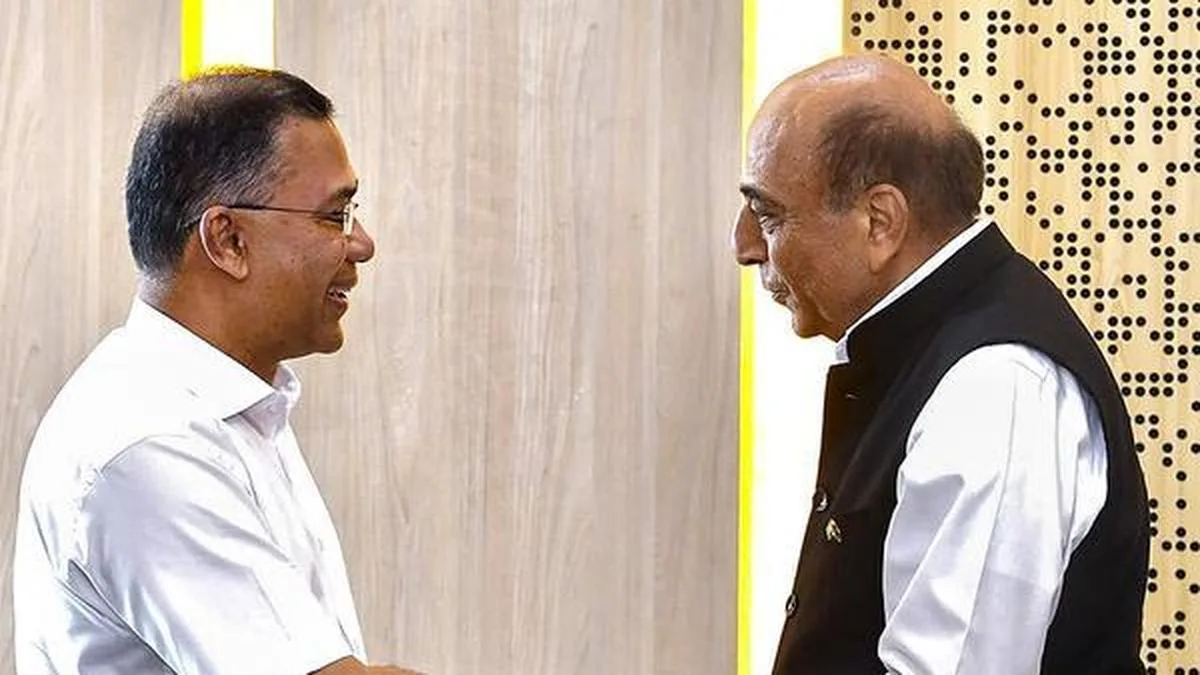
Sheikh Hasina's extradition hinges on a legal process established by India and Bangladesh.
The Bangladeshi government has repeatedly called for Hasina's return to face justice for past violence.
India's High Commissioner emphasized the need for a respectful legal approach amid complex regional dynamics.
India's High Commissioner to Bangladesh, Dinesh Trivedi, stated on October 3, 2026, that the extradition of former Prime Minister Sheikh Hasina could be executed through a 'well-structured process' grounded in legality. This statement came during the Bay of Bengal Conversation, an annual event organized by the Centre for Governance Studies in Dhaka. Trivedi noted that Hasina had sought refuge in India following consultations among Bangladeshi leaders during the tumultuous period of July-August 2024, emphasizing that India had limited options in that scenario.
The backdrop to this situation involves significant unrest in Bangladesh, where the government led by Prime Minister Tarique Rahman has demanded Hasina's extradition to face charges related to a violent crackdown that resulted in approximately 800 civilian deaths, with some reports suggesting the toll could be as high as 1,400. The UN High Commissioner for Human Rights has also highlighted these fatalities, underscoring the gravity of the situation. Trivedi reiterated that a legal framework exists for extradition, but he could not provide a specific timeline for the process.
India and Bangladesh formalized an extradition treaty in 2013, which outlines specific conditions under which extradition may be postponed, particularly concerning politically motivated offenses. Trivedi described the circumstances surrounding Hasina's refuge as tragic, stating that the decision was made out of necessity during a critical moment in Bangladesh's political landscape. He acknowledged that the events leading to her evacuation were sudden and unanticipated, reflecting the chaotic nature of the political climate at that time.
The High Commissioner recalled that on August 5, 2024, Hasina was airlifted from her residence in Bangladesh and subsequently transported to India by the Bangladeshi Air Force. He clarified that the Indian military was not involved in her evacuation, emphasizing the role of the existing Bangladeshi government in facilitating her departure. Trivedi remarked that had India denied landing permission, the situation could have escalated differently.
Looking ahead, Trivedi affirmed that India respects Bangladesh's sovereignty and will not interfere in its internal affairs. He noted that Hasina has expressed intentions to return to Bangladesh by December 2026, which has raised concerns within the current Bangladeshi administration. The ongoing dialogue between India and Bangladesh regarding political dynamics and the future of bilateral relations remains crucial as both nations navigate this complex scenario.