Ex-IMF Director Disputes Pakistan's Claim of Financial Leadership
Krishnamurthy V Subramanian challenges Pakistan's assertion of a 'historic milestone' in global finance leadership.
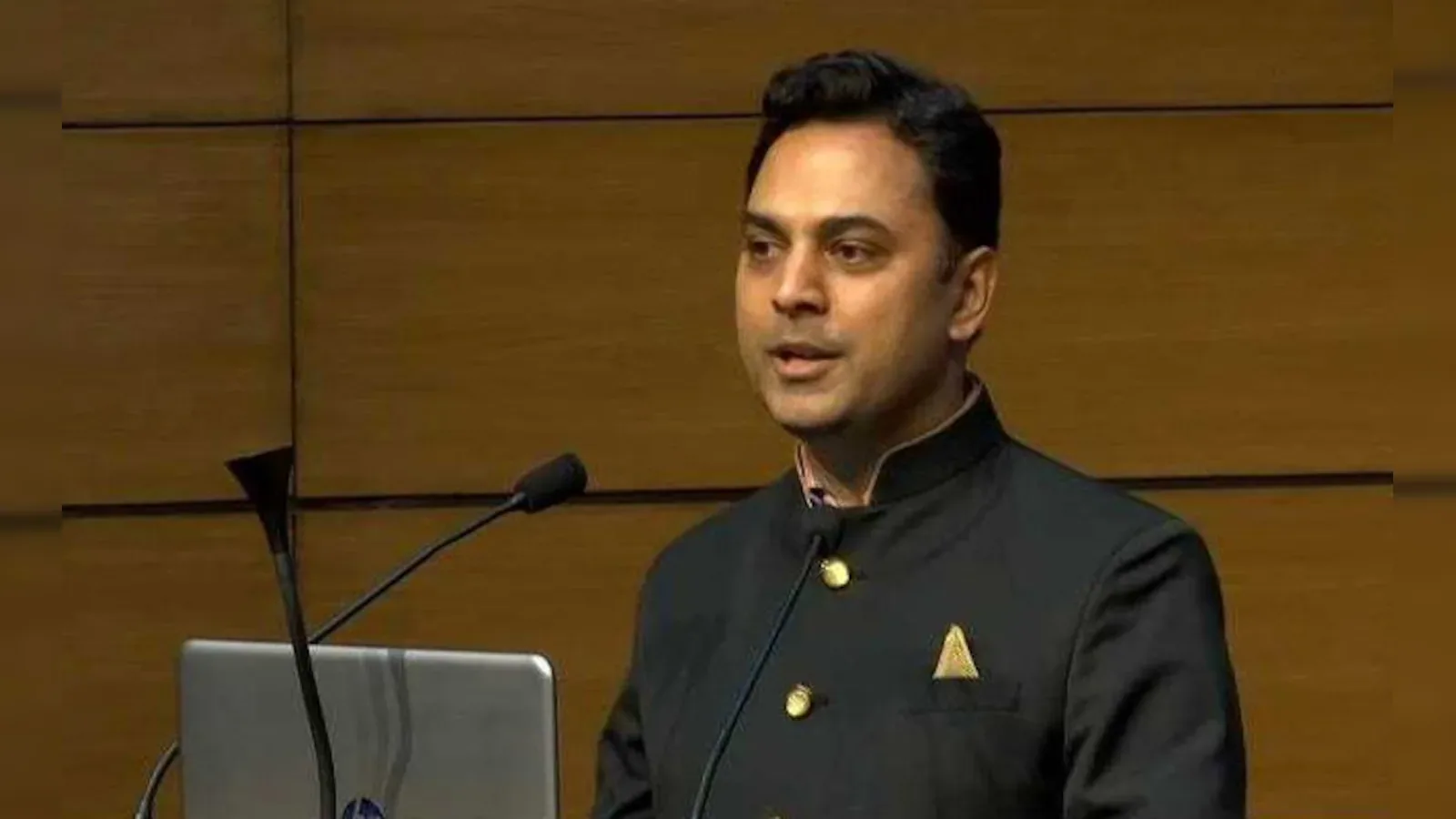
Krishnamurthy V Subramanian clarifies that Pakistan's IMF chairmanship is ceremonial.
Pakistan will chair the IMF and World Bank in 2027, marking its first return to this role since 1953.
Subramanian highlights the difference between Pakistan's role and India's significant global economic leadership.
Krishnamurthy V Subramanian, a former executive director at the International Monetary Fund (IMF), has publicly challenged Pakistan's assertion that its upcoming chairmanship of the IMF and World Bank signifies a return to global financial leadership. He emphasized that the role, set to commence in 2027, is largely ceremonial and does not equate to actual power in the global financial arena.
Subramanian took to social media platform X to clarify the situation, stating that while Pakistan will indeed chair the IMF-World Bank Annual Plenary in 2027, this position rotates annually among member countries. He pointed out that the chairmanship is not a sign of regained influence but rather a procedural formality, with Paraguay holding the position this year and Cabo Verde in 2025.
The announcement of Pakistan's chairmanship has been hailed by its Ministry of Economic Affairs as a 'historic milestone', suggesting it would enable the country to engage more actively in global economic discussions. However, Subramanian refuted this claim, arguing that equating Pakistan's rotating chairmanship with India's leadership roles in G20 and BRICS is misleading. He noted that India's presidencies have substantial implications for global economic cooperation, unlike Pakistan's upcoming role, which is limited to presiding over an annual meeting.
Pakistan's economic situation remains precarious, as the country is currently reliant on a USD 7 billion Extended Fund Facility from the IMF to stabilize its economy and implement necessary reforms. Additionally, it is engaged in a USD 1.4 billion Resilience and Sustainability Facility aimed at addressing climate-related challenges. The IMF is also expected to approve an additional USD 1.2 billion for Pakistan, contingent upon successful negotiations between IMF staff and Pakistani officials regarding ongoing loan programs.
Looking ahead, the implications of Pakistan's IMF chairmanship will unfold as the country navigates its economic challenges and attempts to leverage this role for greater influence in international financial discussions. The upcoming years will be crucial for Pakistan as it seeks to stabilize its economy while preparing for its ceremonial leadership at the IMF and World Bank in 2027.