El Nino's Intensifying Effects on Global Climate Expected in 2027
As El Nino strengthens, scientists warn of significant climate impacts in 2027, including extreme weather and altered rainfall patterns.
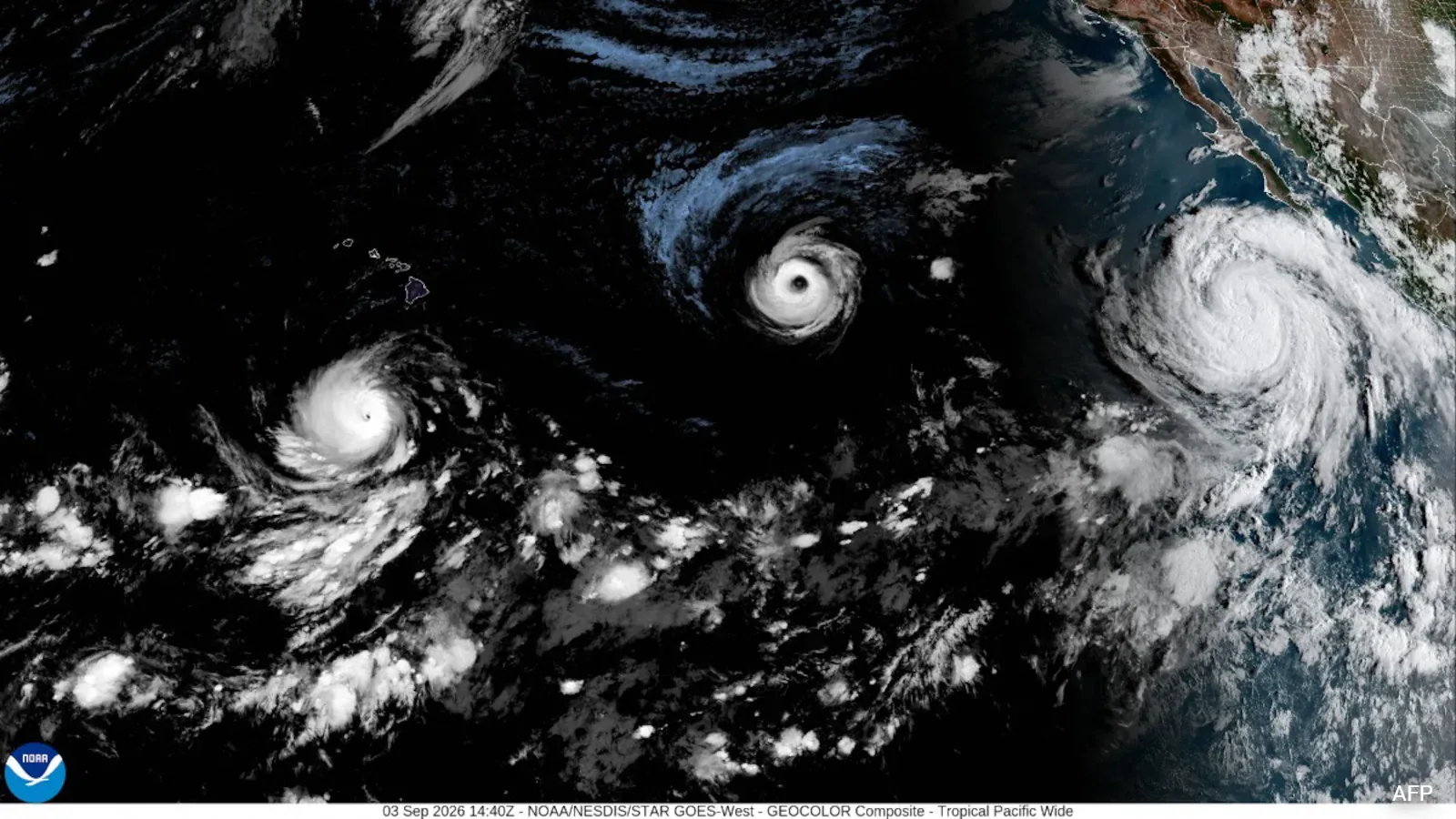
El Nino is predicted to peak in December 2026, affecting global weather patterns.
Warming oceans are exacerbating climate change, leading to extreme weather events.
India may face below-average rainfall due to changing oceanic conditions.
As 2026 approaches its end, scientists are closely monitoring the strengthening El Nino phenomenon in the Pacific Ocean, which is expected to peak around December. This climatic event, characterized by unusually warm sea-surface temperatures, is anticipated to have significant implications for global weather patterns, including temperature fluctuations and altered rainfall distributions that could extend into 2027.
El Nino is part of the El Nino-Southern Oscillation (ENSO) cycle, which influences weather patterns worldwide. During this phase, the trade winds weaken, allowing warm water to spread eastward across the Pacific. This shift can impact atmospheric circulation, leading to changes in rainfall and temperature patterns not only in the Pacific region but also across Asia, Africa, and the Americas. The World Meteorological Organization (WMO) has highlighted the potential for these changes to disrupt economies and ecosystems globally.
The WMO's recent updates indicate that sea-surface temperatures in the central and eastern tropical Pacific are expected to reach record highs by the end of 2026. This warming trend is compounded by greenhouse gas emissions from human activities, which trap heat in the atmosphere and lead to rising ocean temperatures. The interaction between these warming oceans and atmospheric conditions is likely to result in intensified weather events, including extreme rainfall and droughts in various regions.
In addition, advancements in technology are allowing scientists to observe ocean currents with greater precision. A recent study introduced a new method for mapping these currents using satellite imagery and artificial intelligence, enhancing our understanding of how ocean dynamics influence climate patterns. These smaller currents play a crucial role in redistributing heat and nutrients, which can affect marine ecosystems and the global climate system.
Looking ahead, the implications of El Nino and warming oceans for India are particularly concerning. The Indian Meteorological Department has projected that the southwest monsoon season may experience below-average rainfall due to these climatic shifts. As El Nino continues to influence weather patterns into 2027, uncertainties remain regarding the extent of its impact, but the potential for significant disruptions to agriculture and water availability is evident. Continuous monitoring and research will be essential to navigate the challenges posed by these changing climate conditions.