Delhi's Air Quality Deteriorates to 'Very Poor' Amidst Crop Burning
Recent analysis reveals a significant spike in Delhi's air pollution due to farm fires in Punjab and Haryana, coinciding with a NASA satellite's observations.
Delhi's air quality index surged from 117 to 324, marking the first 'very poor' reading of the season.
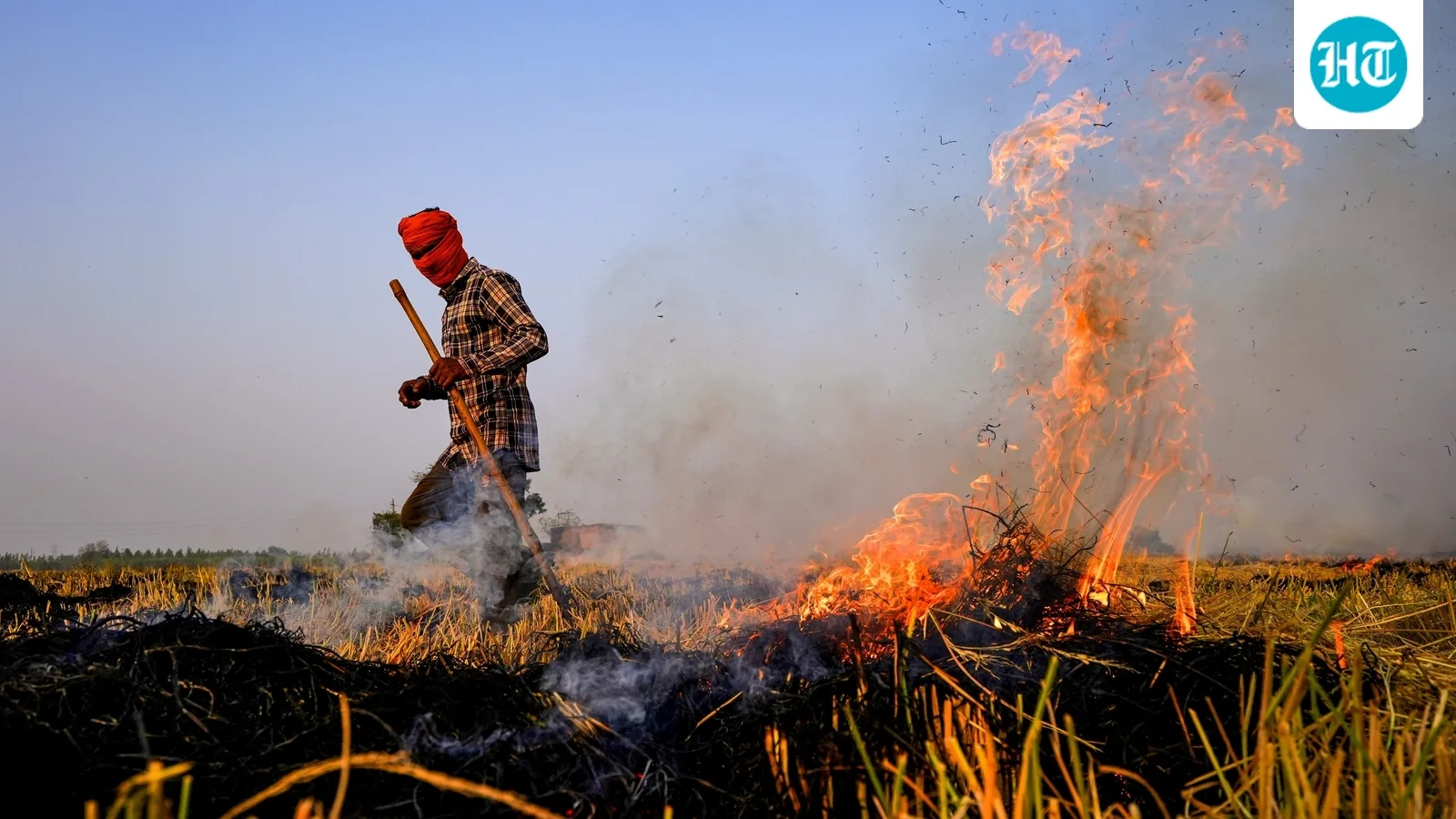
The increase in pollution is linked to evening crop burning, particularly after NASA's satellite passed over the region.
PM2.5 levels averaged 194 micrograms per cubic meter on November 1, significantly exceeding India's daily limit.
Delhi's air quality has sharply declined, reaching a 'very poor' status on November 1, 2026, primarily due to increased stubble burning in neighboring Punjab and Haryana. An analysis of air quality data revealed that the air quality index (AQI) jumped from 117 on Saturday to 261 on Sunday, and further escalated to 324 by Monday afternoon, marking the first instance of such poor air quality this season.
The deterioration in air quality is attributed to a surge in crop burning activities that coincided with a NASA satellite's passage over the region. Most of these fires were ignited in the evening, following the satellite's observation, highlighting a trend where farmers are timing their burning to avoid detection. This practice has raised concerns among environmentalists and public health officials alike.
On November 1, the average PM2.5 levels reached 194 micrograms per cubic meter, which is more than three times the permissible limit set by Indian authorities. This spike was particularly alarming given that similar weather conditions on October 18 and 28 did not result in such high pollution levels. The analysis indicates that while weather conditions were comparable, the significant difference in air quality was primarily due to the timing of the crop burning.
The implications of this pollution crisis extend beyond immediate health concerns for Delhi residents. The rise in PM2.5 levels poses serious risks, particularly for vulnerable populations, including children and the elderly. Moreover, the persistent air quality issues highlight the ongoing challenges of managing agricultural practices and environmental sustainability in the region, raising questions about policy effectiveness and enforcement.
Looking ahead, authorities are likely to implement stricter measures to curb pollution, including potential restrictions on stubble burning and enhanced monitoring of air quality. As the winter months approach, the situation may worsen, necessitating urgent action from both state and central governments to address the underlying causes of air pollution in Delhi and its surrounding areas.