Air Chief Marshal Dixit Addresses Cyber Espionage Threats in India's Military
During the ANI National Security Summit, Air Chief Marshal Ashutosh Dixit highlighted the evolving nature of espionage targeting India's defense sector.
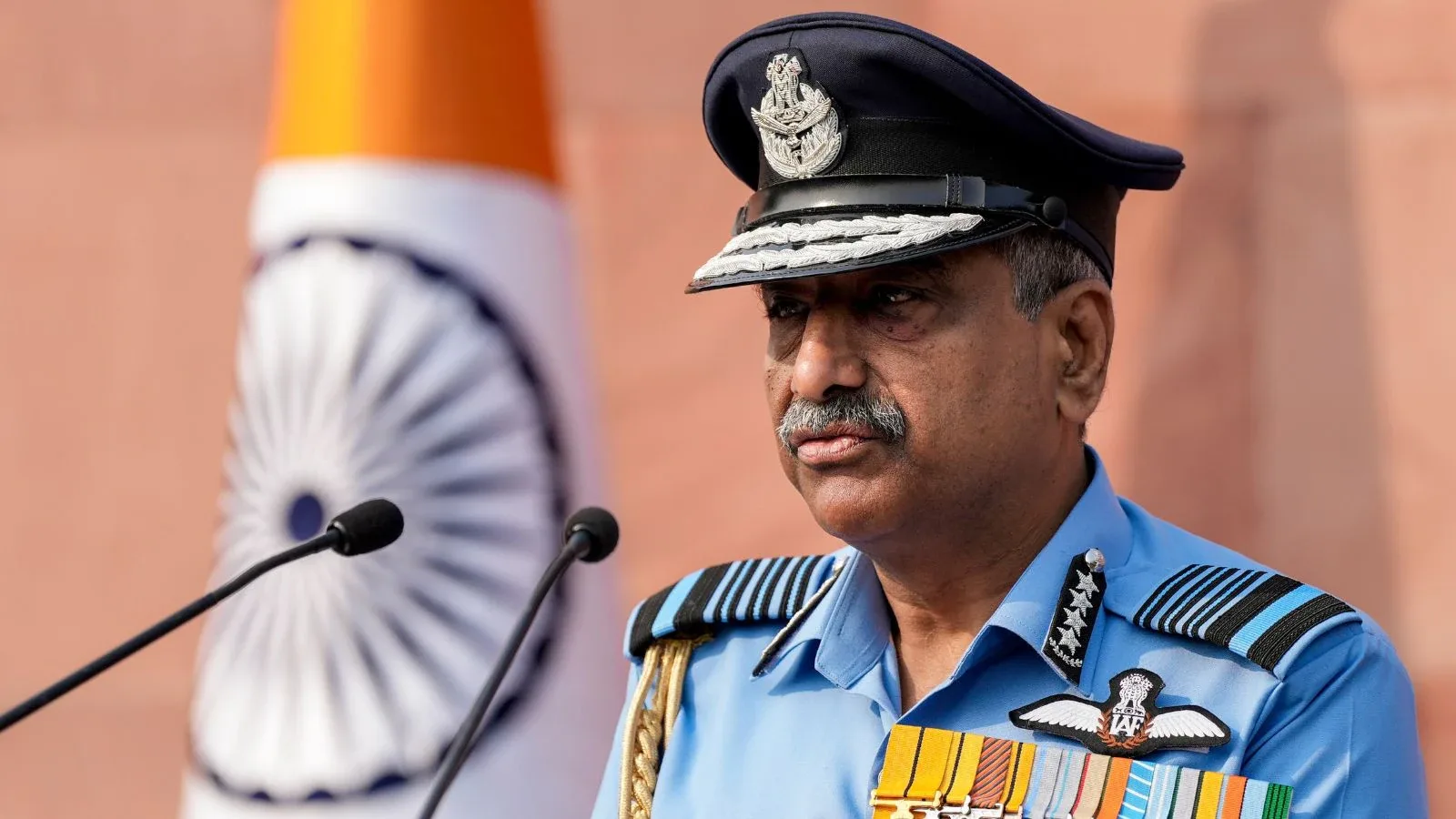
India's military is enhancing safeguards against cyber espionage and other scams.
Air Chief Marshal Dixit emphasized that honey traps are just one aspect of a broader intelligence challenge.
Recent arrests in the defense sector underscore the risks posed by foreign intelligence operatives.
At the ANI National Security Summit 3.0 held in Delhi, Air Chief Marshal Ashutosh Dixit outlined the measures being taken by India's military to combat foreign espionage. He noted that the threat landscape has evolved, with cyber warfare and various scams becoming more prevalent than traditional honey traps. Dixit emphasized that romantic entrapment on social media is a minor part of a larger intelligence challenge that targets personnel in both public and private defense sectors.
Dixit explained that espionage today is predominantly conducted through cyber means rather than physical infiltration. He stated, "It is not a honey trap thing. It is basically cyber espionage." The Air Chief highlighted that foreign intelligence operatives are increasingly focusing on human operators instead of hardware, as the core military communication networks are air-gapped and isolated from the public internet.
To mitigate these risks, the Indian Air Force has implemented both technical and institutional solutions. Dixit mentioned that there is a systemic effort to monitor and control potential insider threats. He pointed out that awareness and training in using secure software are crucial for both public sector entities, like DRDO labs, and private defense contractors. An agency has been established to provide guidance to the private sector on network security practices.
The urgency of these measures is underscored by recent high-profile arrests linked to espionage activities. Investigations revealed that operatives associated with Pakistan's Inter-Services Intelligence (ISI) have employed fake social media profiles and financial incentives to extract sensitive military information. Notably, a defense officer was arrested for allegedly leaking operational details after being befriended online by a woman suspected of working for a Pakistani handler.
Looking ahead, the Indian military is committed to strengthening its defenses against evolving espionage tactics. Continuous training and awareness programs will be vital in ensuring the safety and security of sensitive information. As the threat landscape continues to change, the military's proactive approach will be essential in safeguarding national security.