NASA's Bold 2028 Mars Mission: A Nuclear Leap
NASA plans to send a nuclear-powered spacecraft to Mars in 2028, testing innovative propulsion technology and deploying helicopters for exploration.
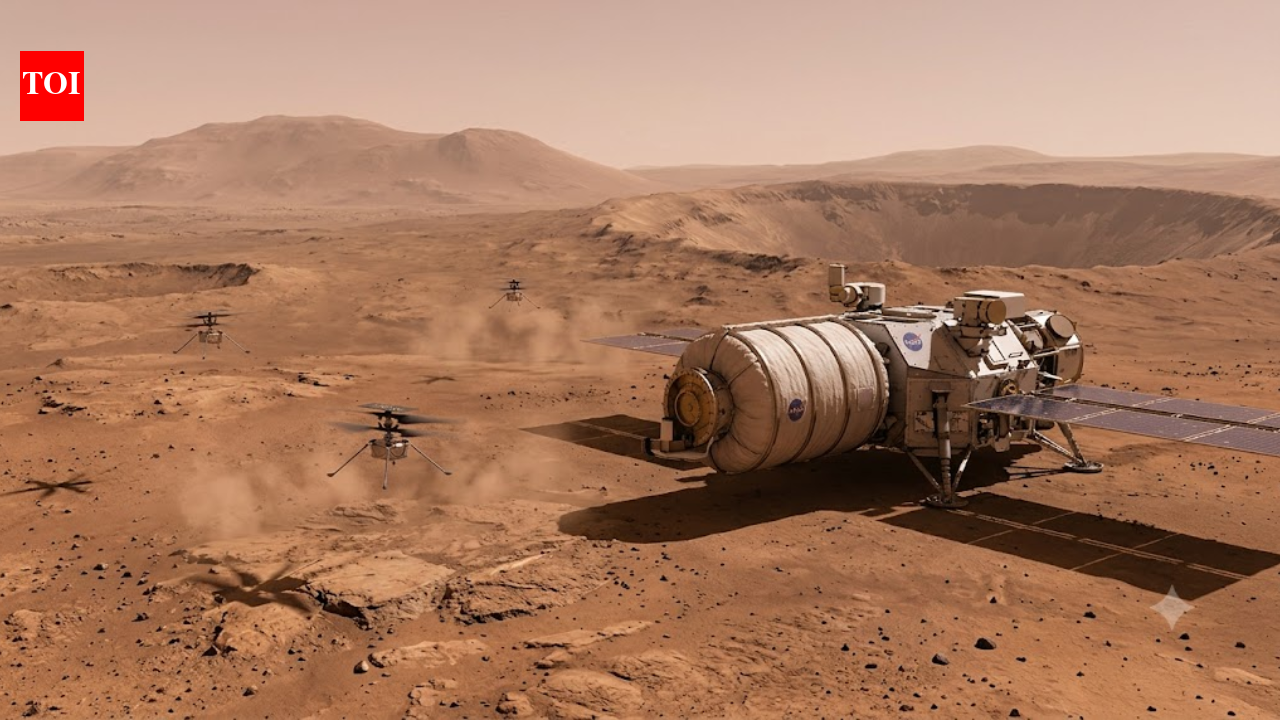
NASA's Freedom mission will test nuclear propulsion in deep space.
Three Ingenuity-style helicopters will survey Mars' environment.
The mission aims to establish experience for future lunar and Martian explorations.
In late 2028, NASA is set to launch an unprecedented mission to Mars with the spacecraft Freedom, equipped with a nuclear reactor for deep-space propulsion. This innovative technology aims to generate electricity for the spacecraft, enabling it to travel beyond the reach of conventional solar power. Instead of landing on Mars, Freedom will perform a flyby and deploy its SkyFall payload, which includes three helicopters designed to explore the Martian atmosphere and search for subsurface ice.
The mission represents a significant step in NASA's exploration strategy, as it seeks to gain practical experience with nuclear-powered spacecraft. The helicopters will not only capture aerial images but also measure weather conditions and utilize ground-penetrating radar to investigate potential ice deposits. This initiative is part of a broader vision for future missions to the Moon and beyond, where nuclear propulsion could play a vital role in supporting longer journeys and heavier scientific payloads.