Innovative $95 Million AI BioDesign Lab Set to Transform Biology
A new AI-driven biology lab in Seattle aims to revolutionize biological design through a unique experimental cycle.
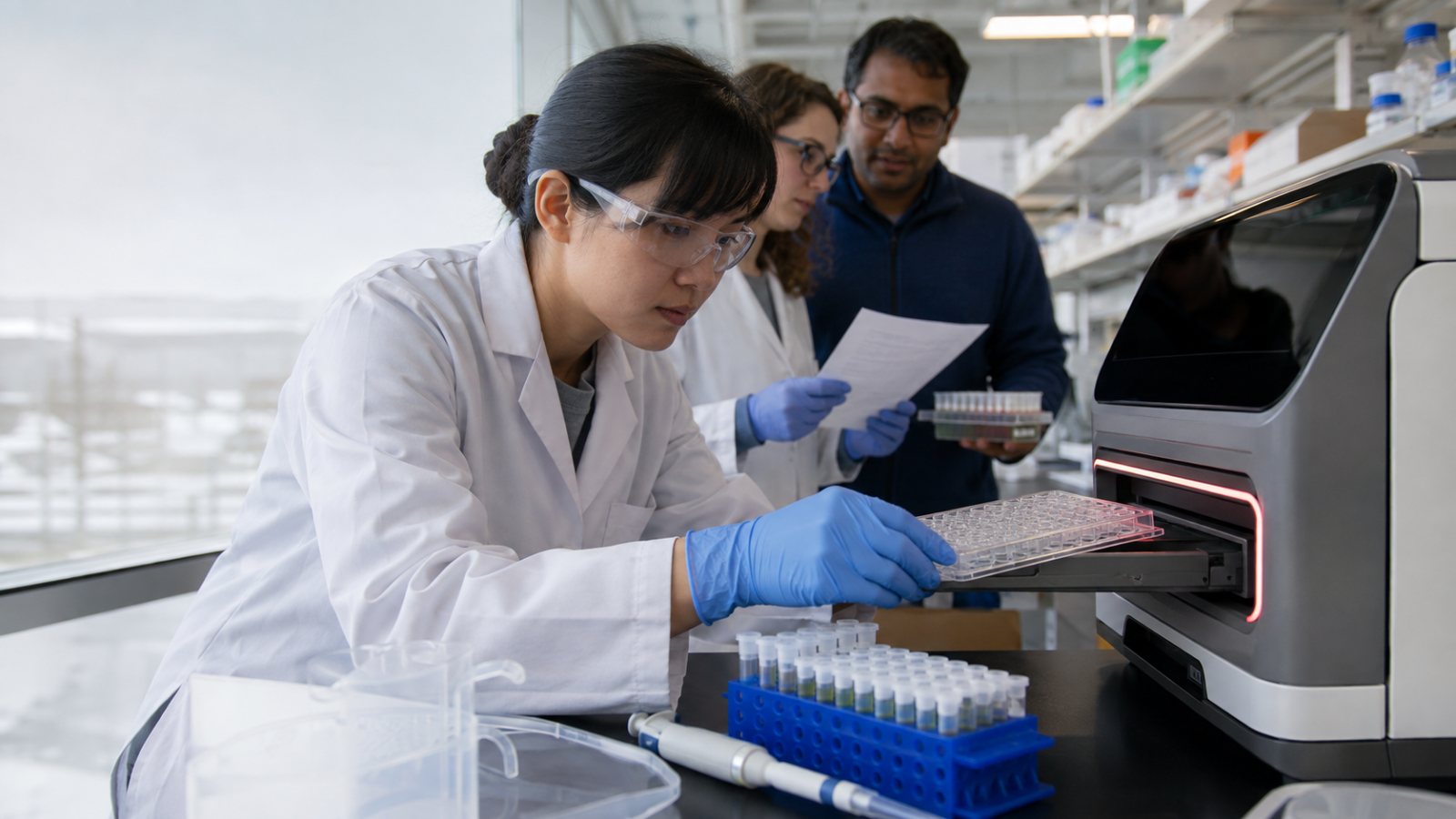
The AI BioDesign initiative is a collaboration among major institutions, backed by nearly $95 million in funding.
The lab will utilize a design-build-measure-learn loop to test biological models in real-world settings.
Long-term applications could include advancements in medicine and environmental solutions, though immediate clinical products are not anticipated.
A groundbreaking initiative, AI BioDesign, has been launched with a substantial investment of $95 million to explore innovative biological designs through artificial intelligence. This project, set to commence on September 3, 2026, is a collaboration between the Allen Institute, the University of Washington, and Fred Hutch Cancer Center, all located in Seattle. The lab's unique approach involves a continuous cycle where AI-generated biological designs are constructed and tested, with results feeding back into the model for refinement.
The AI BioDesign project is structured around a design-build-measure-learn methodology, allowing researchers to create biological sequences based on AI proposals. These sequences will undergo rigorous laboratory testing to assess their functionality, with the data collected being crucial for the next iteration of designs. This method ensures that the project does not merely rely on theoretical simulations but incorporates practical experimentation to validate and enhance the models.
Funding for this ambitious project comes from the Fund for Science and Technology, which has allocated nearly $94.6 million over the planned research duration. The distribution of funds includes $46.1 million for the Allen Institute, $43.8 million for the University of Washington, and $4.7 million for Fred Hutch. The collaboration leverages the strengths of each institution, combining expertise in open-science programs, protein design, and cellular systems to create a comprehensive research platform.
The implications of the AI BioDesign lab extend beyond immediate biological research. The project aims to produce reusable scientific resources, including datasets, assays, and benchmarks, which can be utilized by other research teams. This open-access approach fosters collaboration and innovation within the scientific community, potentially leading to breakthroughs in medicine and environmental science, such as developing new cancer treatments or biodegradable materials.
Looking ahead, the AI BioDesign initiative will focus on establishing a robust experimental framework that allows for continuous improvement of biological models. While there are no immediate plans for clinical applications, the project aims to generate valuable insights and tools that could eventually lead to significant advancements in healthcare and sustainability. The success of this endeavor will depend on the ability to effectively integrate computational models with experimental biology, paving the way for future discoveries.