Giant Iceberg Breaks Away from Greenland: What You Need to Know
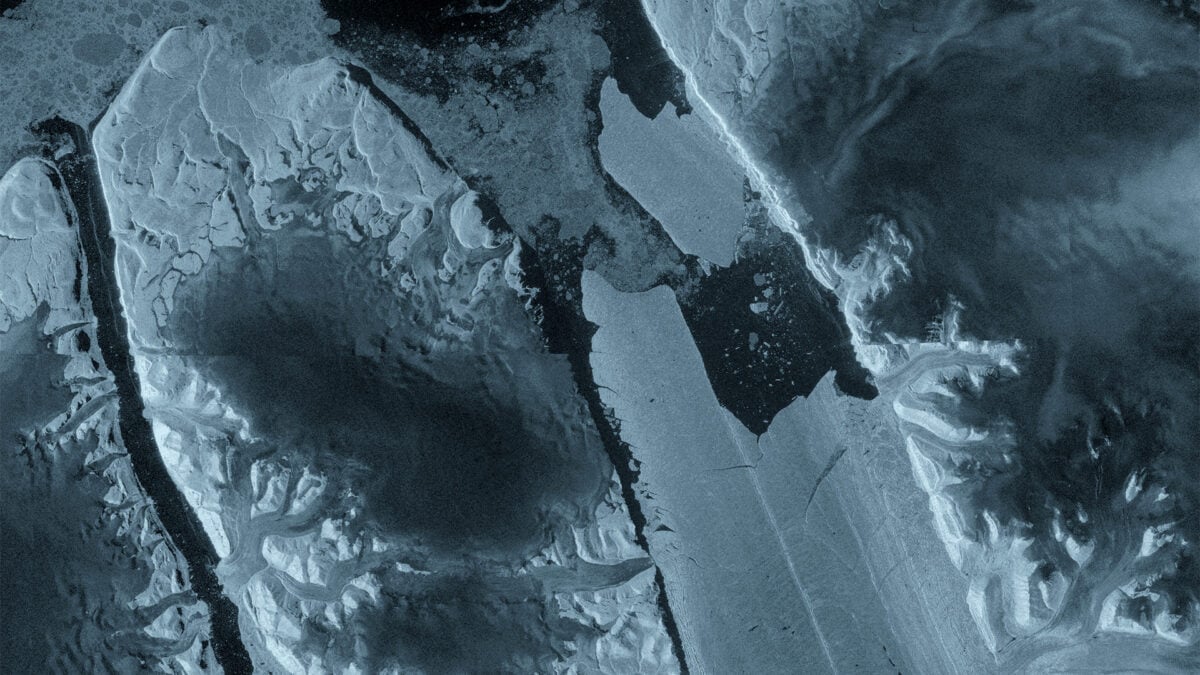
A significant geological event has unfolded in Greenland, where a massive iceberg, roughly the size of Manhattan, has detached from the Petermann Glacier. This dramatic occurrence, captured by satellites on August 4, highlights the ongoing changes in the Arctic region's ice dynamics. The European Space Agency's Copernicus Sentinel-1 mission provided critical imagery that not only documented the calving event but also revealed fractures in the glacier's ice tongue that had developed over several months.
Why This Matters: The 29-square-mile section that broke away marks the largest loss of floating ice from Petermann Glacier in over a decade. This event is not just a random occurrence; it is a stark reminder of the accelerating changes in Greenland's glaciers, driven by climate change. Scientists have been monitoring the glacier's condition since 2019, noting significant deformations and fractures that foreshadowed this calving event.
The Petermann Glacier, known for its frequent iceberg shedding, has already seen several significant break-offs in recent years. Notably, a 97-square-mile iceberg was released in 2010, followed by another in 2012. Experts predict that more calving events are imminent, with future ice islands expected to measure around 36.3 and 32.4 square miles.
Researchers are committed to tracking the Petermann Glacier and the newly formed iceberg using advanced satellite technology and aerial observations. This ongoing monitoring is crucial for understanding the broader implications of ice loss in the polar regions and its impact on global sea levels. As Martin Wearing from ESA emphasizes, these satellite missions are vital for providing the long-term data necessary to comprehend the processes behind iceberg calving and their effects on our planet.