Future Supercontinent Could Spell Doom for Humanity
A new study predicts that the formation of a supercontinent may lead to extreme climate conditions that threaten human survival in 200 million years.
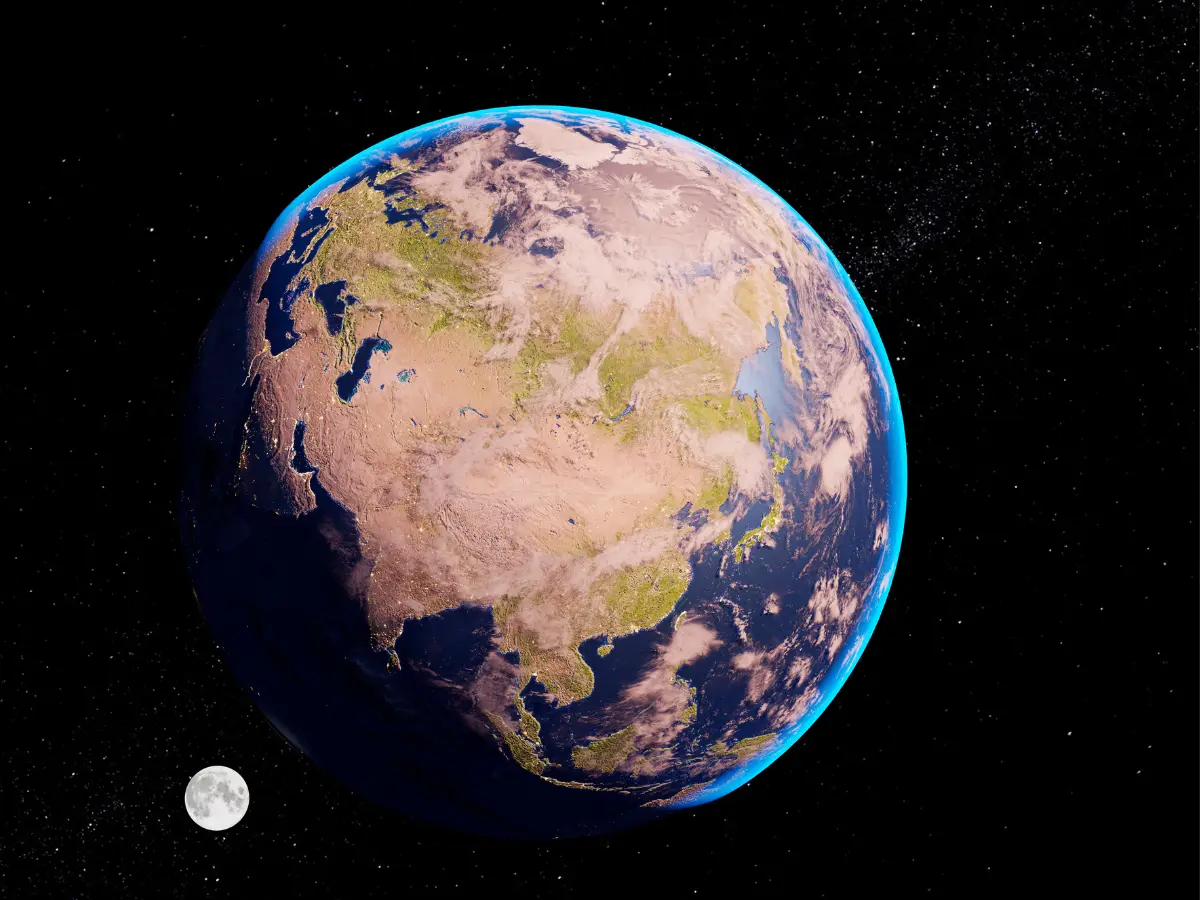
Earth's continents are expected to merge into a supercontinent in approximately 200 million years.
The Pangea Ultima scenario poses the greatest risk, with extreme heat making most of the land uninhabitable.
High levels of carbon dioxide and volcanic activity could lead to mass extinction events.
Scientists have long theorized that Earth's continents will eventually converge to form a new supercontinent, a process that could take around 200 million years. This concept harks back to the time of Pangea, which began to break apart approximately 200 million years ago. Recent research published in the Geological Magazine outlines several potential scenarios for this geological transformation, each with significant implications for life on Earth.
Among the proposed scenarios, Pangea Ultima stands out as the most catastrophic for mammals, including humans. In this scenario, the Atlantic Ocean would completely close, leading to a collision of the Americas with Asia. This would create a massive landmass encircling the equator, characterized by extreme heat and aridity. The interior regions would be far removed from oceanic breezes, resulting in temperatures soaring between 40°C and 70°C, rendering 90% of the land inhospitable for mammalian life.
The research highlights four distinct scenarios: Novopangaea, Aurica, Amasia, and Pangea Ultima. Novopangaea envisions the Pacific Ocean closing while the Atlantic expands, leading to a northern-centric landmass. Aurica predicts the closure of both oceans, forming a ring of land around the equator. Amasia suggests that all continents, except Antarctica, will shift towards the North Pole, resulting in a vast ocean in the Southern Hemisphere. Each scenario presents unique challenges, but Pangea Ultima is particularly alarming due to its potential to trigger mass extinction.
The implications of these geological changes extend beyond mere survival. The anticipated increase in volcanic activity associated with tectonic movements would elevate carbon dioxide levels in the atmosphere, exacerbating the already extreme heat. As the planet warms, the physiological limits for mammalian life would be exceeded, leading to a potential mass extinction event. While this scenario is far in the future, it raises critical questions about the resilience of life on Earth and the adaptability of future species.
Looking ahead, researchers emphasize the importance of understanding these geological processes to better prepare for the long-term future of our planet. While humanity may not be present to witness these changes, the study of supercontinents offers valuable insights into Earth's dynamic systems and the potential for life to adapt to new environments. As we continue to explore these scenarios, the focus remains on fostering resilience in the face of inevitable geological transformations.