Explore the Night Sky: Key Celestial Events This Week
This week offers a unique opportunity for stargazers to observe the Last Quarter Moon and the Dumbbell Nebula.
The Last Quarter Moon occurs on September 3, enhancing evening visibility.
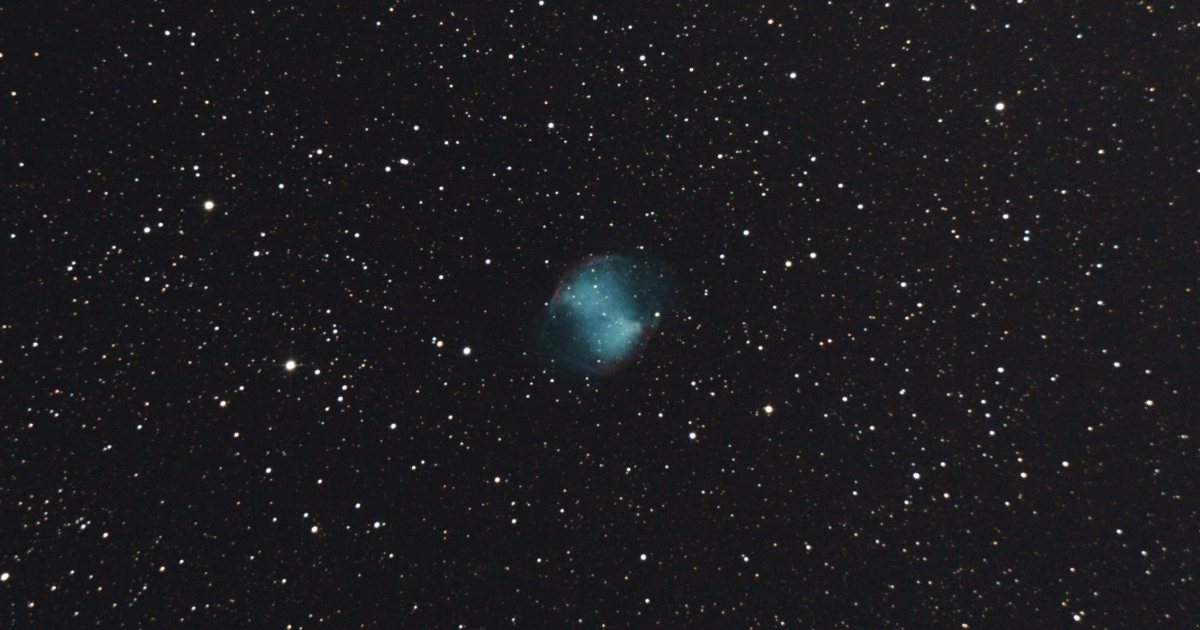
The Dumbbell Nebula (M27) is a prime target for amateur astronomers.
Optimal viewing conditions are expected with a dark sky after sunset.
On September 3, the Last Quarter Moon will take place at 3:51 A.M. EDT, resulting in a dark evening sky ideal for observing celestial objects. This astronomical event allows stargazers to explore fainter deep-sky targets without the interference of bright moonlight.
In the southeastern sky, two hours post-sunset, the constellation Vulpecula can be spotted, positioned adjacent to the prominent Cygnus the Swan. Within Vulpecula lies the notable Dumbbell Nebula, or M27, a planetary nebula formed from a dying star similar to our Sun. Its distinctive shape, resembling a dumbbell, is characterized by a thinner middle and thicker ends, making it a fascinating object for observation.
M27 shines at a magnitude of 7.4, making it one of the most accessible planetary nebulae for novice astronomers. It stretches approximately 8 arcminutes in length and nearly 6 arcminutes in width. Observers using binoculars or small telescopes may initially see a grayish or greenish blur; however, patience is key as the eyes adjust to the darkness. Utilizing a higher magnification or a narrowband filter can significantly enhance the viewing experience.
The central star of the Dumbbell Nebula, now a white dwarf, has a magnitude of 13, and larger telescopes (10 inches or more) should allow for its visibility. This week’s celestial events not only provide an opportunity for individual exploration but also foster a greater appreciation for the wonders of the universe.
As the week progresses, stargazers can look forward to additional celestial phenomena. With the moonrise at 11:51 P.M. and moonset at 2:59 P.M., the viewing conditions will remain favorable for observing various astronomical features. Enthusiasts are encouraged to take advantage of these opportunities to deepen their understanding of the cosmos.