ESA's Juice Spacecraft Executes Earth Flyby at 8,640 km
On September 28, 2026, ESA's Juice spacecraft successfully performed a flyby of Earth, capturing stunning images while adjusting its trajectory towards Jupiter.
Juice spacecraft flew 8,640 km above the Indian Ocean to utilize Earth's gravity.
The flyby altered its trajectory by 20 degrees and increased speed by 3.5 km/s.
Juice aims to study Jupiter's moons for potential signs of life beneath icy surfaces.
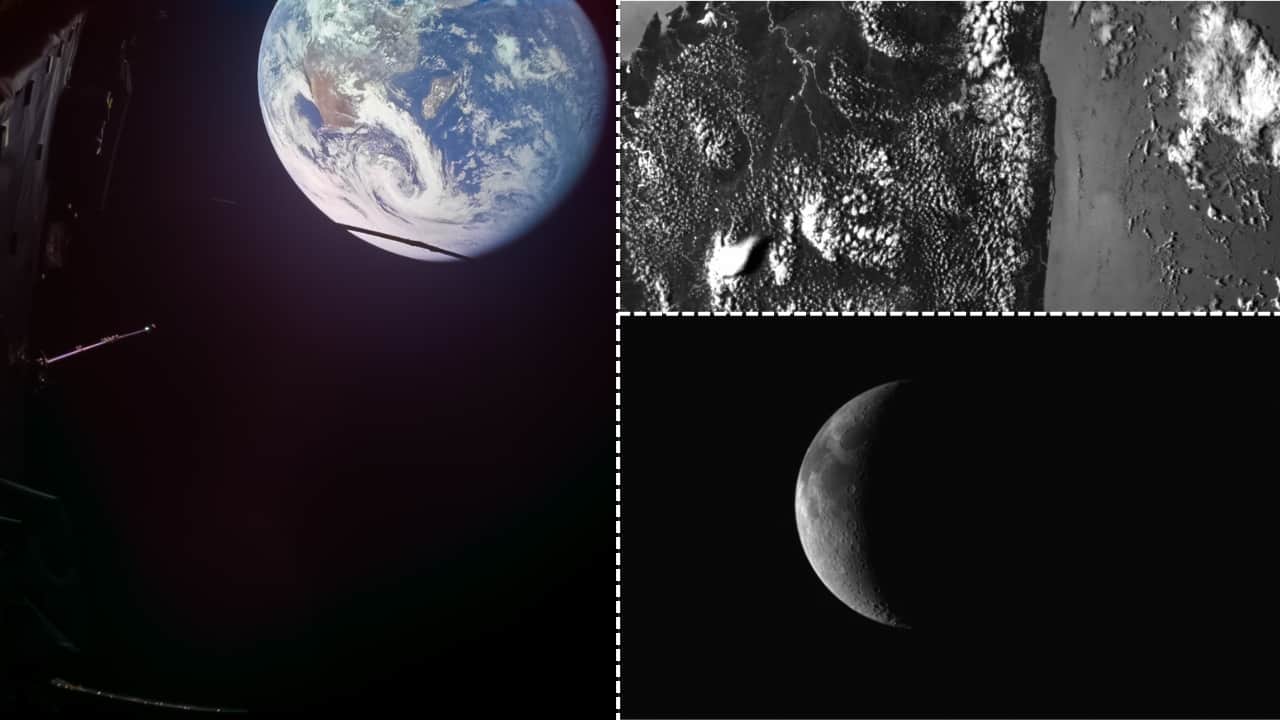
On September 28, 2026, the European Space Agency's Juice spacecraft completed a significant flyby of Earth, passing just 8,640 kilometers above the Indian Ocean. This maneuver was crucial for adjusting its trajectory and accelerating its journey towards Jupiter, the gas giant that it aims to explore in detail. During this flyby, Juice captured remarkable images of Africa, Madagascar, and the Moon, showcasing the beauty of our planet from space.
The Juice mission, which stands for Jupiter Icy Moons Explorer, is designed not only to reach Jupiter but also to investigate its three largest icy moons: Ganymede, Europa, and Callisto. Scientists believe that these moons may harbor hidden oceans beneath their icy crusts, making them potential candidates for supporting life. The flyby on September 28 was a strategic move to harness Earth's gravitational pull, allowing Juice to change its trajectory by approximately 20 degrees and boost its speed by around 3.5 kilometers per second.
Images taken during the flyby highlight the spacecraft's advanced monitoring and navigation capabilities. One notable image features Africa, with Madagascar clearly visible to the left. Another image captures Madagascar shortly after the closest approach, while a third showcases the Moon. These visuals not only provide insights into the spacecraft's journey but also offer a striking perspective of Earth from the outer Solar System.
The implications of this mission extend beyond mere exploration; it is a step towards understanding the potential for life beyond Earth. Juice's primary scientific investigations will commence upon its arrival at Jupiter, expected in July 2031. The mission aims to uncover the composition, internal structures, and environmental conditions of Jupiter's moons, assessing their habitability.
Looking ahead, Juice is set for another Earth flyby in January 2029, further refining its trajectory before reaching Jupiter. The ongoing journey emphasizes the importance of gravitational assists in space exploration, allowing spacecraft to conserve fuel and optimize their paths through the Solar System. As the mission progresses, scientists remain hopeful about the discoveries that lie ahead in the quest to understand our celestial neighbors.