Wadji Village in Maharashtra Generates 500 Litres of Water Daily from Air
Wadji village adopts innovative technology to produce drinking water from atmospheric moisture, alleviating local water scarcity.
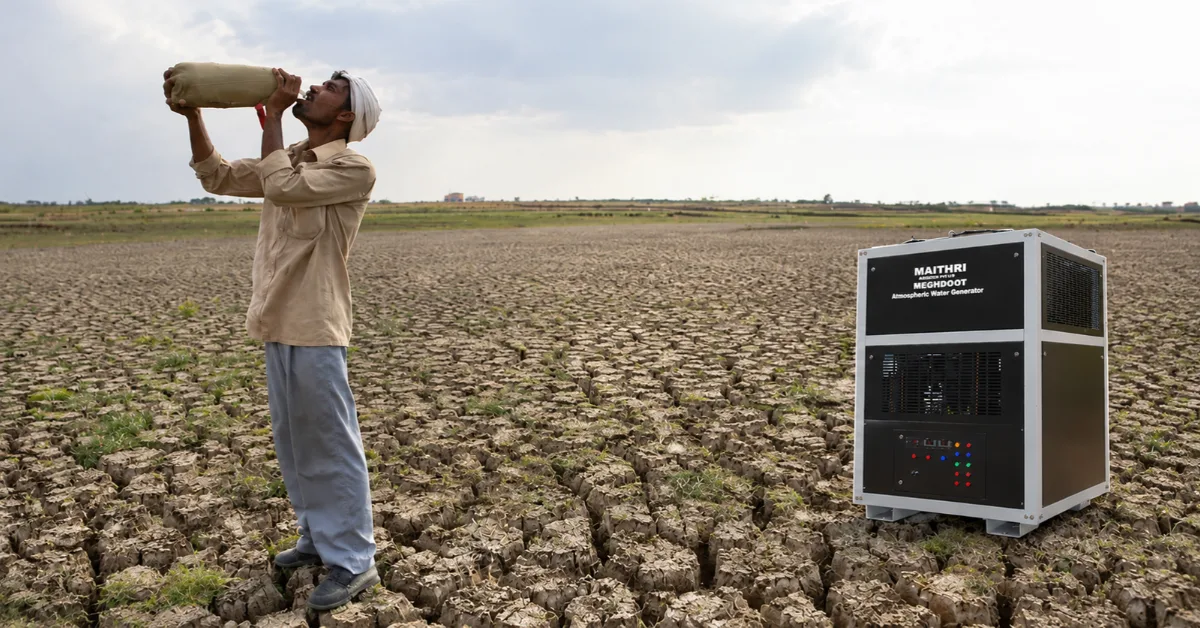
Wadji village now produces 500 litres of drinking water daily using Meghdoot technology.
Residents previously traveled up to 1.5 km for water, facing severe shortages during summer.
The project was developed by CSIR-IICT scientists in collaboration with Maithri Aquatech.
In a remarkable development, Wadji village in Maharashtra's Washim district has implemented a groundbreaking technology that generates up to 500 litres of drinking water daily from atmospheric moisture. This initiative, known as Meghdoot, is a response to the chronic water scarcity faced by the village's nearly 2,000 residents, who previously had to trek over a kilometer to fetch water, especially challenging during the hot summer months.
Historically, Wadji has struggled with limited access to drinking water, a situation exacerbated by the depletion of local groundwater sources. Reports from the Central Ground Water Board indicate that many villages in the Risod taluka are classified as semi-critical concerning groundwater availability. The introduction of Meghdoot technology marks a significant shift in how the community approaches its water needs, utilizing the moisture present in the air as a viable resource.
The Meghdoot system operates by drawing humid air into the machine, where it undergoes a filtration process to remove impurities. The air is then cooled to its dew point, causing water vapor to condense into liquid droplets. This collected water is further purified through activated carbon filtration and ultraviolet disinfection, making it safe for consumption. The technology not only provides a new source of drinking water but also reduces reliance on traditional groundwater sources.
The initiative is a collaborative effort between scientists from the Council of Scientific and Industrial Research-Indian Institute of Chemical Technology (CSIR-IICT) in Hyderabad and Maithri Aquatech. The Wadji Gram Panchayat played a crucial role in bringing this technology to the village, with the unit installed at local schools to ensure easy access for children and residents. This strategic placement aims to enhance the community's overall health and well-being by providing reliable drinking water.
While the Meghdoot technology offers a promising solution to Wadji's water challenges, it is essential to recognize that it is not a replacement for groundwater conservation or rainwater harvesting. The system's effectiveness is contingent upon local atmospheric conditions and requires electricity to operate. However, if maintained properly, this innovative approach could serve as a model for other villages facing similar water shortages, potentially transforming how communities access drinking water in the future.