Maharashtra's Rs 19,000 Crore Water Diversion Project Faces Opposition
Karnataka's Industries Minister MB Patil raises concerns over Maharashtra's plan to divert floodwater, demanding clarity from the Union government.

Maharashtra plans to divert 40 TMC of floodwater from Krishna to Bhima river.
Karnataka's minister questions the legality and funding of the project.
A detailed project report is expected by the end of 2026, with an estimated cost of Rs 19,000 crore.
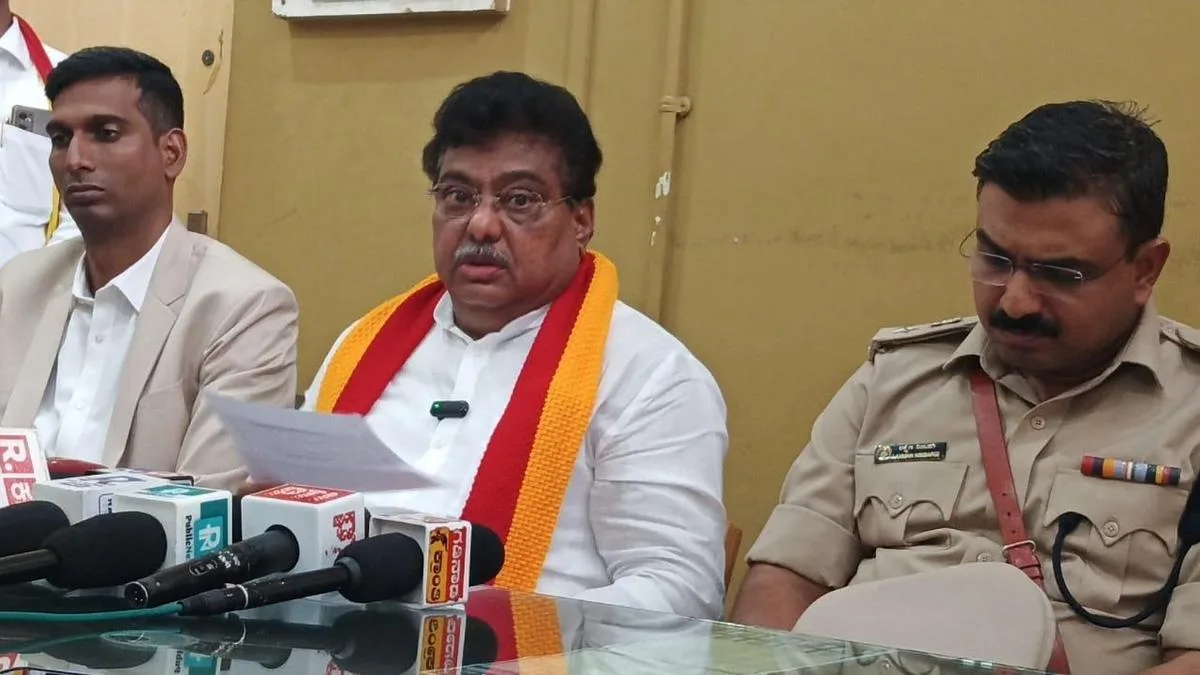
In a significant development, Karnataka's Industries Minister MB Patil has voiced strong objections to Maharashtra's ambitious proposal to divert 40 thousand million cubic feet (TMC) of floodwater from the Krishna River to the Bhima River. Patil expressed his concerns during a press briefing on Sunday, emphasizing that the project could severely impact Karnataka's water resources and alter the hydrology of the Krishna upper sub-basin.
The proposal, recently announced by Maharashtra Chief Minister Devendra Fadnavis, has raised alarms among Karnataka officials. Patil highlighted that the diversion could diminish the water flow into the Almatti reservoir, which is crucial for Karnataka's agricultural and drinking water needs. He urged the Union government to clarify the legal framework supporting Maharashtra's initiative, particularly since it appears to fall outside the jurisdiction of the Krishna Water Disputes Tribunal-II (KWDT-II) award.
Patil pointed out that Maharashtra has already allocated Rs 24 crore for the preparation of a detailed project report (DPR), which is expected to be completed by the end of 2026. The project is estimated to cost around Rs 19,000 crore and involves conducting geological surveys along an 84-kilometer route. The minister questioned how Maharashtra secured funding from the World Bank for this project while Karnataka's DPR for the Upper Krishna Project Stage III has been repeatedly returned due to procedural issues.
The implications of this project extend beyond Karnataka, potentially affecting water availability for other states sharing the Krishna River. Patil noted that the KWDT-II had allocated an additional 448 TMC of water based on specific dependability metrics, with Maharashtra receiving a portion of this allocation. The ongoing disputes over water sharing in the region underscore the need for careful consideration of inter-state water agreements and the potential consequences of such diversion projects.
Looking ahead, an all-party meeting chaired by Karnataka Chief Minister DK Shivakumar is set to convene soon to discuss the ramifications of Maharashtra's proposal. The meeting aims to formulate a unified response and ensure that Karnataka's water interests are safeguarded amidst the ongoing negotiations and developments surrounding the Krishna River water sharing agreements.