Maharashtra Mandates Check Dams with New Bridges for Water Storage
In a bid to enhance water conservation, Maharashtra will require check dams alongside all new bridges to combat drought.
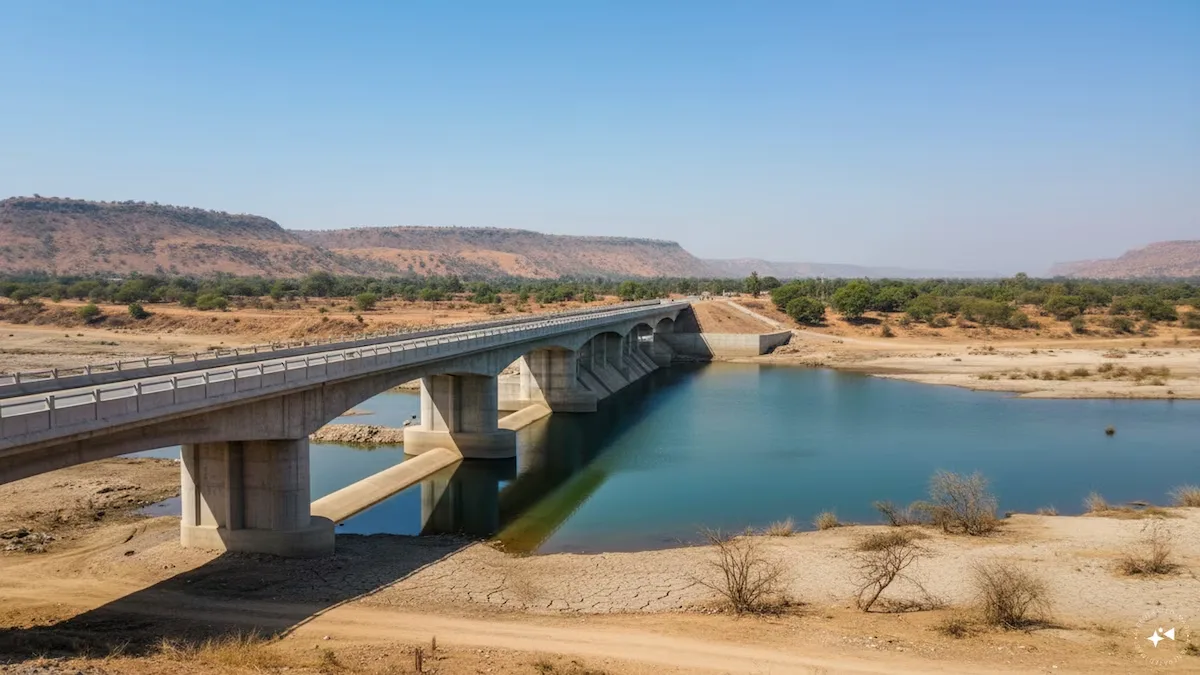
Maharashtra's new rule mandates check dams with all new bridges to improve water retention.
The initiative aims to store at least one meter of water beneath each bridge.
Additional projects include local lake excavations and silt removal for agricultural support.
The Maharashtra government has introduced a new regulation requiring the construction of check dams alongside every new bridge built over rivers and streams. This initiative aims to address the ongoing drought conditions in the state by enhancing water storage capabilities. The decision was made during a Cabinet Sub-Committee meeting focused on drought mitigation, chaired by Revenue Minister Chandrashekhar Bawankule, with participation from key officials including Water Resources Minister Girish Mahajan.
Check dams are designed to slow down water flow, allowing for better collection and retention of river water. Under the new rule, all projects funded by both the state and central governments will be subject to this requirement. The government aims to ensure that a minimum of one meter of water is stored beneath each bridge, thereby maximizing the use of available water resources.
The regulation will affect various agencies, including the Public Works Department, Maharashtra State Road Development Corporation (MSRDC), and the Mumbai Metropolitan Region Development Authority (MMRDA). Additionally, it will encompass bridges constructed under the Chief Minister's Gram Sadak Yojana. Future infrastructure projects, such as the proposed Shaktipeeth Expressway, are also expected to integrate bridge-cum-check dams.
In conjunction with the check dam initiative, the Maharashtra government is exploring proposals from local gram panchayats to create small lakes on grazing lands, each spanning two to three acres. This effort is aimed at increasing overall water storage and improving water availability for local communities in the coming years.
Moreover, the state has extended the Gaalmukt Dharan scheme deadline to June 30, which facilitates the removal of silt from community-managed tanks. Farmers can obtain this silt free of charge for agricultural use. The government has set the silt removal rate at ₹32 per cubic meter, with transportation costs at ₹37 per cubic meter, and a maximum subsidy of ₹37,500 available under the scheme.