Maharashtra-Lower Saxony Joint Working Group Established
CM Devendra Fadnavis announces a collaborative initiative to enhance economic ties with Lower Saxony, Germany.
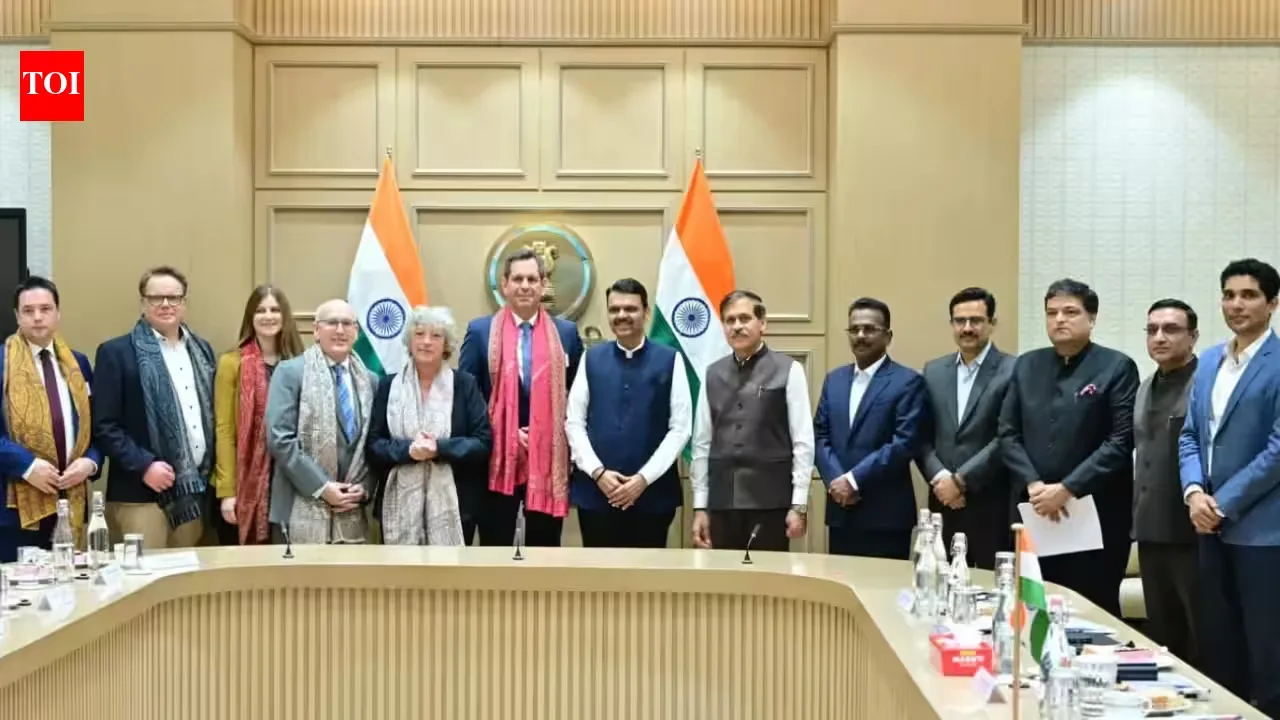
A new Joint Working Group aims to strengthen economic collaboration between Maharashtra and Lower Saxony.
Maharashtra targets a $1 trillion economy by 2030, leveraging its industrial ecosystem.
Volkswagen's significant investment in Maharashtra highlights the region's potential in advanced manufacturing.
In a significant move to bolster economic relations, Maharashtra Chief Minister Devendra Fadnavis announced the establishment of a 'Maharashtra-Lower Saxony Joint Working Group' during a meeting with Olaf Lies, the Minister President of Lower Saxony. This initiative aims to facilitate cooperation in various sectors, including automotive, engineering, and renewable energy, by bringing together senior government officials, industry leaders, and academic representatives from both regions.
The backdrop of this collaboration is rooted in the growing importance of India, particularly Maharashtra, to the German economy. CM Fadnavis emphasized that Maharashtra's robust economic framework, skilled workforce, and diverse industrial landscape present substantial investment opportunities for German companies. He urged German firms to establish research and development centers in Maharashtra to tap into global markets effectively.
During the discussions, CM Fadnavis highlighted that the combined economic strength of Maharashtra and Lower Saxony is approximately $1 trillion, with Maharashtra contributing about 15% to India's GDP. The state is also a major recipient of foreign direct investment, aiming to become a $1 trillion economy by 2030 and a $5 trillion economy by 2047. Volkswagen's role as a key industrial partner was noted, particularly in advanced manufacturing and future vehicle technologies, with ongoing modernization efforts at their Chakan facility.
The implications of this partnership extend beyond immediate economic benefits. Both Maharashtra and Lower Saxony are poised to leverage their strengths in various sectors, including automotive, defense technology, and digitalization. The collaboration is expected to enhance existing investments and foster new opportunities in precision engineering, robotics, and artificial intelligence, aligning with global trends towards sustainability and technological advancement.
Looking ahead, the establishment of the Joint Working Group marks a pivotal step in deepening economic ties. With plans for increased cooperation and investment, both regions are set to explore new avenues for growth. The successful conclusion of the India-EU Free Trade Agreement negotiations could further unlock market access and industrial collaboration, paving the way for a prosperous future for both Maharashtra and Lower Saxony.