Maharashtra Launches India's First Sulphur Dioxide Emissions Trading Scheme
The Maharashtra Government has unveiled a pioneering emissions trading scheme aimed at reducing sulphur dioxide levels to enhance air quality.

Maharashtra's new scheme allows industries to trade emissions permits.
Collaboration with the University of Chicago to integrate AI in environmental inspections.
The initiative aims to balance environmental protection with economic growth.
On Tuesday, the Maharashtra Government introduced India's inaugural sulphur dioxide (SO2) emissions trading scheme, a significant step towards improving air quality in the region. Environment and Climate Change Minister Pankaja Munde announced the initiative in Mumbai, emphasizing the government's commitment to collaborate with industries to find solutions that harmonize environmental sustainability and economic development.
The emissions trading scheme will be managed by the Maharashtra Pollution Control Board (MPCB) in partnership with the Emissions Market Accelerator. Under this scheme, industrial units will receive permits that outline their allowable sulphur dioxide emissions. Industries that can achieve reductions at a lower cost will have the opportunity to sell their surplus permits to those facing higher costs of emission reductions, thereby creating a market-driven approach to pollution control.
Michael Greenstone, an economics professor at the University of Chicago and co-chair of the Emissions Market Accelerator, highlighted the effectiveness of market-based schemes in achieving emission reductions while minimizing costs for industries. This innovative approach is expected to incentivize industries to adopt cleaner technologies and practices.
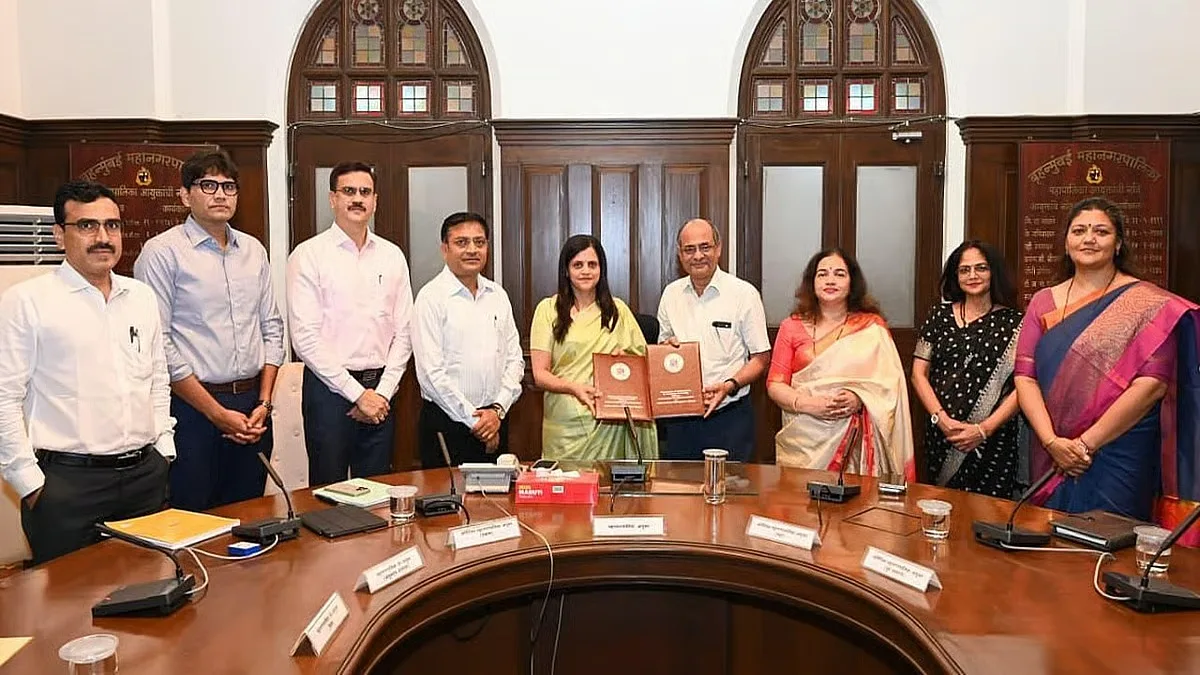
In addition to the trading scheme, the MPCB has signed a memorandum of understanding with the University of Chicago Trust to leverage artificial intelligence and machine learning for environmental regulation and industrial inspections. This collaboration aims to develop an AI-based framework that will analyze data from the MPCB to identify industrial units at higher risk of violating environmental regulations. Training programs for MPCB officials on AI and environmental data analysis will also be part of this initiative.
The pilot project will serve as a basis for evaluating the effectiveness of the AI framework, with future decisions regarding its expansion across Maharashtra contingent on the results. This comprehensive approach not only seeks to improve air quality but also fosters a collaborative environment between the government and industries to address environmental challenges.