Maharashtra Fails to Publish 1.22 Crore Voter Discrepancies
The Election Commission's directive remains unfulfilled as Maharashtra's CEO delays publishing lists of voters flagged for discrepancies.
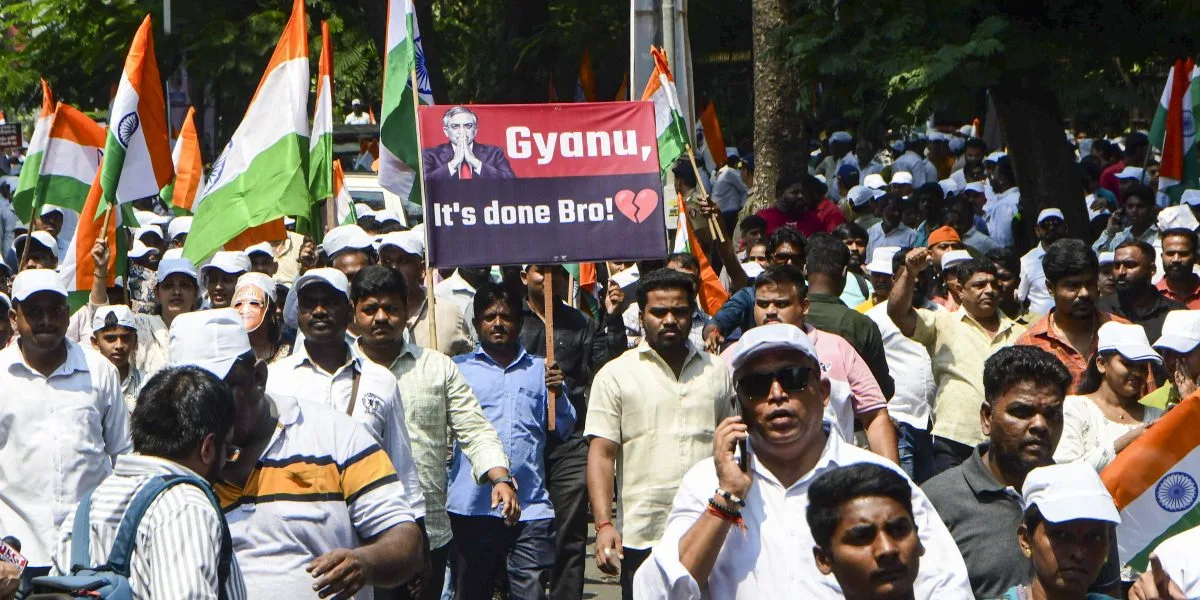
Maharashtra has 1.22 crore voters under unmapped and logical discrepancies categories.
Other states have already published similar lists, raising concerns over Maharashtra's delay.
Special camps for voter inclusion are scheduled for October 17, 18, 24, and 25.
In a significant oversight, the Chief Electoral Officer (CEO) of Maharashtra has yet to publish the list of 1.22 crore voters identified as having either unmapped status or logical discrepancies. This delay comes despite directives from the Election Commission of India (ECI) mandating all state CEOs to make such lists available on their official websites. The ECI's notification aimed to ensure transparency and accountability during the ongoing Special Intensive Revision (SIR) process.
Currently, Maharashtra's voter registration issues are alarming, with 59.75 lakh individuals categorized as unmapped and 62.48 lakh flagged for logical discrepancies. This situation highlights a total of 1.22 crore voters potentially affected by the revision process. In contrast, states like Karnataka, Telangana, and Delhi have already complied with the ECI's directive and published their respective lists, raising questions about the efficiency of Maharashtra's electoral management.
An official from the CEO's office indicated that the publication process is underway, with the Electoral Registration Officers (EROs) responsible for compiling and releasing the data. However, the lack of timely information has sparked concerns among citizens and electoral advocates regarding the integrity of the voter registration process in the state.
The implications of this delay are significant, particularly as Maharashtra prepares for special camps aimed at including new or previously excluded voters on October 17, 18, 24, and 25. The situation has attracted legal scrutiny, with a Public Interest Litigation (PIL) filed in the Supreme Court challenging the SIR process. Senior advocate Arvind Datar has voiced concerns over the substantial number of voters affected, questioning the rationale behind the classifications of logical discrepancies and unmapped status.
Looking ahead, the urgency for the Maharashtra CEO to publish the voter lists is critical. The upcoming special camps represent a crucial opportunity for voter inclusion, but the ongoing discrepancies must be addressed to restore public confidence in the electoral process. As the situation unfolds, stakeholders will be closely monitoring the actions taken by the electoral authorities to rectify these issues and ensure fair access to voting for all eligible citizens.