Maharashtra Aims for $1 Trillion Economy by 2030 Despite Rupee Fluctuations
Chief Minister Devendra Fadnavis reaffirms Maharashtra's commitment to achieving a $1 trillion economy by 2030 amid currency challenges.
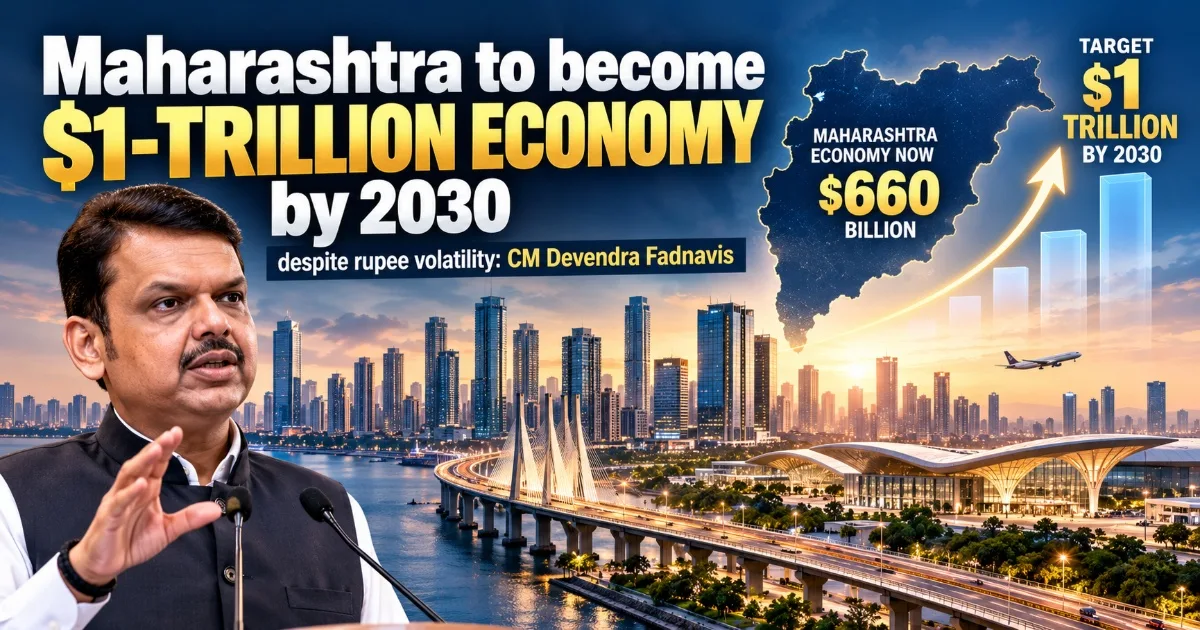
Maharashtra's economy has reached $660 billion since 2015.
60% of investment MoUs signed in the state have been acted upon.
The state is focusing on ease of doing business over financial incentives.
Maharashtra is steadfast in its ambition to achieve a $1 trillion economy by the year 2030, as articulated by Chief Minister Devendra Fadnavis during the Rising Bharat Summit on October 28. Despite ongoing fluctuations in the dollar-rupee exchange rate, Fadnavis expressed confidence in the state's economic growth, which has already reached $660 billion since the goal was set in 2015.
Fadnavis highlighted that the journey towards this ambitious target has been remarkable, emphasizing that the state is well on its way to achieving its economic aspirations. He acknowledged the challenges posed by the depreciation of the rupee, which complicates dollar-denominated targets, but reassured that such fluctuations would not hinder Maharashtra's progress.
The Chief Minister also noted that the state has made significant strides in converting investment proposals into operational projects. Approximately 60% of the signed investment memorandums of understanding (MoUs) have been acted upon, a stark contrast to the national average of 35-40%. Notably, agreements made during the World Economic Forum in Davos exhibited an impressive conversion rate of 75%, with various projects currently at different stages of implementation.
Maharashtra's economic landscape is crucial not only for the state but also for India's overall economic health. The state contributes over 13.5% of India's GDP and has been a significant recipient of foreign direct investment (FDI), accounting for 39% of the national total. The government aims to attract ₹70.5 lakh crore in investments and create around 50 lakh jobs by 2030, reflecting its commitment to sustainable economic growth.
Looking ahead, the state is prioritizing policy certainty and infrastructure readiness over financial incentives to attract investments. Fadnavis emphasized that while many states are competing for investments, Maharashtra's approach focuses on delivering promised incentives within a year of signing agreements. The government is also addressing environmental concerns related to data centers and urban development projects, such as Mumbai 3.0, which aims to create specialized clusters for various industries. These initiatives are expected to bolster Maharashtra's position as a leading economic hub in India.