Significant Decline in Migratory Birds at Amravati Wetlands
A recent survey reveals a worrying drop in migratory bird populations at wetlands in Amravati, attributed to poor monsoon conditions.
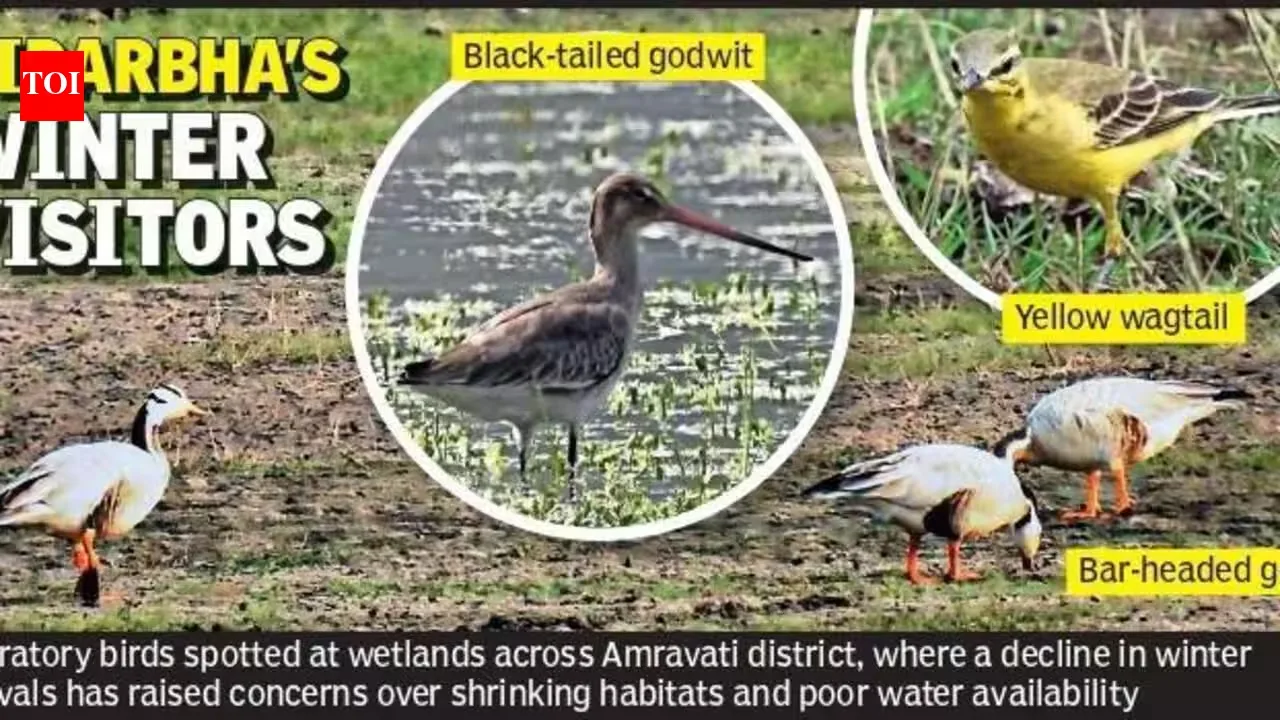
A bird survey indicates a sharp decrease in migratory bird arrivals in Amravati.
Key wetlands like Chhatri Talao and Malkhed Talao show significantly fewer winter visitors.
Experts emphasize the need for wetland conservation due to habitat degradation.
A recent survey has highlighted a troubling decline in the number of migratory birds arriving at wetlands in Amravati district, raising alarms about the health of these aquatic ecosystems. Conducted on November 22, the survey focused on four major water bodies and revealed that many species are either arriving late or in significantly reduced numbers, with the deficient monsoon being a primary factor.
Wildlife writer PS Hirurkar, who has been observing bird populations for nearly 40 years, noted that while some waterbirds were present at Chhatri Talao, the numbers of red-crested pochards were alarmingly low compared to previous years. He observed a family of black-tailed godwits, which migrate thousands of kilometers from Europe and Siberia to winter in India. Hirurkar pointed out that the lake, once vibrant with these birds, is now suffering due to invasive vegetation, which has further compromised the habitat.
Malkhed lake, located near Savanga Vithoba, fared slightly better in terms of water levels, hosting a few avocets and spoonbills, but still showed a decline in overall bird populations. The presence of a rare yellow wagtail along the shoreline was a highlight, yet the overall trend remains concerning. Meanwhile, Shevti dam reported very few birds, with a notable absence of the usually common bar-headed geese, which typically winter there.
Jalaka Shahapur lake, known for its historical abundance of bar-headed geese, has seen a drastic reduction in numbers, with only 20-25 spotted this year compared to previous counts of over a hundred. The lake, which usually teems with life, appeared unusually quiet, signaling a broader issue affecting the region's wetlands. Hirurkar attributes this decline to the poor monsoon, which has left muddy shorelines that are unsuitable for feeding and resting, causing migratory birds to avoid these traditional stopovers.
The ongoing decline in migratory bird populations over the past three decades calls for urgent action in wetland conservation and habitat restoration. As more birdwatchers document these changes, the need for increased awareness and proactive measures to protect these vital ecosystems becomes ever more critical. The future of Amravati's wetlands and their avian visitors hangs in the balance, necessitating immediate attention from conservationists and local authorities alike.