Nagpur Water Supply Strategy Faces Infrastructure Challenges
Nagpur's water supply planning reveals significant gaps in infrastructure and source security as officials propose new pipeline connections.
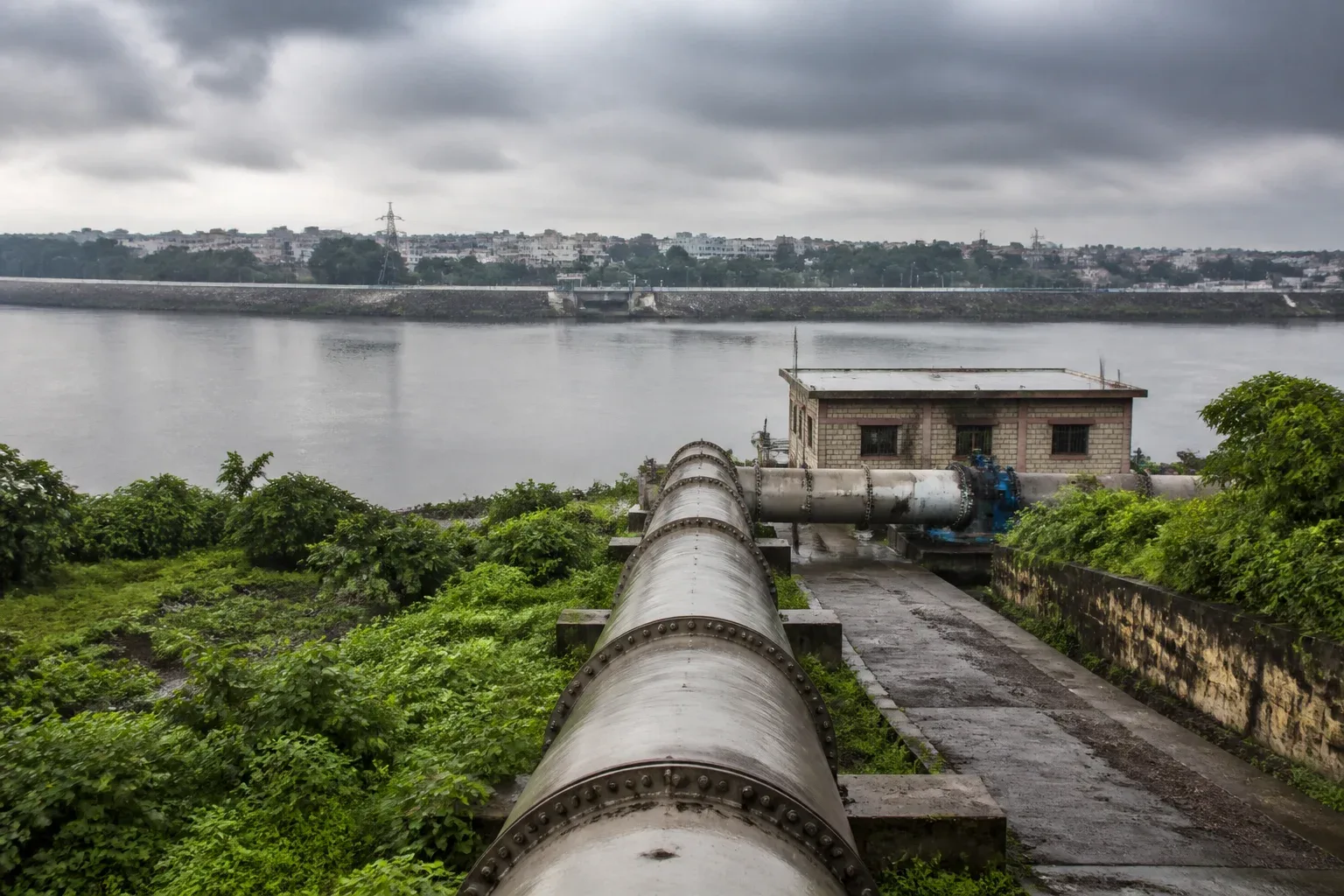
Gosikhurd dam is at 96.74% capacity, while Totladoh is only at 50.52%.
Nagpur Municipal Corporation is considering a pipeline to connect Gosikhurd to the city.
A comprehensive feasibility study is needed to assess the project's viability.
Nagpur's water supply strategy is currently under scrutiny due to infrastructure challenges that have been highlighted by the uneven water levels in the city's reservoirs. As of October 4, the Gosikhurd dam reported a live storage capacity of 96.74%, while Totladoh, a key drinking water source, was only at 50.52%. This disparity has prompted the Nagpur Municipal Corporation (NMC) to revisit a previous proposal aimed at connecting Gosikhurd to the city via a pipeline.
The significance of this proposal lies not in the availability of a new water source but in the stark reality of Nagpur's reliance on a limited number of water sources and the infrastructure that links them to the urban area. Currently, NMC sources water from Totladoh and Kamthi Khairy, but Gosikhurd, despite its ample storage, is not directly integrated into the city's supply system. This situation creates a disconnect between the available water in the region and what can be reliably delivered to Nagpur.
Recent data from the Times of India indicates that Gosikhurd holds 715.41 million cubic meters (Mcum) of water against a designed capacity of 740.17 Mcum, while Totladoh holds 527.57 Mcum compared to a designed capacity of 1,016.93 Mcum. Kamthi Khairy has 111.36 Mcum against a capacity of 141.98 Mcum. However, these figures alone do not determine how long the water supply can last, as they depend on various factors including consumption rates and distribution losses. This has led NMC to reassess both its water sources and consumption demands.
The proposed solution consists of two main components. The first involves establishing a physical connection to Gosikhurd. Currently, a pipeline links Gosikhurd to Mouda, and NMC is exploring the feasibility of extending this pipeline to Nagpur, which is over 50 kilometers away. Initial estimates for the project cost were around Rs 500 crore, but updated assessments will be necessary to determine current costs and logistical requirements. The second component is administrative, with Mayor Neeta Thakre indicating that a proposal will be submitted to state officials for further consideration.
The implications of this situation are significant for Nagpur's water management strategy. The city must balance the development of new infrastructure with effective demand management. While a new pipeline could enhance the water supply network, its effectiveness will depend on the city's ability to treat and distribute the additional water. As NMC moves forward, the focus will be on conducting a thorough feasibility study, assessing reservoir sustainability, and submitting proposals to state leadership. The outcome of these efforts will be critical in determining whether Nagpur can effectively manage its water resources amidst fluctuating reservoir levels.