Nagpur Traffic Diversion Causes Major Disruption on Monday
A planned traffic diversion in Nagpur turned disastrous, stranding thousands of commuters for hours.
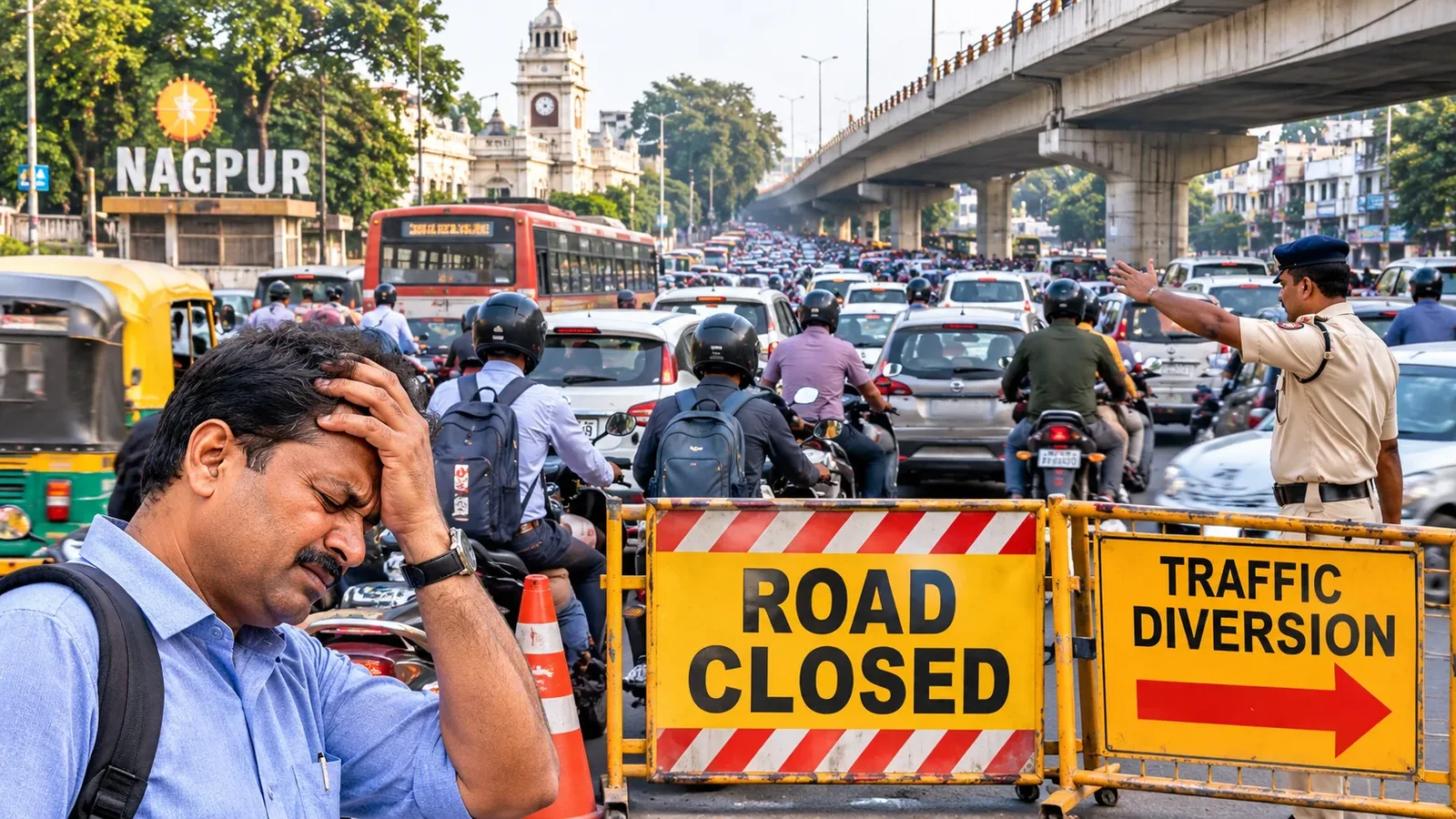
Simultaneous road closures led to severe traffic congestion.
Motorists faced significant delays, with some missing important travel connections.
The traffic police's lack of effective management raised concerns about planning and execution.
On Monday evening, a traffic management initiative in Nagpur spiraled into chaos, affecting thousands of motorists who found themselves trapped in an unprecedented gridlock. The city's traffic police implemented a diversion plan that involved closing the Sitabuldi Flyover and several key road segments, leading to a complete standstill in the area. Commuters were left stranded for hours as vehicles moved at a crawl, creating a situation reminiscent of a parking lot rather than a thoroughfare.
The traffic disruptions were primarily linked to the observance of Shaheed Gowari Smruti Din, but the execution of the plan raised serious questions about the preparedness of the traffic authorities. With multiple major roads closed simultaneously, the police failed to deploy adequate personnel to manage the resulting traffic flow. This oversight resulted in significant congestion that extended beyond the immediate closure zones, affecting a four-kilometer radius around the city center.
Key routes such as Wardha Road beneath the Sitabuldi Flyover and stretches between Samvidhan Square and Morris Square were among the hardest hit. The absence of traffic personnel at critical junctions exacerbated the chaos, with motorists left to navigate the congestion without guidance. Reports indicated that double parking on already congested roads further complicated the situation, creating a domino effect of traffic bottlenecks across the city.
The ramifications of this traffic disaster were not limited to inconvenience; many commuters faced tangible losses, including missed trains and disrupted schedules. One resident from Wardha, who attempted to reach Ajni Railway Station for a scheduled train, recounted how the traffic chaos delayed him significantly, resulting in him missing his departure. His experience mirrored that of many others who found themselves ensnared in a poorly executed traffic management plan.
This incident has raised critical concerns regarding the planning and execution of traffic management strategies in Nagpur. The failure to anticipate the overflow of traffic onto alternative routes and the lack of visible traffic regulation at key intersections have prompted calls for a reevaluation of how such events are managed. As the city reflects on this disruption, it becomes clear that effective traffic management requires more than just road closures; it demands comprehensive planning, coordination, and real-time response to ensure the smooth flow of vehicles in the urban landscape.