Nagpur's Air Quality Declines to 'Very Poor' Levels
On Monday, Nagpur's air quality deteriorated, surpassing even Diwali night pollution levels.
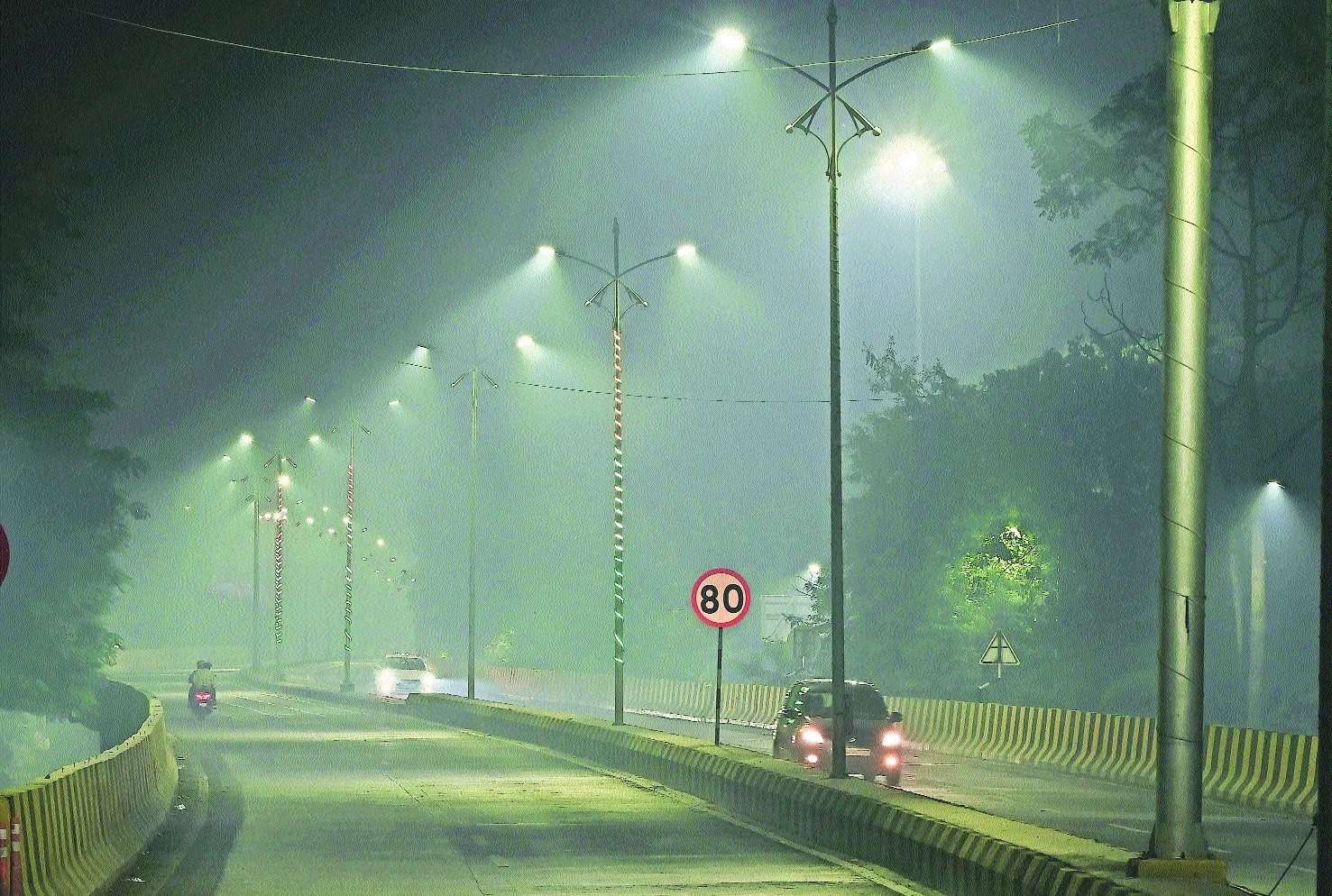
PM2.5 levels in Nagpur reached 326 µg/m³, categorized as 'very poor'.
Three out of four air quality monitoring stations reported PM2.5 levels above 300 µg/m³.
Health experts advise vulnerable groups to limit outdoor activities during high pollution hours.
On Monday, the air quality in Nagpur significantly worsened, with particulate matter (PM2.5) levels exceeding those recorded on Diwali night. This alarming trend has raised concerns among residents and health experts, particularly for vulnerable populations such as children and the elderly. The city's air quality monitoring stations reported troubling figures, indicating a serious air pollution crisis.
Nagpur is equipped with four Continuous Ambient Air Quality Monitoring Stations (CAAQMSs) that provide real-time data on air quality. On Monday, three of these stations recorded PM2.5 levels above 300 µg/m³, which is classified as 'poor'. The Mahal station reported the highest concentration at 326 µg/m³, while Ram Nagar and Civil Lines stations recorded levels of 301 µg/m³ and 297 µg/m³, respectively. The Ambazari station, although lower, still reported a concerning level of 219 µg/m³.
Experts attribute these fluctuations in air quality to both local pollution sources and meteorological conditions. Factors such as temperature inversion, sharp temperature changes, and fog contribute to the accumulation of dust and smoke in the air. Additionally, calm winds hinder the dispersion of pollutants, allowing fine particulate matter to linger close to the ground. The Central Pollution Control Board (CPCB) reported that Nagpur's overall air quality index (AQI) was 186, placing it in the moderate category, which is still better than other major cities in Maharashtra.
Despite the overall moderate AQI, the spikes in PM2.5 levels during nighttime hours pose significant health risks. Health professionals recommend that individuals, especially those with respiratory issues, avoid outdoor activities during these high pollution periods. They advise sealing homes during late evenings to prevent indoor air quality deterioration and suggest using air purifiers with HEPA filters. If outdoor exposure is necessary, wearing a properly fitted N95 mask is recommended.
Looking ahead, residents are urged to stay informed about air quality updates and take necessary precautions to protect their health. Continuous monitoring and community awareness are essential in mitigating the adverse effects of air pollution in Nagpur as the winter months approach.