Nagpur Municipal Corporation Revises NRW Data, Lacks Accurate Figures
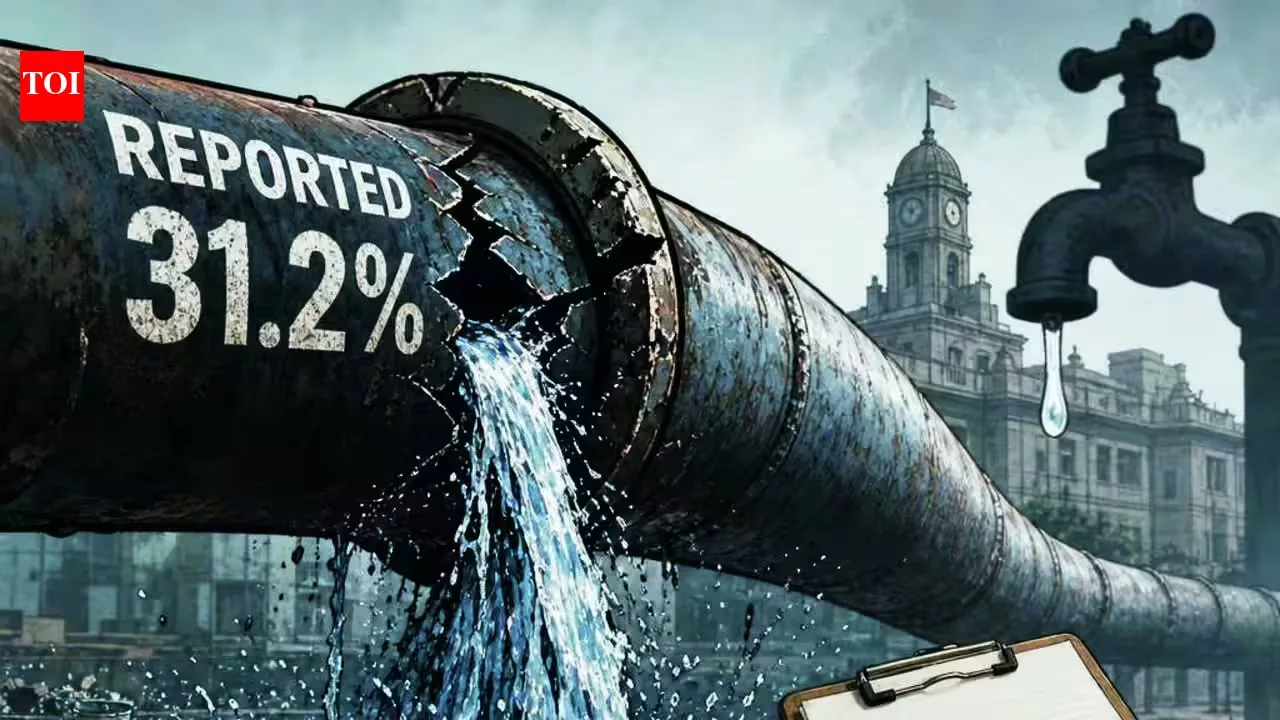
NMC admits it does not have precise data on non-revenue water, contradicting earlier claims of 31.2% losses.
NMC acknowledges lack of accurate NRW data for the current financial year.
An independent audit is planned to assess actual water loss levels.
Water supply duration varies significantly across different city zones.
In a surprising turn of events, the Nagpur Municipal Corporation (NMC) has retracted its earlier claim of 31.2% non-revenue water (NRW), revealing that it lacks precise data for the current financial year. This admission came in response to a query from Congress corporator Abhijeet Jha on November 17, where NMC stated that figures for the fiscal years 2025-26 and up to September 2026 are still pending finalization. The statement, provided by superintending engineer Shweta Banerjee, also indicated that NMC is initiating a tender process for an independent water audit to determine the actual NRW levels.
The contradiction raises significant questions regarding the reported NRW figure presented to guardian minister Chandrashekhar Bawankule during an October review meeting. If NMC has yet to verify the latest data from Orange City Water Pvt Ltd (OCW) and is planning an independent audit, the basis for reporting the 31.2% figure remains unclear. Historical data indicates that NRW was at 52% when the 24x7 water supply contract with OCW was signed in 2012, which has since decreased to 39% in 2024-25. The current scrutiny of OCW’s submissions for 2025-26 and beyond will ultimately determine the NRW percentage.
This discrepancy is particularly relevant given the city's NRW-reduction targets set by Nagpur Environmental Services Ltd (NESL). In March 2022, NESL established targets of 36.72% for 2022-23, 33.75% for 2023-24, 30.78% for 2024-25, 27% for 2025-26, and 25% for 2026-27. However, the NMC's recent response indicates that NRW is currently at 39%, which exceeds the target for 2024-25. NMC emphasized that the responsibility for reducing NRW lies with OCW, and no additional consultants or payments have been allocated for this purpose.
Despite the replacement of 433 kilometers of pipelines under a renovation program costing Rs186.80 crore, many areas in the city experience limited water supply, receiving water for only two to four hours daily. This situation underscores the ongoing challenges in managing the city's water distribution effectively. With OCW's latest submissions still under review and the independent audit yet to commence, the true extent of water losses in Nagpur remains uncertain.
The NMC has provided zone-wise data on water supply, revealing significant variations in service duration across different areas. For instance, Laxmi Nagar receives water for 18-24 hours in some parts, while other zones like Dharampeth and Hanuman Nagar report supply durations as low as 2-3 hours. This inconsistency highlights the urgent need for accurate data and effective management strategies to address water supply issues in Nagpur.