Nagpur Launches India's First AI-Driven Public Toilet
Nagpur Municipal Corporation unveils an innovative AI-powered public toilet at Reshimbagh, aiming to enhance urban sanitation.
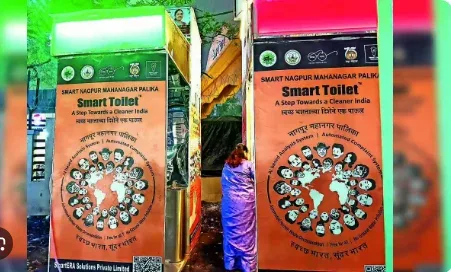
The first AI-powered automated public toilet in India is now operational in Nagpur.
The facility, inaugurated by MLA Mohan Mate, is free for public use and has seen 200 users in its initial days.
Equipped with advanced technology, the toilet aims to improve cleanliness and maintenance through smart monitoring.
In a significant advancement for urban sanitation, Nagpur has introduced the country's first AI-powered automated public toilet at Reshimbagh Maidan. The facility, inaugurated by South Nagpur MLA Mohan Mate, aims to modernize public convenience management by replacing traditional manual monitoring with an intelligent system that tracks usage and maintenance needs.
This innovative toilet, developed by a private company, features stainless steel cabins equipped with Artificial Intelligence (AI) and Internet of Things (IoT) technologies. It includes automated flushing, waste decomposition, and mechanisms for ventilation and odour control. An AI-based analytics platform monitors usage patterns and operational efficiency, allowing civic authorities to oversee the facility's performance effectively.
The public toilet is designed with separate sections for men and women and incorporates a QR code system for users to report cleanliness issues and maintenance concerns. This feedback mechanism is expected to assist civic officials in identifying service needs and ensuring prompt responses to any complaints raised by users.
The project has been implemented on a sponsored basis, as confirmed by the Nagpur Municipal Corporation's Executive Engineer. The civic administration is now encouraging citizens to provide feedback on the facility's performance, which will help determine if this technology-driven model can be expanded to other locations in Nagpur.
While this initiative represents a leap forward in public sanitation, its success will depend on consistent maintenance, the reliability of automated systems, and the swift resolution of user complaints. The real challenge lies in ensuring that this pioneering facility does not fall into disrepair but continues to serve the community effectively.