Nagpur Faces 39% Water Loss Despite ₹187 Crore Pipeline Upgrade
Nagpur's water supply woes continue as 39% of treated water remains unaccounted for, raising concerns over management and accountability.
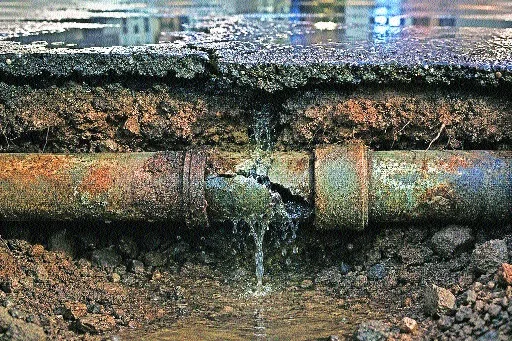
39% of water supplied in Nagpur is classified as Non-Revenue Water (NRW).
Despite ₹186.80 crore spent on pipeline upgrades, targets for NRW reduction have not been met.
Water supply hours vary significantly across the city, with some areas receiving only 2 hours daily.
Nagpur is grappling with a significant water management issue, as nearly 39% of the water supplied to the city is unaccounted for, translating to a loss of revenue for the municipal corporation. This alarming statistic indicates that nearly two out of every five liters of water pumped into the distribution network fails to generate income. Despite a hefty investment of ₹186.80 crore aimed at replacing 433 kilometers of aging pipelines, the Nagpur Municipal Corporation (NMC) has not succeeded in curbing water losses to acceptable levels.
The situation has raised serious concerns regarding the efficiency of the private operator, Orange City Water (OCW), and the oversight provided by the NMC. Official data obtained by Congress corporator Abhijeet Jha reveals that the Non-Revenue Water (NRW) figure for the fiscal year 2024-25 stands at 39%, which is significantly above the target of 30.78%. NRW encompasses water that enters the supply system but does not yield any revenue, including losses from leaks, unauthorized connections, and billing inaccuracies. This not only wastes treated water but also strains the city's water resources, impacting availability for consumers.
While there has been a reduction from 52% NRW at the onset of the OCW agreement, the pace of improvement has been disappointingly slow. A directive from Nagpur Environmental Services Limited (NESL) mandated that NRW should decrease to 30.78% by 2024-25, followed by further reductions to 27% in 2025-26 and 25% in 2026-27. However, the NMC has not enforced any penalties for failing to meet the initial target, nor has it provided verified figures for subsequent years.
Additionally, the disparity in daily water supply hours across different neighborhoods raises questions about the effectiveness of the 24x7 water supply initiative. For instance, residents in Trimurti Nagar enjoy access to water for 18 to 24 hours daily, while those in areas like Dighori and Kharbi receive water for only 2 to 2.5 hours. This inconsistency forces many residents to rely on storage tanks, complicating their daily water management and highlighting the unfulfilled promise of continuous supply throughout the city.
In light of these challenges, Jha has called for accountability regarding the substantial public funds spent on pipeline replacements. He emphasized the need for the administration to clarify how much water savings have been achieved and why no actions have been taken against OCW for its shortcomings. A senior NMC official has pointed out that OCW has not effectively implemented the 24x7 supply scheme, and the Water Supply Department has failed to adequately monitor its performance.