Nagpur District Faces Potential Drought with 48% Water Levels
Water levels in major dams of Nagpur district have plummeted, raising concerns of a looming drought due to deficient rainfall.
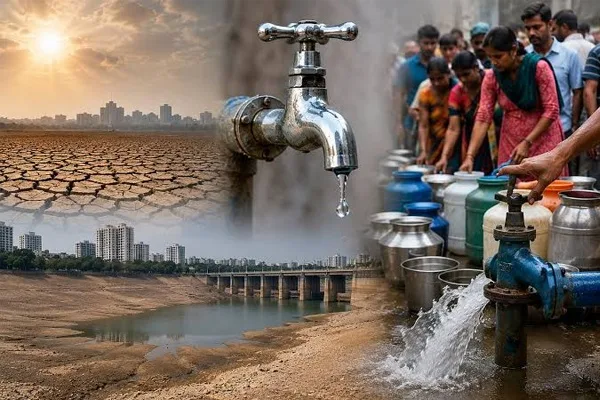
Nagpur's major dams are at 48% capacity, down from 96% last year.
Totladoh Dam, the primary water source, has only 30.52% water stock.
Chhattrapati Sambhaji Nagar is the worst affected region in Maharashtra with 39.41% water storage.
Nagpur district is facing the threat of a potential drought as water levels in five major dams have dropped to a concerning 48%. This significant decline in water stock is attributed to deficient rainfall linked to the El Nino phenomenon. In stark contrast, the same dams held 96.19% of their capacity at this time last year, which adequately met the water demands of the population until now.
The Totladoh Dam, which serves as the primary water supply for Nagpur, currently has only 30.52% of its designed capacity filled. Last year, the water level in Totladoh was recorded at 91.98%. This dam has a designed storage capacity of 1,166.93 million cubic meters (Mcum), but it now holds just 310.38 Mcum of water, raising alarms among local authorities about the impending water crisis.
In addition to Totladoh, the Kamptee Khairy Dam is another significant water source for the region, currently at 57.22% capacity, down from 89.44% last year. The Khindsi Dam, located in Ramtek taluka, has dropped to an alarming 33.91%, the lowest in recent times, compared to 99.53% on the same date last year. Other dams, including Nand and Wadgaon, also show reduced water levels at 68.03% and 51.33% respectively, both of which were at full capacity last year.
Maharashtra as a whole is experiencing water shortages, with Chhattrapati Sambhaji Nagar being the most severely impacted division, currently at just 39.41% water storage. This is a dramatic decrease from 88.32% last year. The Amravati division follows closely with a water level of approximately 55%, down from 88.98%. The Nagpur division ranks third in terms of low water levels, currently at 58.90%, compared to 88.09% last year. In contrast, the Konkan division boasts the highest water levels in the state at 84.17%, while Nashik and Pune divisions maintain better water stocks at 75.61% and 77.12% respectively.
As the region braces for potential drought conditions, local authorities are urged to implement water conservation measures and prepare for the challenges ahead. The situation remains critical, and residents are advised to monitor updates regarding water availability and restrictions.