Modi and Bhagwat's Dasara Speeches Reflect Tactical Truce
On October 20, 2026, Modi and Bhagwat delivered speeches that underscored a strategic alignment amid rising political tensions.
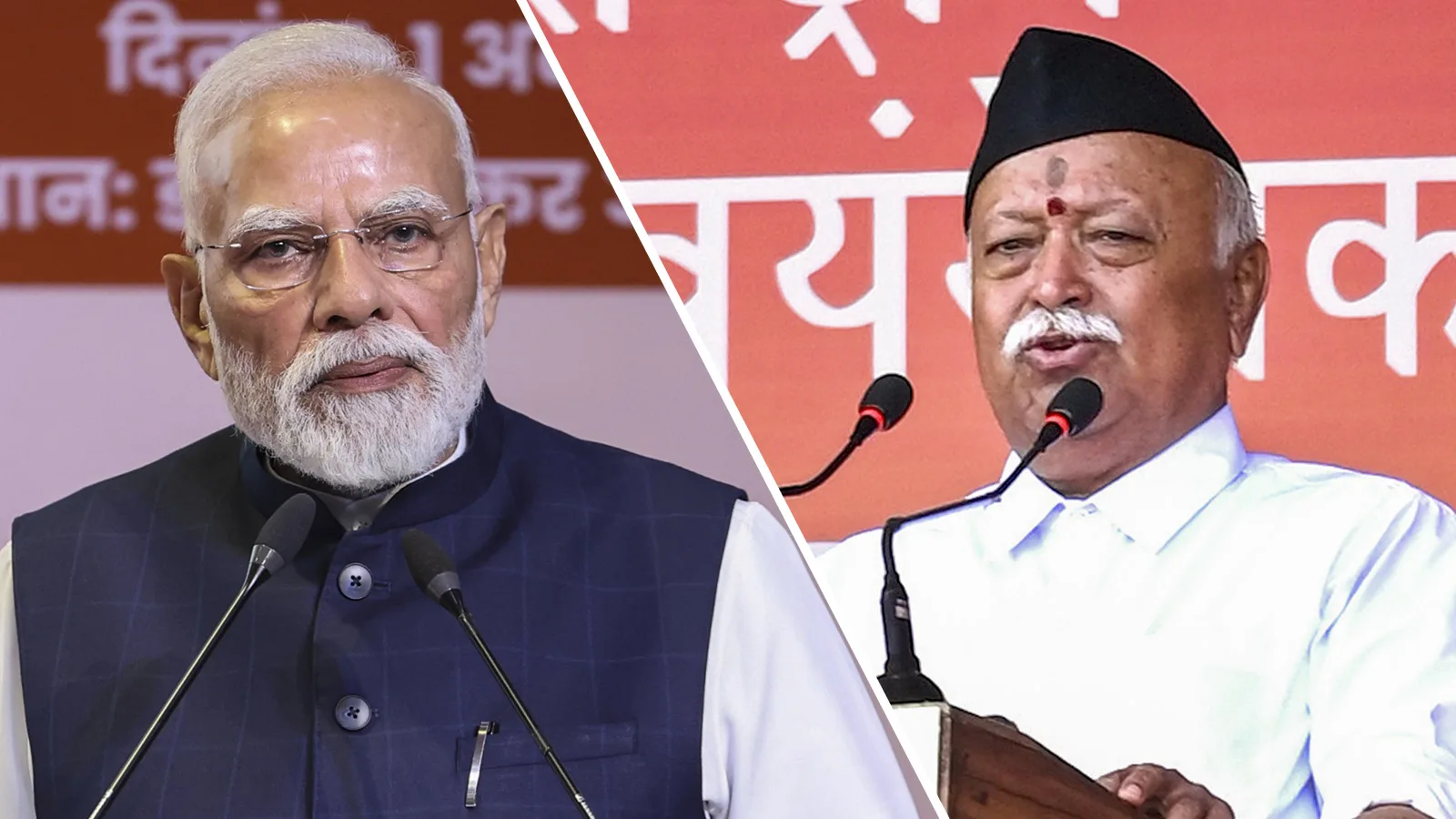
Modi and Bhagwat's addresses coincided with the RSS's centenary and Modi's 25 years in public office.
Both leaders framed dissent as a national security threat, diverging on the nature of dissent in democracy.
The speeches marked a shift from Modi's earlier focus on nation-building to a more dominant executive narrative.
On October 20, 2026, Prime Minister Narendra Modi and RSS Chief Mohan Bhagwat delivered their annual Vijaya Dashami speeches, highlighting a tactical alignment between Nagpur and Delhi. Modi's address followed Bhagwat's, which was delivered after traditional rituals, allowing the latter's words to dominate news coverage. This timing was significant as it coincided with the RSS's centenary and Modi's 25 years in public service, marking a critical juncture in their political narratives.
Historically, the Dasara festival has served as a platform for the Sangh Parivar to communicate ideological messages. Over the years, the speeches of Modi and Bhagwat have reflected their organizational ties and the political landscape. This year, the speeches were particularly anticipated due to the backdrop of increasing political friction and the culmination of the RSS's centenary celebrations, which added layers of meaning to their messages.
In their addresses, both leaders emphasized the need for national unity against perceived threats from dissenting voices. Bhagwat acknowledged dissent as a feature of democracy but cautioned against chaos, while Modi portrayed dissent as treasonous. This divergence highlighted a complex relationship between the ideological and political realms, with Bhagwat adopting a philosophical tone and Modi taking a more combative stance.
The implications of their speeches extend beyond the immediate political context. By framing dissent as a national security issue, both leaders sought to consolidate support among their base and delegitimize opposition movements. This narrative shift reflects a broader trend in Modi's leadership, moving from a focus on collective civic action to a more centralized executive dominance, as evidenced by the evolving nature of his Dasara addresses over the years.
Looking ahead, the tactical truce between Modi and Bhagwat suggests a coordinated approach to navigating the challenges posed by opposition forces. As political tensions continue to rise, the upcoming months will likely see further developments in their strategies, particularly as they prepare for future electoral contests and address internal dissent within their ranks.