C.P. Radhakrishnan Addresses National Youth Parliament in Nagpur
Vice President emphasizes youth's role in shaping a developed India by 2047.
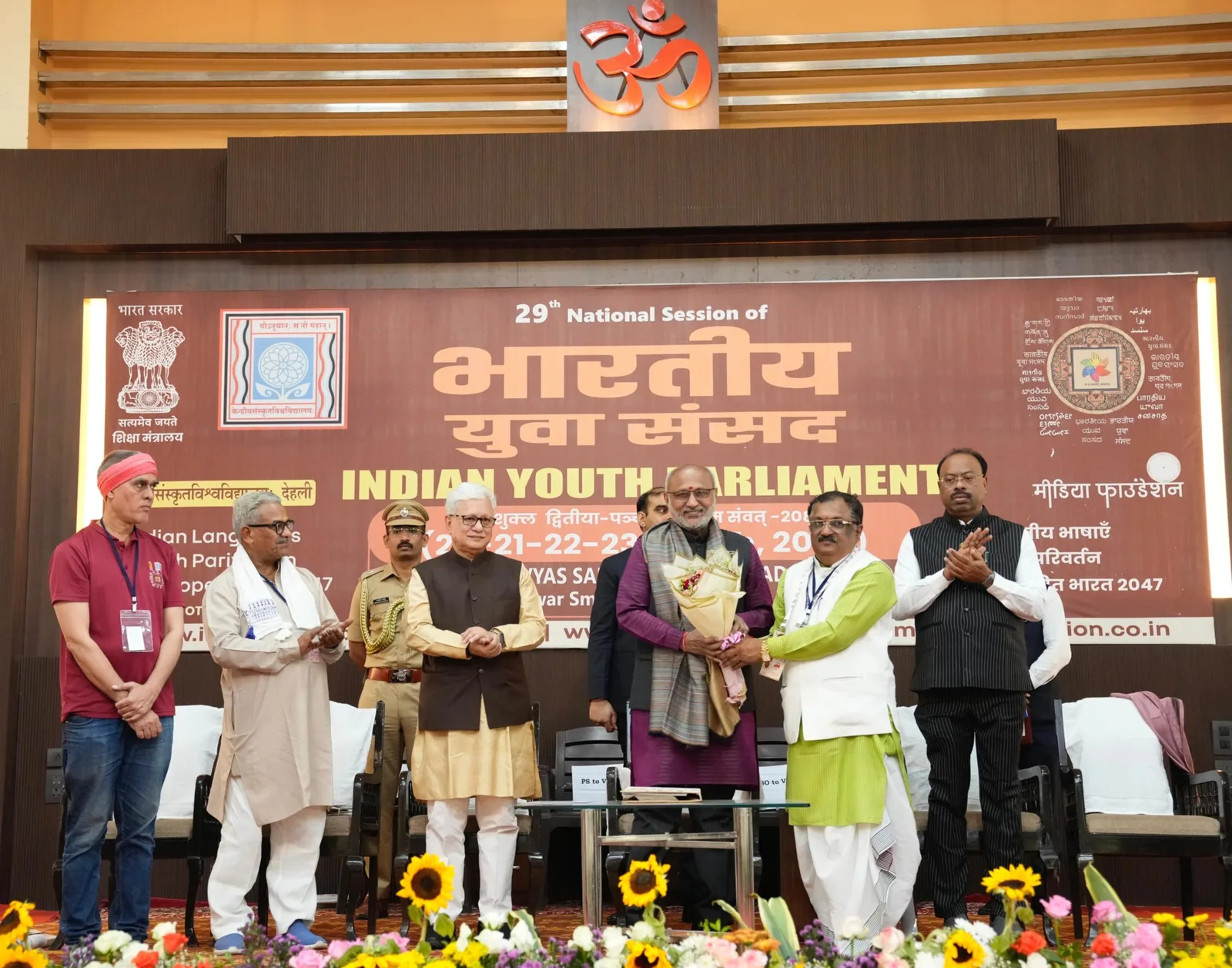
C.P. Radhakrishnan urges students to balance modernity with cultural heritage.
The National Youth Parliament focuses on 'Indian Languages & Viksit Bharat@2047'.
The event marks the historical significance of Nagpur in India's socio-political landscape.
Vice President C.P. Radhakrishnan delivered a compelling address at the 29th National Youth Parliament held today at the Maharshi Vyas Auditorium in Nagpur. He emphasized the importance of youth in realizing the vision of a developed India by the year 2047, urging students to embrace a modern outlook while honoring the rich cultural heritage of the nation.
During his speech, Radhakrishnan highlighted the need for young people to actively participate in national development and uphold the dignity of the Indian Tricolour. He stressed that the youth must ensure the flag's glory in a future where India stands as a developed nation. His remarks come at a time when global tensions are prevalent, and he advocated for dialogue as a means to resolve conflicts.
The Vice President also noted Nagpur's historical significance, recalling that it was in this city that Keshav Baliram Hedgewar established the Rashtriya Swayamsevak Sangh (RSS) in 1925. His address was attended by notable figures, including Maharashtra's Governor Jishnu Dev Sharma and Guardian Minister Chandrashekhar Bawankule, along with a large audience of students eager to engage in meaningful discussions.
The four-day Indian Youth Parliament, which commenced today, revolves around the theme 'Indian Languages & Viksit Bharat@2047'. Participants will explore various issues related to this theme through discussions and paper presentations, aiming to foster a deeper understanding of the role of languages in India's development.
Looking ahead, the event promises to be a platform for young minds to articulate their views and contribute to the national discourse. As the sessions unfold, the insights generated may play a pivotal role in shaping policies and initiatives that align with the vision of a prosperous India by 2047.