Bombay High Court Overturns Administrator Rule in Amravati APMC
The Bombay High Court has annulled the Maharashtra government's decision to appoint an administrator for the Amravati APMC, citing legal violations.
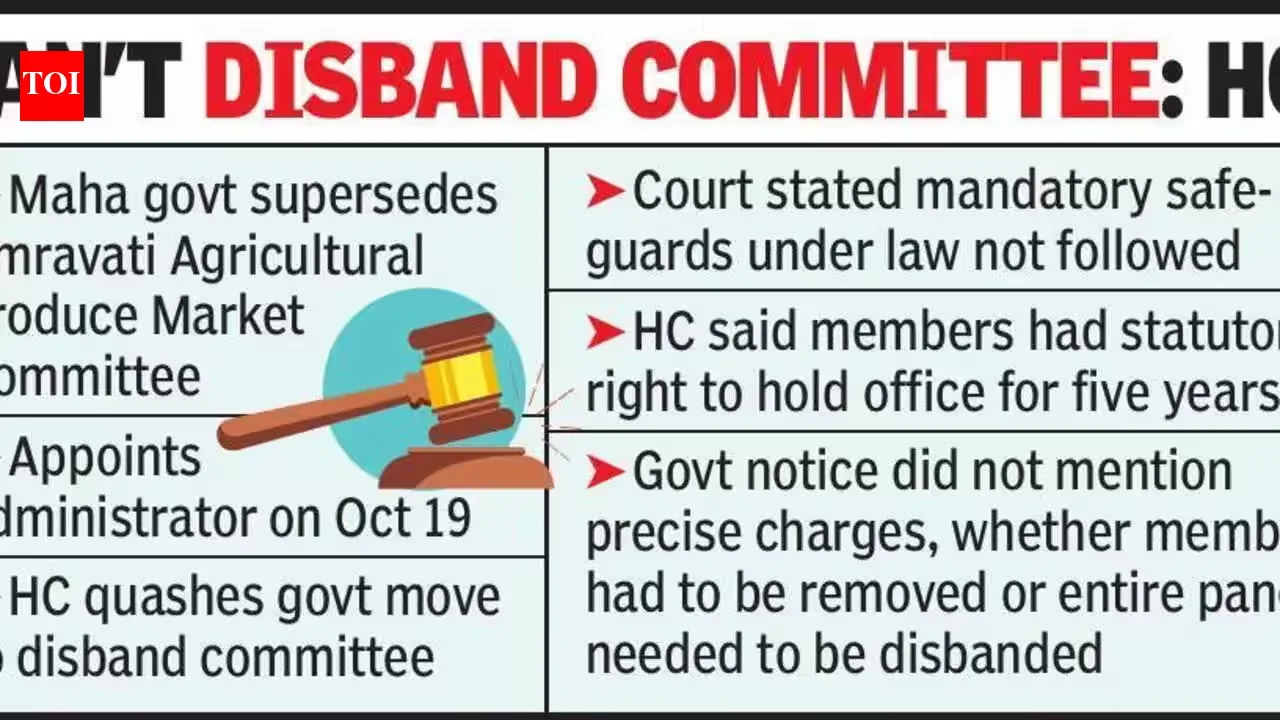
The court found that the government failed to follow legal protocols in superseding the APMC.
The Amravati district deputy registrar's actions were deemed casual and lacking justification.
The ruling allows for a new show-cause notice to be issued, adhering to legal standards.
In a significant ruling, the Nagpur bench of the Bombay High Court has invalidated the Maharashtra government's decision made on October 19 to replace the Amravati Agricultural Produce Market Committee (APMC) with an administrator. The court emphasized that the authorities did not adhere to essential legal safeguards, which are mandatory when disbanding an elected committee.
The controversy surrounding the APMC dates back to 2024 when complaints regarding alleged irregularities were submitted to the Amravati district collector and Rajya Sabha MP Dr. Anil Bonde. These complaints were subsequently referred to the Amravati district deputy registrar (DDR), leading to the formation of a two-member inquiry committee. This committee presented its findings on January 21, 2025, which prompted a show-cause notice to the committee's directors on April 21, 2025, before the DDR's decision to supersede the committee.
In its judgment, the High Court pointed out that the law requires clear reasons for superseding a committee, yet the DDR's order merely summarized the complaints and inquiry without providing substantial justification. The court noted that while the DDR claimed the committee failed in its duties, it did not establish that this failure was persistent, nor did it quantify any financial losses attributed to the committee's actions.
The court also highlighted that the law mandates consultation with the state marketing board prior to such a decision. However, the board did not provide a definitive opinion, indicating a lack of effective consultation. The bench criticized the government's approach, stating it showed a complete disregard for legal provisions, leading to the annulment of the DDR's order.
Moving forward, the court has allowed the DDR to issue a new show-cause notice and proceed in accordance with the law, taking into account the findings of this judgment. The case has drawn attention to the importance of adhering to legal processes in administrative decisions, particularly those affecting elected bodies.