AISA March in Nagpur Demands Justice for IIT Student Sahil Wakode
The All India Students' Association organized a march in Nagpur to seek justice for Sahil Wakode and advocate for the Rohith Vemula Act.
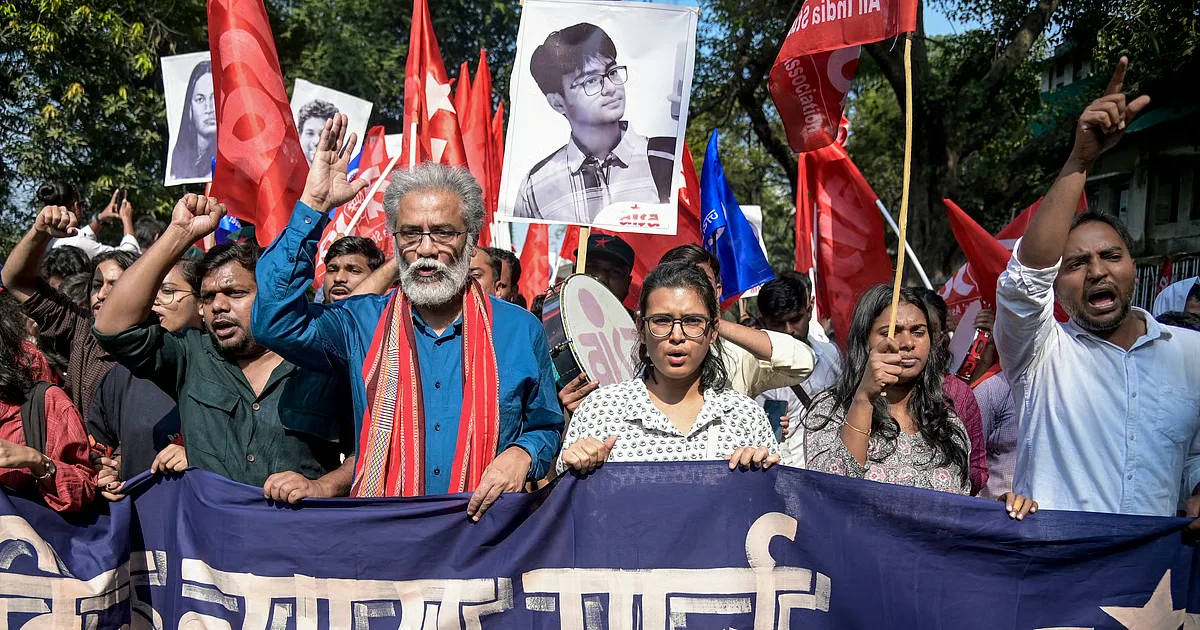
The march was held on November 28, 2026, in memory of IIT student Sahil Wakode.
Participants called for the enactment of the Rohith Vemula Act to address caste discrimination in education.
Sahil Wakode died by suicide after being accused of using ChatGPT during an exam.
On November 28, 2026, the All India Students' Association (AISA) conducted the 'Sahil Nyay March' in Nagpur, advocating for justice for IIT Bombay student Sahil Wakode, who tragically took his own life on September 18. The march commenced at Samvidhan Square, led by AISA national president Neha Bora, and was attended by Sahil's father, Ravindra Wakode, among numerous supporters.
Sahil Wakode, a 22-year-old second-year B.Tech student from Yavatmal, was found deceased in his hostel room on the Powai campus shortly after being allegedly caught using a mobile device to access ChatGPT during a mid-semester examination. His death has raised significant concerns regarding mental health and the pressures faced by students in competitive academic environments.
During the march, participants voiced their demands for justice and called for action against caste-based discrimination in educational institutions. They specifically advocated for the Rohith Vemula Act, which aims to make caste discrimination a punishable offense in educational settings. This act is named after Rohith Vemula, a Dalit scholar who also died by suicide in 2016 amid allegations of caste discrimination.
AISA emphasized that the march was not only a tribute to Sahil but also a platform to highlight ongoing issues regarding student safety and discrimination within the education system. The organization aims to ensure that such tragedies do not recur and that students are protected from systemic biases.
The three-day AISA national conference, which began on the same day, is set to continue until November 30, 2026, focusing on various issues affecting students across India, including mental health, discrimination, and educational reforms.