Hyderabad Researchers Discover Compounds to Combat Fungal Infections
Scientists at CCMB have identified two compounds that inhibit the transformation of Candida albicans, potentially addressing antifungal resistance.
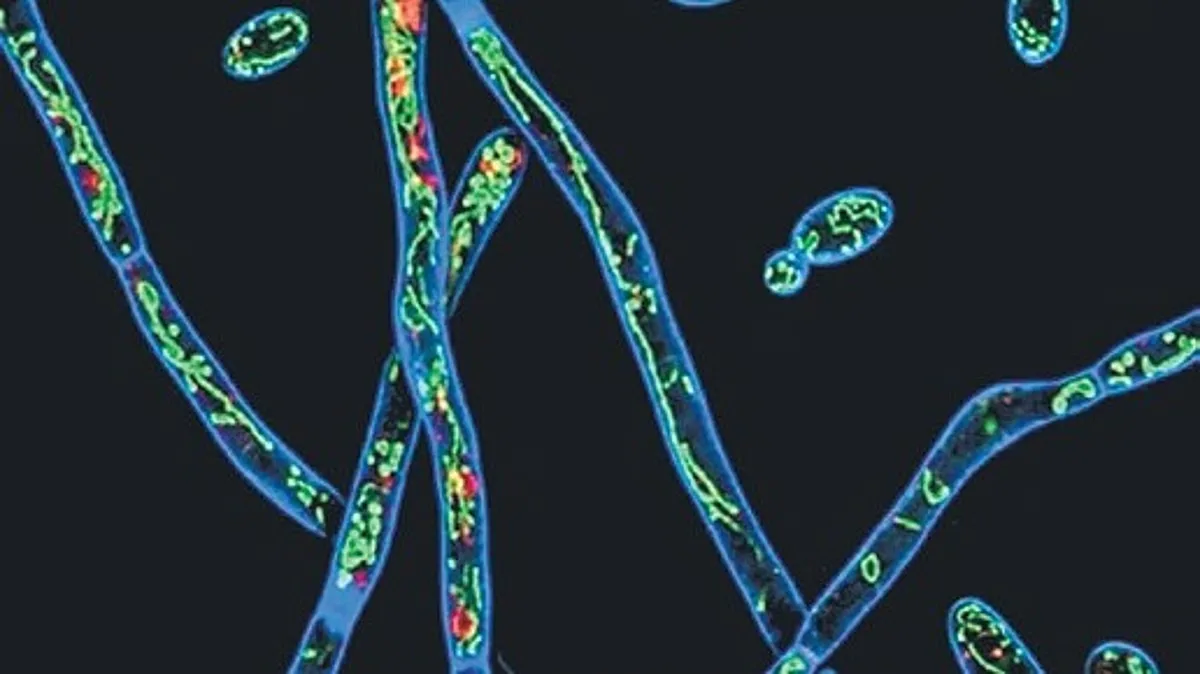
Two compounds identified that prevent Candida albicans from becoming pathogenic.
Research focuses on blocking fungal transformation rather than killing the organism.
Findings suggest enhanced efficacy of existing antifungal treatments.
Researchers at the CSIR-Centre for Cellular and Molecular Biology (CCMB) in Hyderabad have made a significant breakthrough in combating fungal infections. They have identified two compounds that inhibit the transformation of Candida albicans, a common fungus that can lead to severe infections when it enters the bloodstream. This innovative approach aims to tackle antifungal resistance by preventing the fungus from adopting its disease-causing form rather than attempting to kill it outright.
Led by Dr. Sriram Varahan, the study delves into the metabolic processes of the fungus. Candida albicans can morph from round cells into filamentous structures, which facilitate its invasion and help it evade the immune system. The researchers focused on glycolysis, the metabolic pathway responsible for energy production through sugar breakdown, which also plays a crucial role in the fungus's shape transformation.
Through extensive screening of small molecules that target glycolysis, the team successfully identified two compounds that effectively inhibited the formation of filaments. While the fungus continued to grow, it remained in its rounded form, indicating that these compounds can disrupt its pathogenic behavior without eliminating it. Furthermore, the study pinpointed pyruvate kinase, an enzyme involved in glycolysis, as a vital target for controlling this transformation.
The implications of this research are significant. In laboratory tests, one of the identified compounds not only reduced biofilm formation—protective layers that complicate treatment—but also increased the fungus’s sensitivity to existing antifungal medications, such as fluconazole and amphotericin B. This suggests a potential for improving treatment outcomes for patients suffering from fungal infections.
In preclinical trials using a mouse model of systemic Candida infection, the lead compound demonstrated a notable improvement in survival rates. Dhrumi Shah, the study's first author, emphasized that the findings indicate a new strategy for targeting fungal disease-associated behaviors without necessarily halting fungal growth. Dr. Varahan concluded that these compounds could serve as a foundational step for further exploration into how metabolic pathways can be leveraged to disrupt fungal infections effectively.