Community Support Key in Overcoming Drug-Resistant TB Challenges
A 55-year-old man's journey through multidrug-resistant TB highlights the critical role of community support in healthcare.
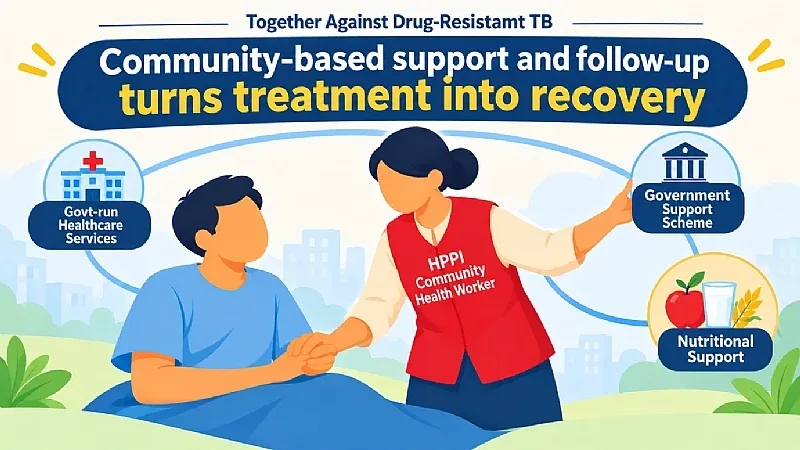
Mahesh's struggle with MDR-TB underscores the need for comprehensive support systems.
Community health workers played a pivotal role in reconnecting him with treatment.
Financial and nutritional assistance significantly aided his recovery process.
In a compelling case from Delhi, a 55-year-old daily-wage worker named Mahesh faced the daunting challenge of multidrug-resistant tuberculosis (MDR-TB). Diagnosed in April 2025, his journey to recovery was fraught with obstacles, not only from the disease itself but also from the economic pressures of daily life that threatened his treatment adherence. Mahesh's story serves as a poignant reminder of the multifaceted battles faced by individuals with drug-resistant TB, particularly those living in vulnerable conditions.
Mahesh's health deteriorated rapidly after he experienced severe symptoms, leading him to seek treatment from various private practitioners without success. Eventually, he was directed to a government clinic where he received a diagnosis of MDR-TB, a form of tuberculosis resistant to key first-line medications. This diagnosis marked the beginning of a challenging treatment journey, complicated by his need to work to support his family, which included his wife and son.
As Mahesh began to feel better, he resumed his search for work, which led to interruptions in his treatment. The struggle to balance health and livelihood is a common issue for many in similar situations, and Mahesh's experience highlights the critical need for a robust support system. His treatment was interrupted, increasing the risk of treatment failure and further complications. Fortunately, community health workers from Humana People to People India (HPPI) intervened during a routine screening, recognizing the importance of Mahesh's situation and providing the necessary support to help him resume his treatment.
The coordinated efforts of community health workers and public healthcare providers proved essential in ensuring Mahesh's continued access to medication. After a serious accident left him bedridden, Shimpi, a frontline worker, facilitated a special arrangement with the clinic to deliver his medicines directly to his home. This proactive approach not only prevented another treatment interruption but also reinforced the importance of community involvement in healthcare.
In addition to medical support, Mahesh received nutritional assistance and financial aid through government programs, which alleviated some of the economic burdens associated with his illness. These interventions underscore the necessity of linking healthcare with social protection systems to support patients effectively. Mahesh's journey illustrates that successful TB treatment extends beyond medication; it requires a comprehensive support network that addresses both health and socio-economic challenges. As India continues to combat TB, fostering these connections will be crucial in ensuring that no one is left behind in the fight against this preventable and treatable disease.