BICC 2026: Lacy Hubbard Highlights Cervical Cancer Strategies
At the Bangladesh International Cancer Congress, Lacy Hubbard emphasizes the importance of leadership and partnerships in cervical cancer elimination.
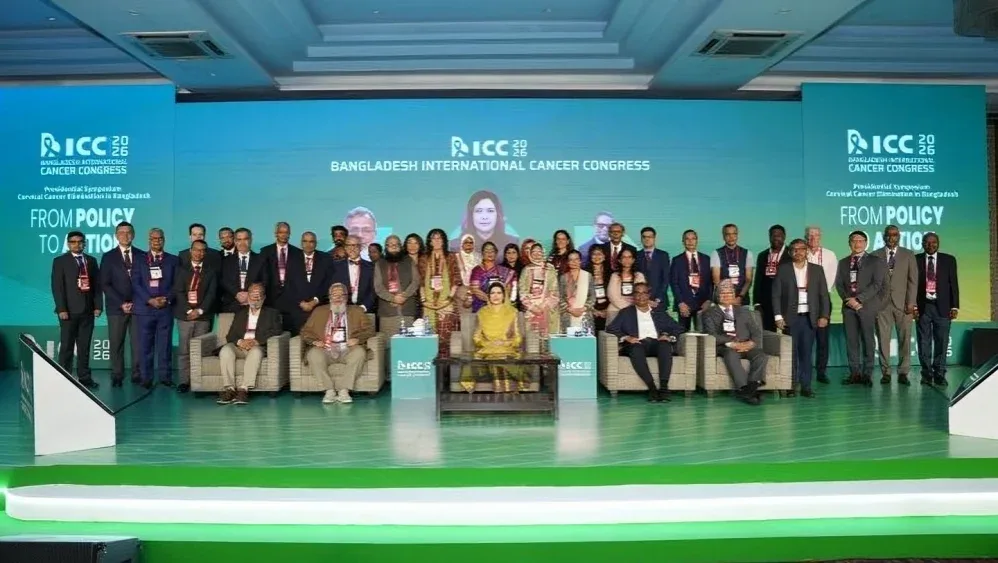
Lacy Hubbard spoke at BICC 2026, focusing on cervical cancer elimination.
Rwanda's successful screening program serves as a model for Bangladesh.
The event gathered health leaders from South Asia to discuss cancer prevention.
Lacy Hubbard, the Founding President and CEO of Elekta Foundation, addressed the Bangladesh International Cancer Congress (BICC 2026) in Dhaka, just two days after World Cervical Cancer Elimination Day. Her presentation, part of the Presidential Symposium titled 'Cervical Cancer Elimination in Bangladesh: From Policy to Action,' highlighted collaborative efforts among South Asian nations, including India, Nepal, Pakistan, and Bangladesh, to combat cervical cancer. The session was graced by remarks from prominent figures such as the First Lady, Dr. Zubaida Rahman, and State Minister of Health, Dr. M. A. Muhit.
During her speech, Hubbard shared Rwanda's impressive progress in cervical cancer screening, where the Ministry of Health initiated a national program four years ago. Currently, Rwanda has achieved the World Health Organization's target of 70% screening coverage, a feat attributed to strong governmental support and effective health partnerships. Hubbard emphasized that Rwanda's experience demonstrates the potential for success when health policies are effectively implemented.
In addition to Rwanda's success, Hubbard discussed the early outcomes of a pilot program in Bangladesh, where 19,000 women were screened for HPV within four months, marking the largest HPV-based screening initiative in the country. She expressed optimism about Bangladesh's capacity to leverage this momentum for broader cervical cancer prevention efforts, stating that the country has a significant opportunity ahead.
Hubbard's remarks underscored the critical need for leadership, investment, and collaborative partnerships to transform intentions into tangible actions for cervical cancer elimination. She concluded by stressing that access to healthcare should not be determined by geographical location, advocating for equitable health outcomes for all individuals.
Looking ahead, the discussions at BICC 2026 are expected to catalyze further initiatives and collaborations across South Asia aimed at enhancing cancer prevention strategies and achieving cervical cancer elimination. The commitment from health leaders and organizations will be essential in driving these efforts forward.