AI Technology Pioneers Early Detection of Cancer Stem Cells
Recent advancements in AI are revolutionizing cancer treatment by enabling early identification of cancer stem cells, potentially reducing recurrence rates.
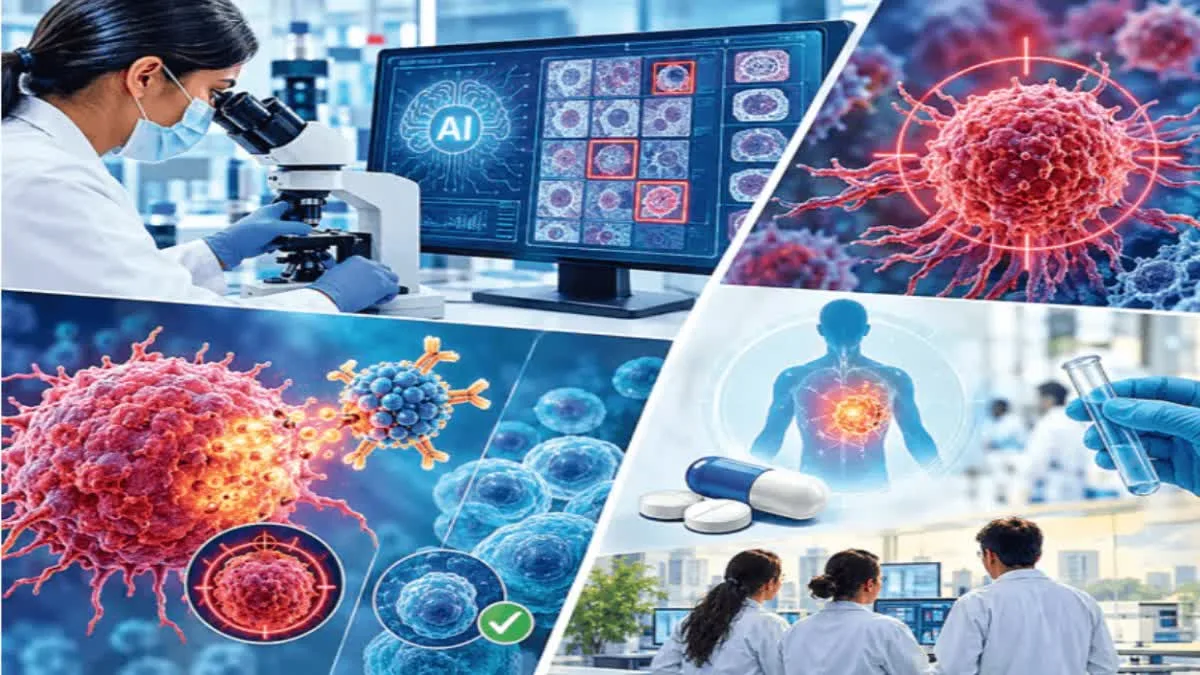
AI can identify cancer stem cells early, aiding in treatment efficacy.
New drug compound RK-251 targets cancer cells while sparing healthy ones.
Research highlights the importance of detecting stem cells to prevent cancer recurrence.
A groundbreaking study has revealed that artificial intelligence (AI) can significantly enhance the early detection of cancer stem cells, a crucial factor in reducing the risk of cancer recurrence. Conducted by researchers from the SN Bose National Center for Basic Sciences and Ashoka University, this innovative approach utilizes AI to analyze individual cancer cells through a method known as 'single-cell RNA' analysis. The findings, published in the journal Nucleic Acids Research, indicate that this technology could transform cancer treatment strategies.
Historically, the challenge of cancer treatment has been compounded by the presence of cancer stem cells, which can evade conventional therapies and lead to recurrence. These stem cells, often comprising less than 1% of tumor cells, possess unique characteristics that make them difficult to identify and target. The recent research underscores the potential of AI in distinguishing these elusive cells, thereby paving the way for more effective treatment protocols.
The study introduced the 'AI-based Cancer Stem-like Cell Profiler and Neoplasm Deconvoluter' (ACSCEND), a tool designed to detect cancer stem-like cells hidden within tumors. By analyzing over 25,000 tumor samples from international databases, researchers found that tumors with a high concentration of potent cancer stem cells are less responsive to treatment. This AI-driven analysis offers a promising avenue for understanding cancer biology and improving patient outcomes.
In addition to AI advancements, researchers from IASST-Guwahati and IIT-Guwahati have developed a novel drug compound named RK-251. Unlike traditional chemotherapy, which often harms healthy cells, RK-251 specifically targets cancer cells by exploiting their elevated levels of reactive oxygen species (ROS). Laboratory tests indicate that this compound effectively releases an anti-cancer agent while minimizing damage to healthy tissues, marking a significant step forward in cancer therapeutics.
Looking ahead, the implications of these studies are profound. The ability to accurately identify cancer stem cells could lead to breakthroughs in treatment, potentially reducing side effects and improving patient quality of life. As clinical trials progress, the medical community remains hopeful that these innovations will lead to more effective and targeted cancer therapies in the near future.